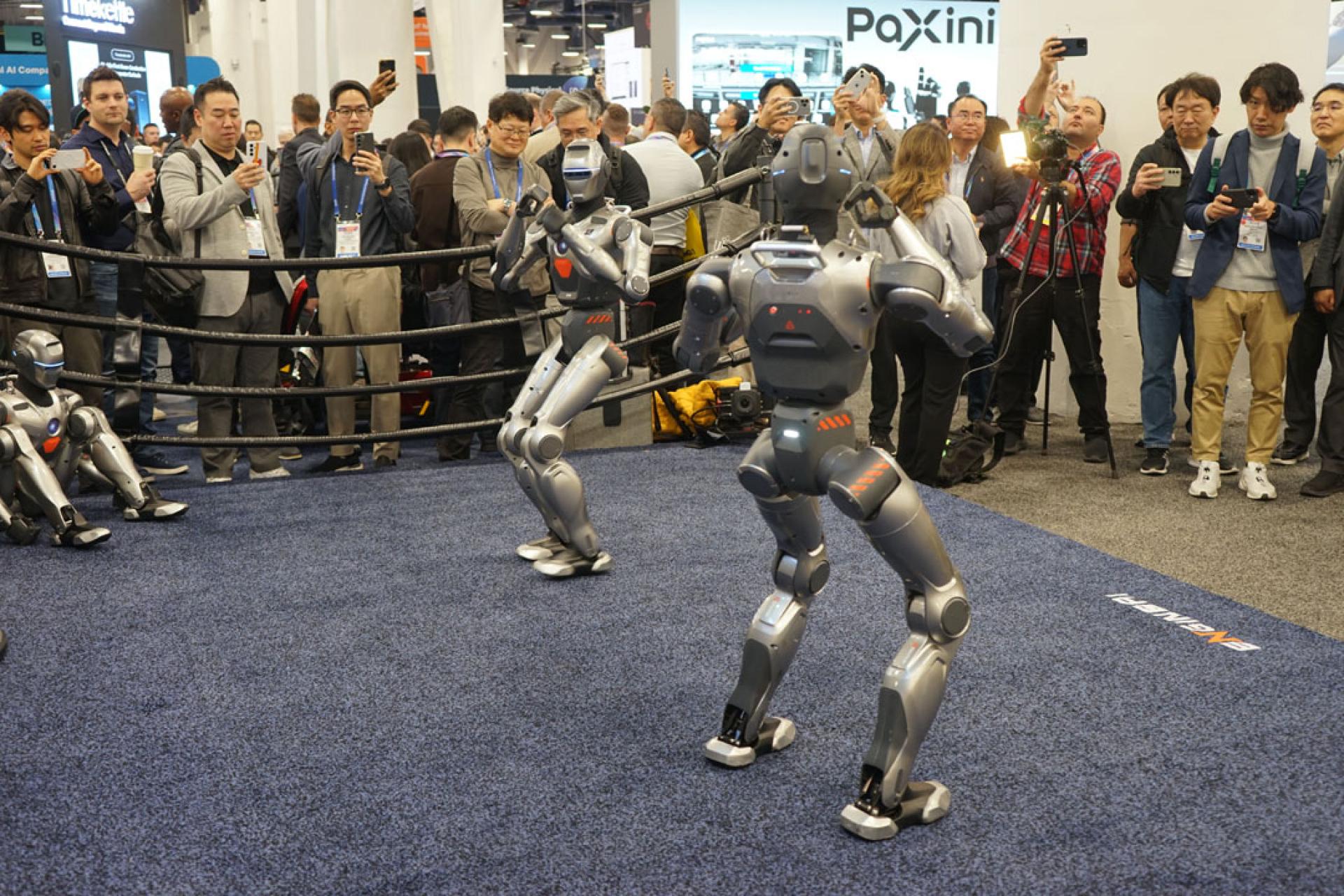
Recently, during the Chinese Spring Festival Gala, robots showcased Shaolin Kung Fu and somersaults, impressing audiences. The latest report from the China Academy of Information and Communications Technology (CAICT) points out that China’s future industrial innovation achievements are remarkable; the five types of 6G typical scenarios and 14 key capability indicators proposed by its research have all been adopted by the International Telecommunication Union. China’s global sales market share of humanoid robots exceeds 80%, and it has entered the top international tier in quantum computing. However, a former Citigroup executive has issued a warning that in the coming decades, the number of AI robots will surpass the labor force.
Wang Zhiqin, Vice President of CAICT, stated that China is currently among the top international ranks in quantum computing, making it the only country worldwide to achieve "quantum computing supremacy" in both major technological routes: photonic quantum and superconducting quantum.
Wang also noted that, in the field of non-invasive brain-computer interface, China leads the world in core technical indicators and the number of patents held. Product application scenarios have already expanded to areas such as motor function restoration, neurological disease treatment, and aerospace human-machine interaction. In addition, China's scale of hydrogen production and consumption, as well as renewable energy-based hydrogen production capacity, remains the highest in the world.
According to Xinhua News Agency reports, China continues to improve the policy system for advancing future industries, accelerating innovation and the opening up of application scenarios. Statistics show that Beijing, Shanghai, Guangdong, Jiangsu, and around 20 other provinces have successively issued policy documents related to future industries. Beijing, Zhejiang, Shandong, and five other provinces have also built and nurtured 63 pilot zones for future industries, creating a number of core platforms for industrial clusters and innovation linkages.
However, China still faces many risks and challenges in the development of future industries, such as insufficient sources of original innovation, critical core technologies being subject to foreign control, inefficient transformation of scientific and technological achievements, and an underdeveloped innovation ecosystem.
In terms of humanoid robot development, CNBC cited Gary Gensler, former head of innovation, technology, and future of work for Citi Global Insights, as saying that global corporate management continues to prioritize profits, with human workers being left far behind. He predicts that within the next few decades, the number of robots will exceed the labor force. According to a 2024 Citi report authored by Gensler, it is projected that by 2035, there will be 1.3 billion AI robots worldwide, even surpassing 4 billion by 2050.