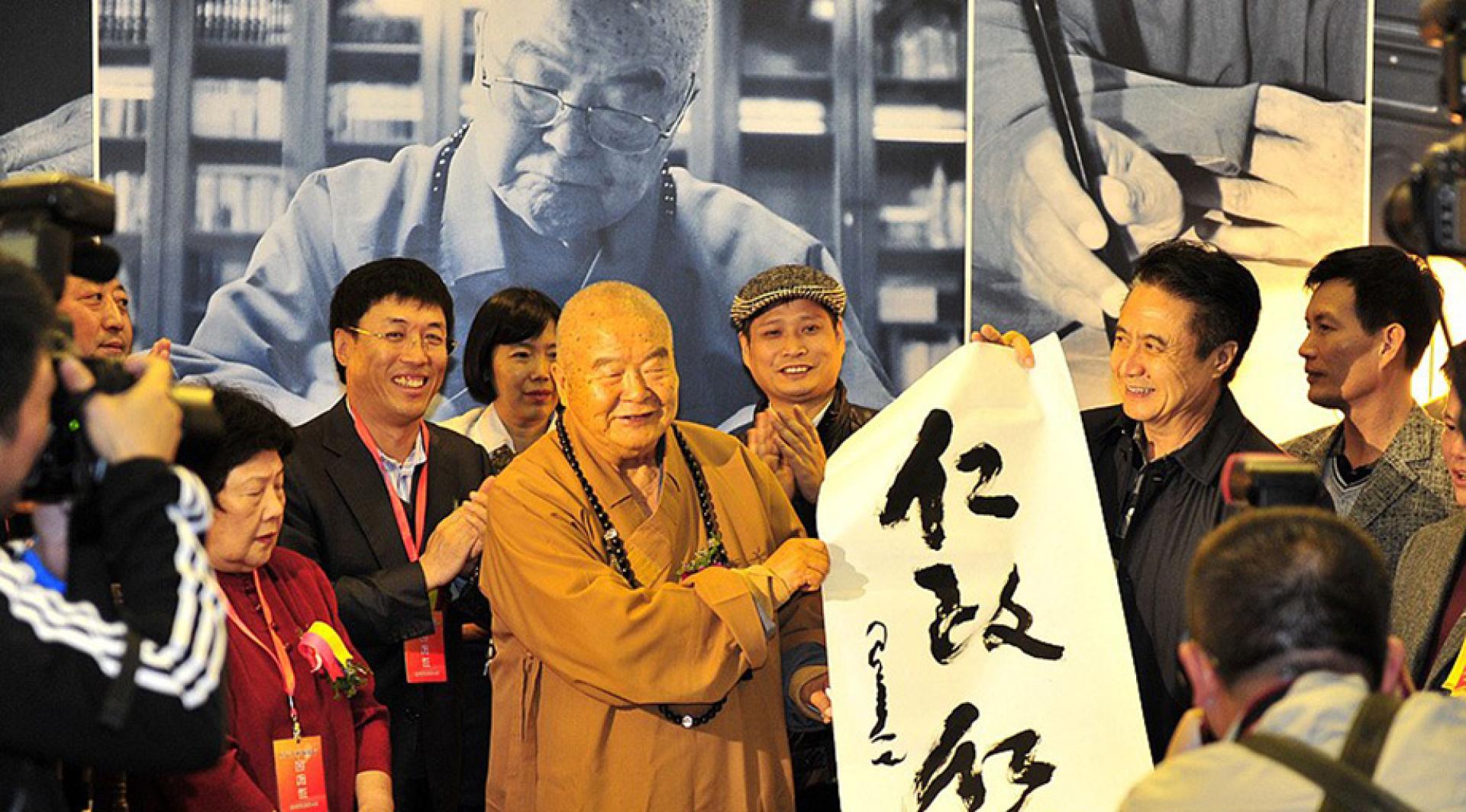
A man who has long been engaged in the acquisition and auction of art, particularly calligraphy and paintings, in Taiwan spent nearly 2 million New Taiwan Dollars (about 250,000 Malaysian Ringgit) to buy nine pieces of calligraphy allegedly by the late Master Hsing Yun from two men. Later, upon discovering they were fake, he angrily filed a lawsuit seeking compensation. The Kaohsiung Branch of the High Court recently ruled that the two men are jointly liable to pay 1.8 million NTD in damages.
According to a report by Liberty Times on the 5th, in May 2019, the plaintiff, Dr. Jiang, wanted to acquire nine pieces of Master Hsing Yun's calligraphy, including “Observing One's Own Mind in Freedom” and “The World is for All”. The defendants, Chen and Guo, in order to gain his trust, produced a publication titled “Master Hsing Yun’s One-Stroke Calligraphy,” claiming that these nine works were all included in the publication and also provided certificates of collection as proof, thus defrauding Jiang of 1.81 million NTD.
Later, Jiang was informed by Fo Guang Shan insiders that the pieces were imitations. He reported the matter as fraud. Prosecutors, however, referencing exchanges such as, “Doctor, didn’t you say you wanted me to find something for you? You bought it yourself, so you need to take responsibility,” decided not to prosecute the two. Jiang then filed a civil lawsuit seeking compensation of nearly 2 million NTD.
The Kaohsiung District Court investigated and found that none of the relevant Fo Guang Shan organizations had ever issued any certificates of collection. The court determined that the works purchased by Jiang at high price were not authentic calligraphy by Master Hsing Yun. However, it held that Chen did not have the subjective intent to commit fraud together, and only ordered Guo to pay 1.15 million NTD in compensation. Both Jiang and Guo were dissatisfied and appealed. Upon review, the Kaohsiung Branch of the High Court found that Chen and Guo did share the intent to commit fraud, and ruled that they were jointly liable to pay 1.8 million NTD in compensation. The case is appealable.