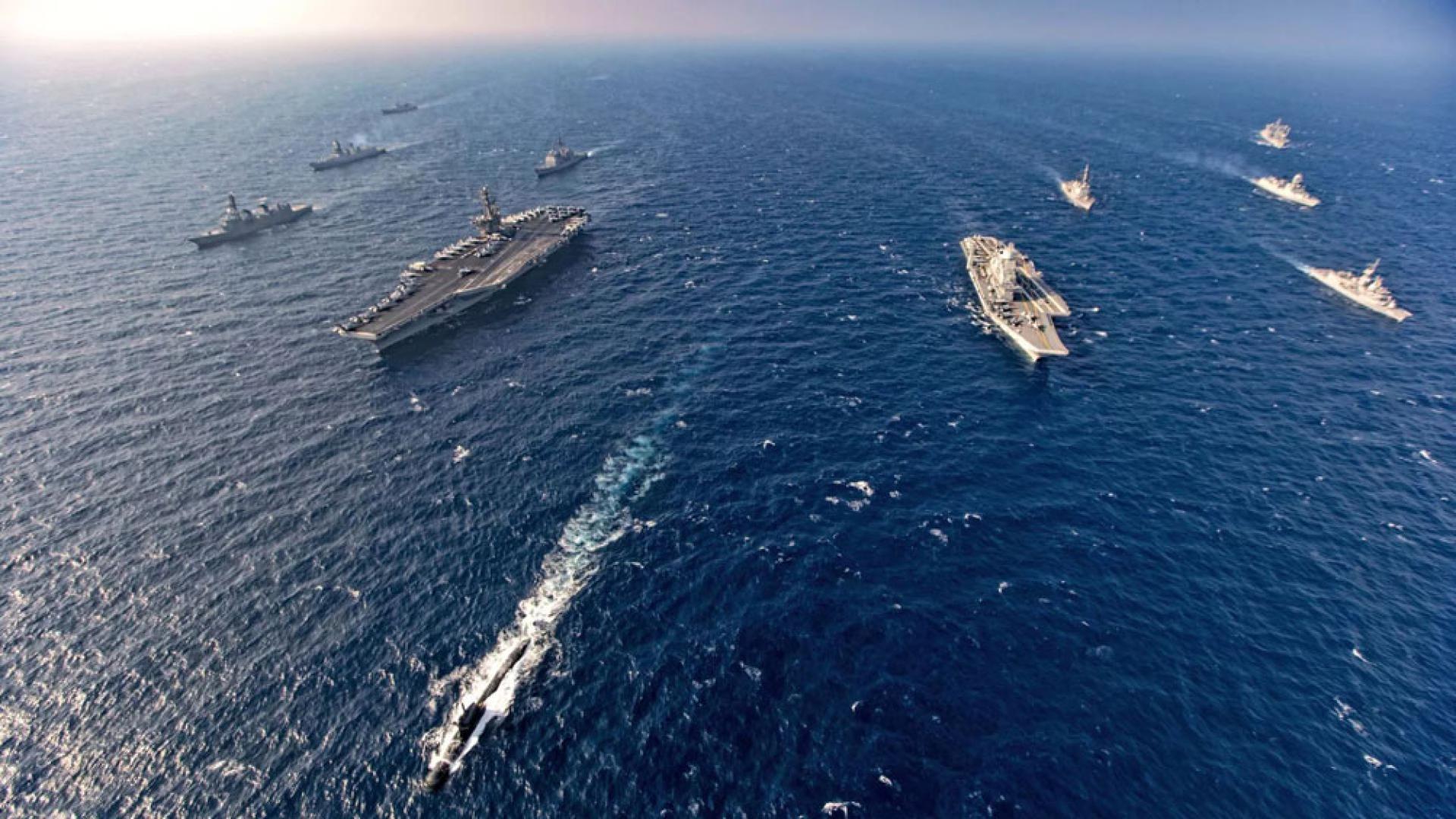
The Wall Street Journal reports that the six fast response patrol ships previously deployed by the US Coast Guard to the Middle East are now operating from bases in Singapore and the Philippines to help contain China's expansion of power in the Pacific region.
The report cites US Coast Guard officials stating: "These patrol ships have been authorized to operate out of relevant bases in Singapore and Subic Bay on Luzon Island in the Philippines, and will remain deployed until at least September."
These six patrol ships are part of the US Coast Guard's newly reorganized 'Expeditionary Patrol Squadron' and can be dispatched globally. Their first deployment is in the Western Pacific. For years, the situation in this area has been tense, as China escalates so-called gray zone operations to project control around Taiwan and in disputed waters of the South China Sea.
Previously, the US had deployed larger Coast Guard patrol ships to the former US military base of Subic Bay facing the South China Sea, but this is the first time smaller, fast response patrol ships have been tasked with missions in the area.
The US is now diversifying its military deployments, upgrading simple airfields, testing advanced missile systems, and holding increasingly complex exercises with more allies—all meant to convince Beijing that any military action would entail excessive risk.
A Coast Guard spokesperson said these patrol ships are commanded and supported logistically from Singapore, with vessels taking turns heading to Subic Bay.
The US military is continuing to expand its deployments in the Philippines, a treaty ally that could become a crucial operating base if war breaks out over Taiwan. As for Singapore, the US has long-standing agreements to use its naval facilities to support certain American operations.
China’s Coast Guard forces are attempting to strengthen their control over these waters, including intercepting Philippine vessels heading to military outposts or local fishing grounds, sometimes using water cannons and other tactics to pressure and drive off rivals.
The US Coast Guard has already deployed ships on Guam and in Hawaii, including what it calls an Indo-Pacific support patrol ship.
With patrol ships deployed in Singapore and the Philippines, the US Coast Guard can now be closer to South China Sea hotspots. These patrol ships are currently supporting US Indo-Pacific Command, which oversees a vast area from India to beyond Hawaii.
However, deterring China in its own backyard remains a challenge for the US.
Today, China's coast guard possesses larger, more heavily armed ships that can remain on duty at sea for longer periods, including the world's longest patrol vessel. The Chinese Coast Guard is also cooperating more closely with the Chinese navy and is supported by China's maritime militia—fishermen who occasionally carry out missions for Beijing.
Meanwhile, the US Coast Guard faces aging ships, lower-than-expected production rates for new vessels, and personnel shortages. Some analysts say that to keep up, the US Coast Guard will need to establish more bases across the vast Pacific region.