On the 15th, the United States and Taiwan reached a trade agreement whereby the U.S. agreed to lower tariffs on goods imported from Taiwan to 15%. The agreement also involves a $500 billion (2.02 trillion ringgit) investment and credit line for semiconductors.
According to comprehensive reports from Bloomberg and other foreign media, under the agreement, Taiwanese chipmakers that expand their production capacity in the U.S., such as TSMC, will enjoy lower tariff rates on semiconductor products imported into the U.S. The U.S. will also reduce its broad range of tariff rates on most other Taiwanese exports to the U.S., cutting them from 20% to 15%.
The U.S. Department of Commerce stated that generic drugs, aircraft components, and scarce natural resources will receive zero percent tariffs.
Taiwanese tech companies such as TSMC will invest in the U.S. with a total value of at least $250 billion (1.01 trillion ringgit) to boost capacity in the semiconductor, energy, and artificial intelligence sectors as a condition of the agreement. U.S. Secretary of Commerce Lutnik said this includes TSMC's previously pledged $100 billion (405.214 billion ringgit) investment in 2025, with more investments to follow.
Taiwan Becomes World's First to Receive U.S. 232 Tariff Most-Favored Treatment
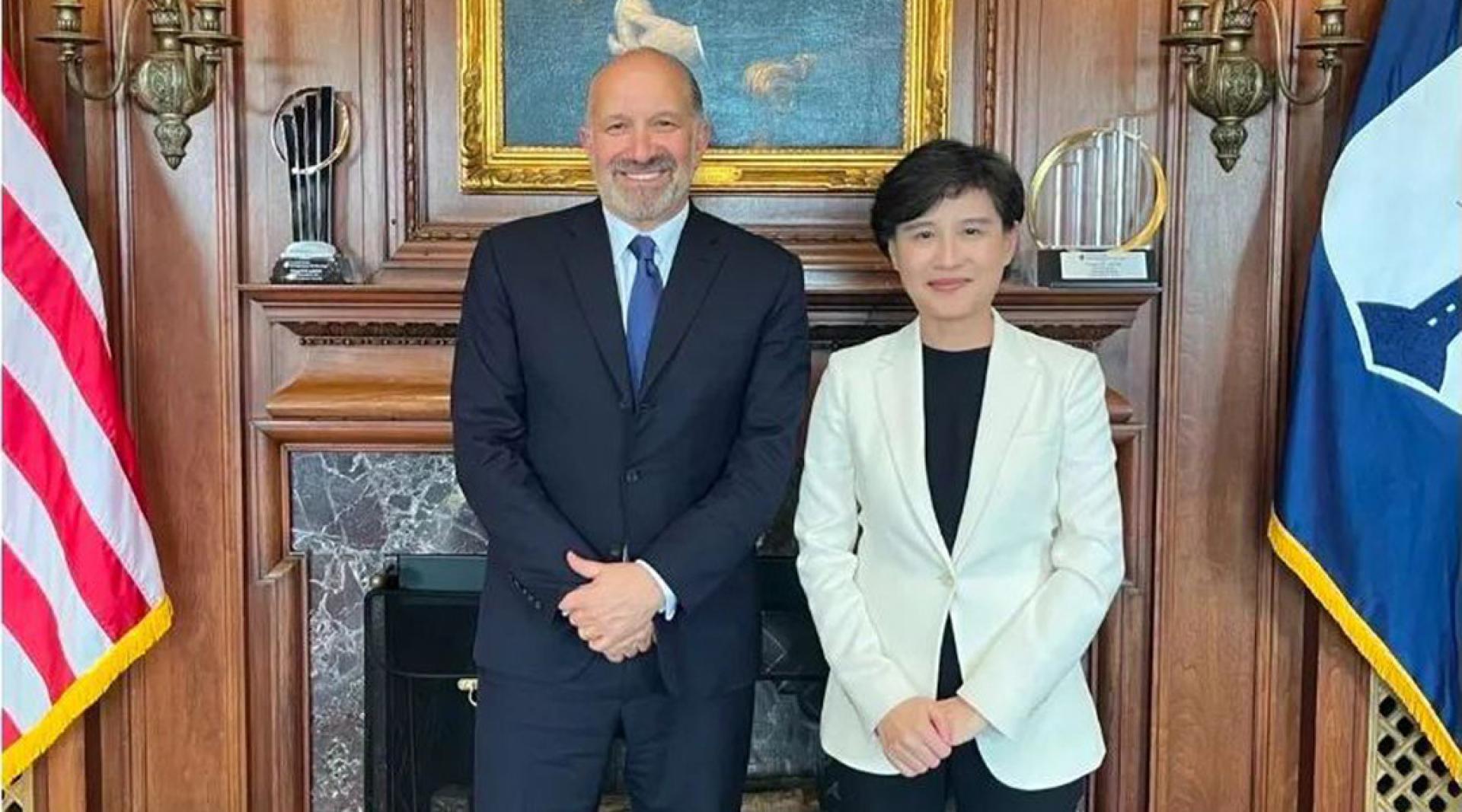
Taiwan’s Deputy Premier Cheng Li-Chun said at a press conference at the Taipei Representative Office in the U.S. that after nine months of negotiation, Taiwan accomplished its four preset goals: reciprocal tariff reductions to 15%, not to be compounded with the original MFN (Most-Favored-Nation) tariff rate, gaining "most-favored ally" status among America’s major deficit partners, achieving parity with Japan, South Korea, and the EU, and becoming the world’s first region where investors have secured the most preferential tariff treatment for semiconductors and related products. Taiwan will use the "Taiwan Model" to lead companies into U.S. supply chains, create industry clusters, and facilitate high-tech mutual investments between Taiwan and the U.S.
Cheng pointed out that Taiwan and the U.S. have completed negotiations: “We are the first in the world to receive a U.S. commitment that, regardless of future second-stage semiconductor or derivative product tariffs (Section 232 tariffs), we will get the most preferential treatment.”
The Executive Yuan also announced that the U.S. has recognized and accepted supply chain collaboration with Taiwan based on the “Taiwan Model,” which will help Taiwanese firms expand their semiconductor and ICT (information and communications technology) presence in America. This will further strengthen Taiwan’s technology sector and deepen strategic Taiwan-U.S. economic and trade cooperation.
According to plans for Taiwanese companies’ independent investment, Taiwan agreed to two different types of capital commitment to invest in the U.S. The first type involves Taiwanese enterprises independently investing $250 billion, including in semiconductors, AI applications, electronics manufacturing services (EMS), energy, and other industries. The second type is that the Taiwanese government will use credit guarantees to support financial institutions in providing up to $250 billion in credit to businesses. Investment areas include the semiconductor and ICT (information and communications technology) supply chains.
The Executive Yuan also said that regarding the Taiwan-U.S. trade agreement, which covers important issues such as tariffs, non-tariff trade barriers, trade facilitation, economic security, labor rights and environmental protection, and expanded procurement, the workgroup said both sides are still undergoing legal review. Taiwan will select another date to sign the agreement with the U.S. Trade Representative’s Office. Once the agreement is signed, a detailed explanation will be given to the public, and the full text will be submitted to the legislature for review according to legal procedures in the future.