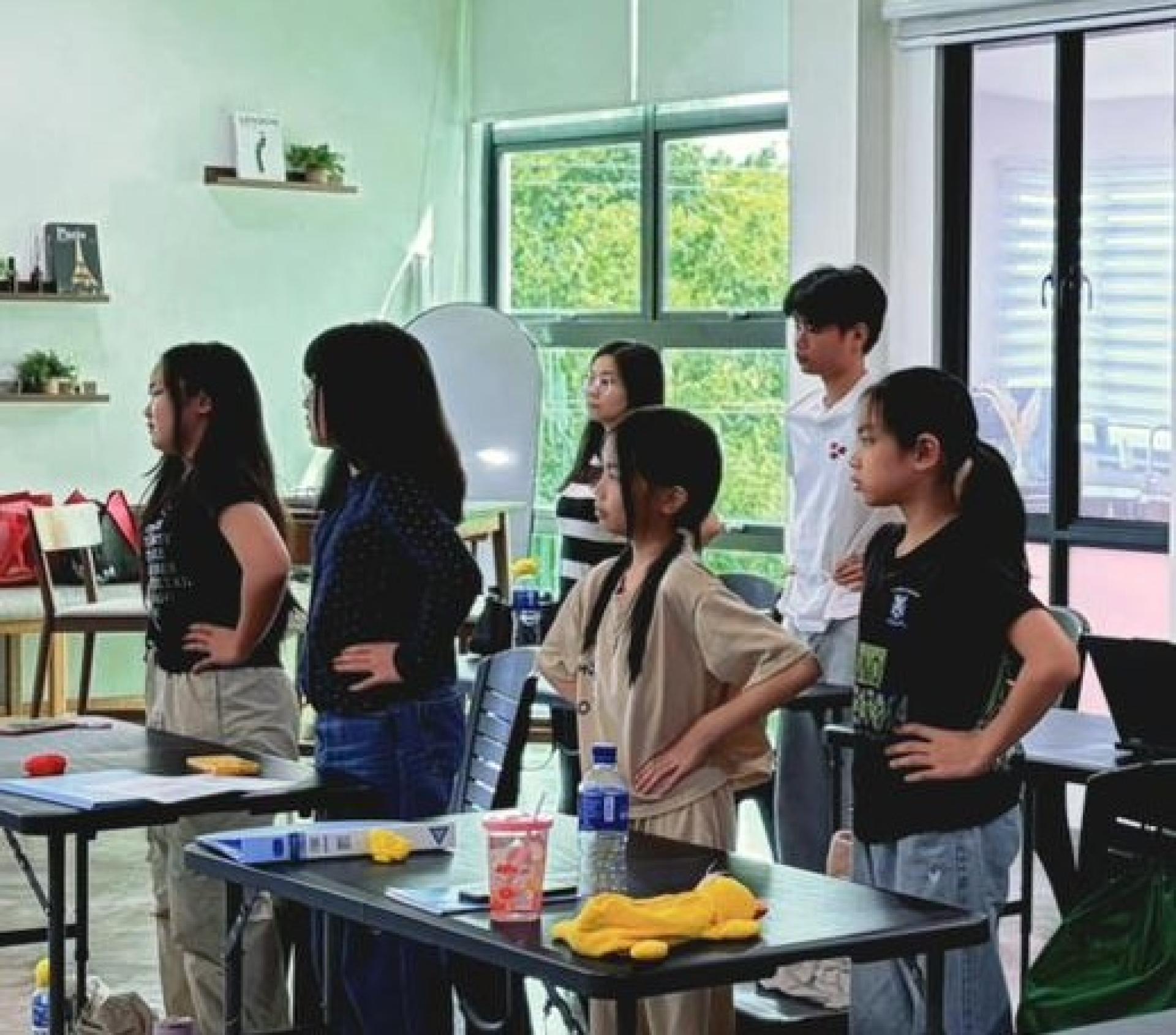
(Bandar Seri Begawan, 20th) — The “Huang Fanshuo Brunei Vocal Masterclass 3.0”, led by renowned Asian vocal coach and JCI Malaysia Ten Outstanding Young Malaysians (TOYM) awardee Huang Fanshuo, was recently held successfully in Brunei. The two-day course tightly integrated theory and practice,
with a focus on scientific vocal training and systematic teaching, attracting many local youth music enthusiasts to participate.
At the beginning of the masterclass, Huang Fanshuo emphasized that learning vocals is not only about skill accumulation, but also a long-term cultivation of attitude. He reminded students not to focus solely on competition rankings or stage evaluations, but rather to value the experiences and growth gained from the process of learning music itself. A true singer needs to remain authentic on stage and enjoy the music, rather than simply pursuing titles or achievements.
During the class, Huang Fanshuo proposed that singing practice should be diverse. Students should select repertoire based on their own vocal conditions and understand different vocal techniques of songs and singers, rather than copying entirely. He encouraged students to experiment with various languages and styles, make adjustments according to genre, and improve pitch, stability, and overall expressiveness through repeated listening to master the melody. Meanwhile, Huang Fanshuo demonstrated vocal techniques such as breath control, resonance training, and muscular adjustments on the spot, allowing students to understand the nature of the voice and master operation methods in practice.
Huang Fanshuo also specifically pointed out that since students’ vocal levels and individual physiological conditions differ, teaching methods should be tailored rather than following fixed steps or models. Teachers need to flexibly adopt diversified teaching strategies, guiding students to explore and build the training system most suitable for their own vocal characteristics and vocal development.
Huang Fanshuo emphasized that education is not only about passing on skills, but also concerns the learner’s attitude, habits, and overall growth. He pointed out that an effective learning process requires a tripartite responsibility: teachers provide professional guidance and direction while observing learning status; parents offer understanding and support in daily life and maintain communication with teachers; and students must be self-disciplined and responsible, actively practicing to internalize what they have learned into sustainable abilities.
He stressed that this concept of “tripartite collaboration” applies not only to music education but can also be promoted in other academic subjects and daily learning. By understanding the long-term and progressive nature of learning, students can shift from solely pursuing skills or achievements to focusing on the process and personal development, thus cultivating independent thinking, problem-solving abilities, and facing challenges. The ultimate goal of education is not short-term results or titles, but to help students establish self-management skills and a foundation for lifelong learning, making the classroom a comprehensive platform for cognition, emotional regulation, and developing responsibility.
During the event, Huang Fanshuo provided each student with one-on-one vocal diagnosis and analysis, combining scientific principles to propose solutions for improvement regarding specific issues.
Cai Hanyu, who represented Brunei and won the championship at the 2024 “Haihai Voice” World Minnan Youth Singer Competition, returned to Brunei recently to attend and participate in this event.
As one of Huang Fanshuo’s long-term students, she stated that the systematic explanations given by her teacher gave her a more comprehensive and clear understanding of her own vocal mechanism. While retaining her personal timbre and singing style, she further optimized her pitch control and use of resonance space during singing, thereby improving her overall vocal stability. She also noted that systematic training not only enhanced her vocal projection, but also made her singing process even more natural and smooth, presenting a more distinctive personal style and breakthroughs in expressiveness and layering.
The event planner Cai Muxi stated that organizing the vocal masterclass was not only about imparting techniques, but also about providing a professional learning and performance platform for Bruneian young singers. Recalling her own experience singing on school and club stages from a young age, as well as representing Brunei in local and international competitions, she deeply appreciated the importance of professional guidance and practical opportunities.
Regarding this activity, Cai Muxi expressed special gratitude to her mentor, who traveled arduously from Malaysia to selflessly share years of experience with Bruneian students, allowing young singers to learn popular singing methods up close.
She said this masterclass not only deepened her understanding of vocals and teaching but also gave her new inspiration in music education and talent development.
She pointed out that there are many passionate and potential young musicians in Brunei but lack systematic training and stage opportunities.
Cai Muxi expressed her hope that students can venture out of Brunei to participate in international stage performances to broaden their horizons and accumulate practical experience.
Having led students to participate in overseas music activities—including those in China and Malaysia—Cai Muxi said she hopes local music talents can gain international experience through learning and practice, growing into more competitive singers.
She believes that through continuous effort, Mandarin pop music can not only take root in Brunei but also discover more potential talents and inject new vitality into local cultural exchange, youth development, and music education.
with a focus on scientific vocal training and systematic teaching, attracting many local youth music enthusiasts to participate.
At the beginning of the masterclass, Huang Fanshuo emphasized that learning vocals is not only about skill accumulation, but also a long-term cultivation of attitude. He reminded students not to focus solely on competition rankings or stage evaluations, but rather to value the experiences and growth gained from the process of learning music itself. A true singer needs to remain authentic on stage and enjoy the music, rather than simply pursuing titles or achievements.
Huang Fanshuo also specifically pointed out that since students’ vocal levels and individual physiological conditions differ, teaching methods should be tailored rather than following fixed steps or models. Teachers need to flexibly adopt diversified teaching strategies, guiding students to explore and build the training system most suitable for their own vocal characteristics and vocal development.
Huang Fanshuo emphasized that education is not only about passing on skills, but also concerns the learner’s attitude, habits, and overall growth. He pointed out that an effective learning process requires a tripartite responsibility: teachers provide professional guidance and direction while observing learning status; parents offer understanding and support in daily life and maintain communication with teachers; and students must be self-disciplined and responsible, actively practicing to internalize what they have learned into sustainable abilities.
He stressed that this concept of “tripartite collaboration” applies not only to music education but can also be promoted in other academic subjects and daily learning. By understanding the long-term and progressive nature of learning, students can shift from solely pursuing skills or achievements to focusing on the process and personal development, thus cultivating independent thinking, problem-solving abilities, and facing challenges. The ultimate goal of education is not short-term results or titles, but to help students establish self-management skills and a foundation for lifelong learning, making the classroom a comprehensive platform for cognition, emotional regulation, and developing responsibility.
During the event, Huang Fanshuo provided each student with one-on-one vocal diagnosis and analysis, combining scientific principles to propose solutions for improvement regarding specific issues.
Cai Hanyu, who represented Brunei and won the championship at the 2024 “Haihai Voice” World Minnan Youth Singer Competition, returned to Brunei recently to attend and participate in this event.
As one of Huang Fanshuo’s long-term students, she stated that the systematic explanations given by her teacher gave her a more comprehensive and clear understanding of her own vocal mechanism. While retaining her personal timbre and singing style, she further optimized her pitch control and use of resonance space during singing, thereby improving her overall vocal stability. She also noted that systematic training not only enhanced her vocal projection, but also made her singing process even more natural and smooth, presenting a more distinctive personal style and breakthroughs in expressiveness and layering.
The event planner Cai Muxi stated that organizing the vocal masterclass was not only about imparting techniques, but also about providing a professional learning and performance platform for Bruneian young singers. Recalling her own experience singing on school and club stages from a young age, as well as representing Brunei in local and international competitions, she deeply appreciated the importance of professional guidance and practical opportunities.
Regarding this activity, Cai Muxi expressed special gratitude to her mentor, who traveled arduously from Malaysia to selflessly share years of experience with Bruneian students, allowing young singers to learn popular singing methods up close.
She said this masterclass not only deepened her understanding of vocals and teaching but also gave her new inspiration in music education and talent development.
She pointed out that there are many passionate and potential young musicians in Brunei but lack systematic training and stage opportunities.
Cai Muxi expressed her hope that students can venture out of Brunei to participate in international stage performances to broaden their horizons and accumulate practical experience.
Having led students to participate in overseas music activities—including those in China and Malaysia—Cai Muxi said she hopes local music talents can gain international experience through learning and practice, growing into more competitive singers.
She believes that through continuous effort, Mandarin pop music can not only take root in Brunei but also discover more potential talents and inject new vitality into local cultural exchange, youth development, and music education.