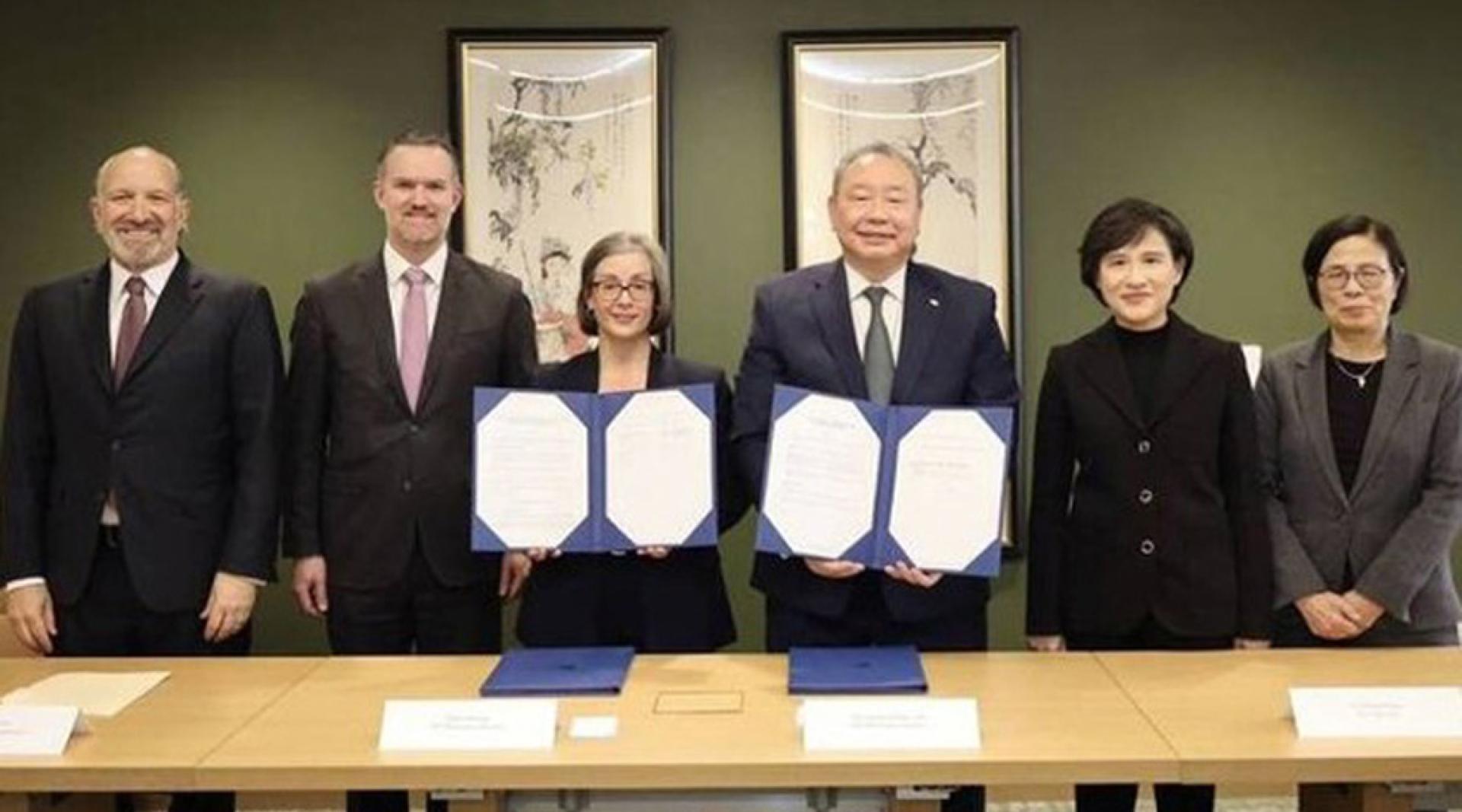
Led by Deputy Premier Cheng Li-chun, Taiwan's negotiation team traveled to the US and signed the “Taiwan-US Reciprocal Trade Agreement” on the US Eastern Time of the 12th, establishing a reciprocal tariff of 15% (with no stacking), and exempting 2,072 Taiwanese export items to the US from the reciprocal tariff. Regarding US-spec vehicles, a topic closely watched by the Taiwanese public, tariffs on passenger cars will be reduced to zero in the future, but certain tariffs on light and medium cargo trucks will be retained to ensure military-industrial resilience. The US side’s tariff reductions for Taiwan will take effect upon completion of its domestic procedures and publication in the Federal Register.
On the 13th, the Executive Yuan of Taiwan issued a press release stating that Deputy Premier Cheng Li-chun led the negotiation team to finalize consensus with the US on the Reciprocal Trade Agreement, and together witnessed the agreement signing by Taiwan’s Representative to the US, Bi-khim Hsiao, and AIT Washington Office Managing Director Ingrid D. Larson. In terms of market opening, Taiwan will remove tariffs on beef and dairy, and lift quantity restrictions on US-spec vehicles, but still require compliance with import standards and, within six months of the agreement taking effect, establish a post-market auditing and regulatory mechanism for US-spec cars; on US imports’ tariffs, rice and rice products, chicken, oysters, clams, cockles, ark shell, garlic, dried red beans, and other key food security items will not have their tariffs reduced. Pork tariffs will be lowered in stages, and health food products will see their tariff reduced to 10%.
The Executive Yuan’s Taiwan-US Economic and Trade Working Group pointed out that after signing this agreement, six major goals have been achieved, including obtaining reciprocal tariff and most-favored-nation status regarding 232 tariffs, ensuring food security and military-industrial resilience, protecting public health, optimizing the Taiwan-US economic and trade system, building a reliable industrial supply chain, and increasing two-way investment. According to economic think tank models, after the completion of Taiwan-US tariff negotiations, the overall impact on Taiwan’s domestic GDP and industrial employment will turn from negative to positive. The previous year, items exempted from reciprocal tariffs accounted for 36% of Taiwan’s total industrial exports to the US, valued at US$9.56 billion (RM37.332 billion), compared to the value of reduced-tariff imports from the US at US$6.44 billion (RM25.148 billion). The overall import-export impact is favorable to Taiwan.
According to US information, Taiwan’s purchases of US products will also increase, with plans for long-term procurement of key US goods from 2025 to 2029, including US$44.4 billion (RM173.4 billion) in liquefied natural gas and crude oil, US$15.2 billion (RM59.3 billion) in civil aircraft and engines, and US$25.2 billion (RM98.4 billion) worth of electrical equipment, power grids, materials, generators, energy storage facilities, marine equipment, steel manufacturing equipment, and other equipment, for a total of approximately US$84.8 billion (RM331.1 billion).