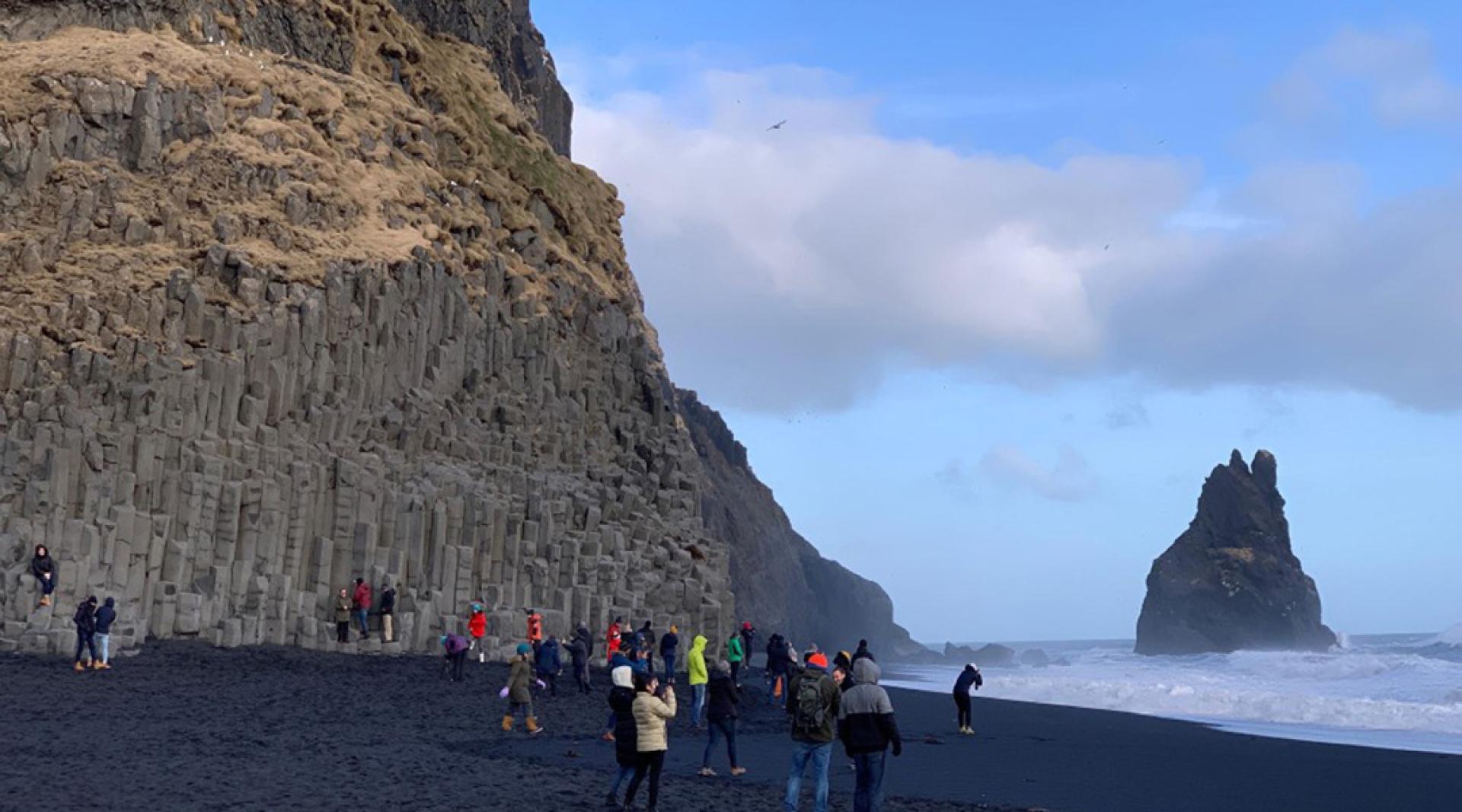
In recent weeks, strong easterly winds have affected the entire country of Iceland, causing severe coastal erosion at the popular tourist attraction Reynisfjara Black Sand Beach in the south. The coastline has retreated significantly, Reynisfjall mountain has collapsed, and the coastal landscape has changed.
In the past, visitors could walk directly to the basalt columns and caves, but now these areas are submerged by the sea. A high erosion slope has appeared along the once-exposed coastline, and in the sand below the slope, huge rocks are tossed back and forth by the fierce impact of the waves.
The landowner in the area, Einarsson, said: "The changes are happening very quickly. The beach is always changing, but I've never seen anything like this before. The sight is quite astonishing."
Reynisfjara Black Sand Beach is a popular tourist destination, attracting hundreds of thousands of visitors each year and is a must-see spot for tour groups. It is also a dangerous place; if tourists get too close to the water’s edge, they can easily be swept away and drown by huge waves.
Local tour guide Sigurdsson said that in his more than ten years working there, he has never seen Iceland’s natural landscape change so rapidly. He warned that some tourists are keen to climb down to see the coastline, but if the waves rise, tourists have no way to climb up the erosion slope. He called for increased monitoring to prevent accidents.
Experts speculate that this winter's switch to easterly winds, unlike previous years when southwesterly winds prevailed, has carried away the sand and giant basalt rocks from the shoreline. If the easterly winds continue and erosion spreads, there is a chance that seawater could flood the inland parking lot.