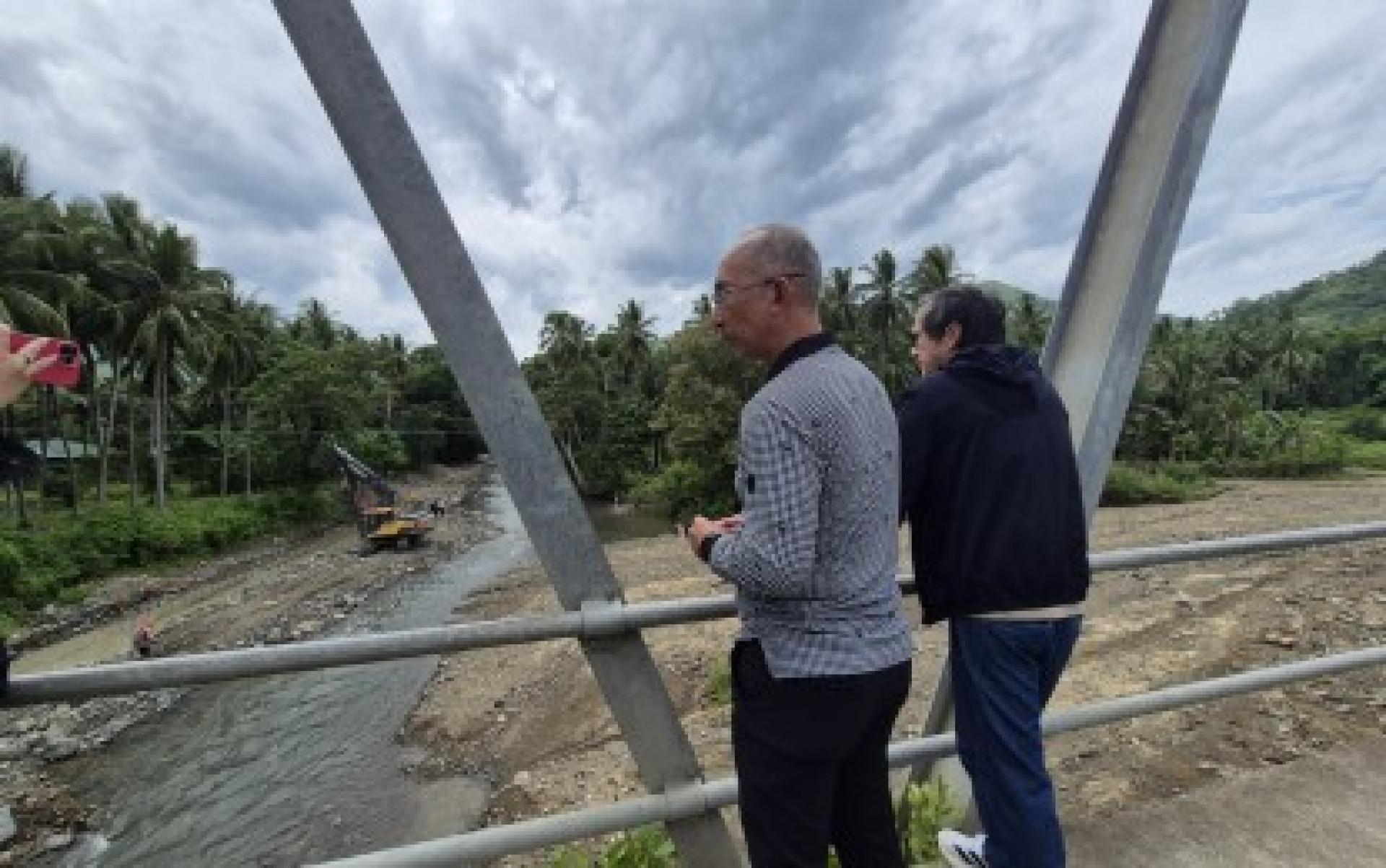
(Manila, 19th, comprehensive report) The Philippine Department of Justice has confirmed that at least 14 flood control projects nationwide have been identified as 'ghost projects', meaning they were listed in plans but do not actually exist. Some cases have already been handed over to the anti-corruption court, while others are still in the preliminary investigation stage.
The Senate Blue Ribbon Committee reconvened on Monday to continue its investigation into the flood control project scandal. Acting Justice Secretary Frederick Vida stated at the meeting that authorities have obtained concrete evidence confirming that the aforementioned 14 projects are fake.
He pointed out that once the Office of the Ombudsman approves and files charges in court, whether to issue an arrest warrant is entirely up to the court. The DOJ must proceed cautiously before prosecution to ensure all evidence can withstand judicial scrutiny.
Vida emphasized that the scope of the investigation must be gradually narrowed in order to make the best use of limited government resources and time. He gave an example: if the Department of Public Works and Highways (DPWH) can confirm that the vast majority of thousands of projects are not ghost projects, it will help investigators focus on the cases that truly involve corruption.
At the same hearing, Senator Erwin Tulfo pointed out that the locations of the projects indicated by the Multi-Year Programming and Scheduling (MYPS) system do not match their actual locations, which increases the difficulty of clarifying which projects are ghost projects.
Relevant agencies also noted that there are errors and inconsistencies in the geographic coordinates used for flood control projects, causing delays when applying for arrest warrants. Authorities must ensure that only cases with solid evidence are brought to court.
DPWH officials admitted that the verification process is time-consuming, as they must confirm whether a project truly does not exist or if the discrepancy is simply between planning diagrams and actual site locations.
DPWH Undersecretary Ricardo Bernabe stated that there are still 421 projects undergoing on-site verification to ensure that the cases submitted to the Ombudsman and the courts indeed involve confirmed ghost projects.
He pointed out that once the Office of the Ombudsman approves and files charges in court, whether to issue an arrest warrant is entirely up to the court. The DOJ must proceed cautiously before prosecution to ensure all evidence can withstand judicial scrutiny.
Vida emphasized that the scope of the investigation must be gradually narrowed in order to make the best use of limited government resources and time. He gave an example: if the Department of Public Works and Highways (DPWH) can confirm that the vast majority of thousands of projects are not ghost projects, it will help investigators focus on the cases that truly involve corruption.
At the same hearing, Senator Erwin Tulfo pointed out that the locations of the projects indicated by the Multi-Year Programming and Scheduling (MYPS) system do not match their actual locations, which increases the difficulty of clarifying which projects are ghost projects.
Relevant agencies also noted that there are errors and inconsistencies in the geographic coordinates used for flood control projects, causing delays when applying for arrest warrants. Authorities must ensure that only cases with solid evidence are brought to court.
DPWH officials admitted that the verification process is time-consuming, as they must confirm whether a project truly does not exist or if the discrepancy is simply between planning diagrams and actual site locations.
DPWH Undersecretary Ricardo Bernabe stated that there are still 421 projects undergoing on-site verification to ensure that the cases submitted to the Ombudsman and the courts indeed involve confirmed ghost projects.