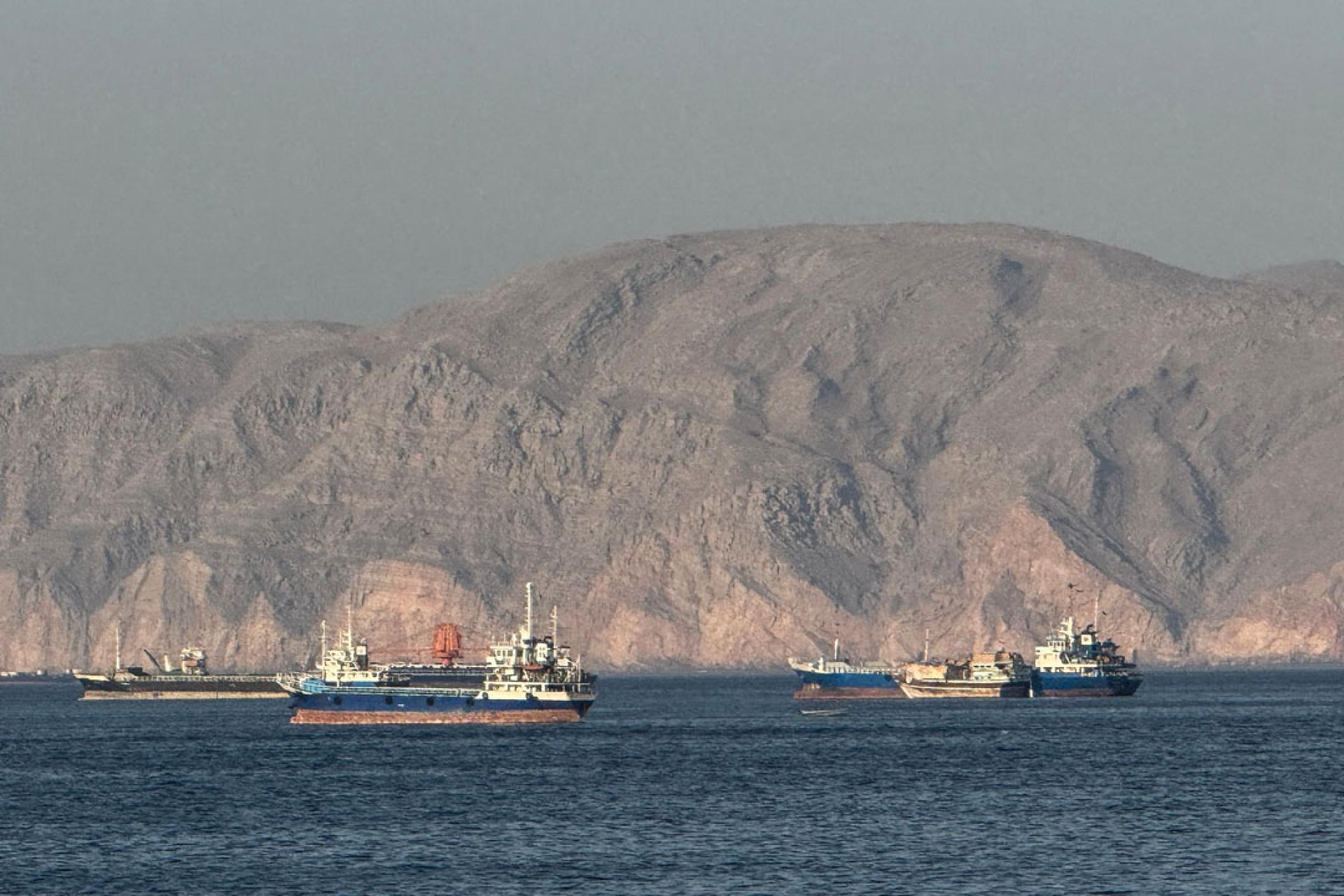
US Treasury Secretary Bessent stated that an agreement between the US and Iran regarding the Strait of Hormuz could be reached on the 4th or 5th.
In an exclusive interview on CNBC's Squawk Box, he said, “We are negotiating with the Iranians. We may have a chance to reach an agreement today or tomorrow to reopen the strait and guide the current conflict situation towards normalization.”
When asked whether Iran could charge ships a passage fee, Bessent stated that it would be free navigation.
He said that once the large number of merchant ships stranded in the Persian Gulf resume navigation, not only will energy supply likely improve, but the transport of goods such as fertilizers, petroleum products, and industrial gases will also return to normal.
US President Trump later also noted that the agreement to reopen the Strait of Hormuz could be reached as early as the 5th, but warned Iran that if the negotiations break down, the country would suffer a heavy blow.
He told Fox News, “The Strait will open soon, or else they will be hit hard—by then the Strait will still be open.”
Temporary Agreement Lasts 60 Days
Meanwhile, US news outlet Axios reported on the 4th that the US, Iran, and Oman are close to reaching a temporary agreement to reopen the Strait of Hormuz, and the US hopes to announce the agreement on the 5th.
The report said that negotiations over a temporary agreement to reopen the Strait of Hormuz have been ongoing for several weeks. The temporary agreement aims to restore the ceasefire status between the US and Iran and restart talks on the Iran nuclear deal, while partially meeting Iran’s demand for greater control over the Strait of Hormuz — a level of control it did not have before hostilities began.
Citing two regional sources, the report stated that the temporary agreement under discussion sets a 60-day arrangement for reopening the Strait of Hormuz, to be jointly implemented by Oman and Iran, with the possibility of extension.
Specifics include: all ships entering the Persian Gulf via the strait will use the northern passage through Iranian waters; all ships leaving for the Arabian Sea will use the southern passage through Omani waters, in coordination with Iran. No passage or other fees will be charged within the 60-day period. All parties will clear the central strait passage of mines within 30 days. After demining is completed, the central passage will be used for ship navigation under the permanent arrangements to be negotiated between Oman and Iran.
The report pointed out that in addition to talks between Oman and Iran, officials from Qatar, Pakistan, and Saudi Arabia also joined mediation efforts, with the US actively participating in the negotiations. US Presidential Envoy Wittkoff spoke multiple times recently with Iranian Foreign Minister Aragchi and Omani Foreign Minister Badr.
According to two regional sources, Aragchi has agreed to the agreement in principle last weekend, but it still requires approval from Iran’s Supreme Leader Mujtaba and the Supreme National Security Council. A US official and a regional source indicated that Iran's leadership had completed the approval process on the 4th.
Negotiations Making Positive Progress
Iranian Foreign Ministry spokesman Baghaei said on the 4th that Iran is still negotiating with Oman over the Strait of Hormuz, and talks have made positive progress on technical and political levels.
He said the focus of this round of talks is to determine safe passages for ships. Iran is working with Oman to develop necessary mechanisms for managing maritime traffic in the strait, and the final results will be announced to the public after all negotiations have concluded.
No Passage Fee, but Service Fees Will Be Charged
An Iranian official stated that the proposed plan under negotiation would not levy passage fees, but service fees would be charged to cover the environmental impact of shipping, security for cargo and oil tankers, and personnel costs, with income to be equally shared by Iran and Oman.
International Oil Prices Fall Over 5%
Buoyed by optimism that a US-Iran agreement on the Strait of Hormuz might be imminent, international crude oil futures prices fell sharply in early trading on the 4th, fluctuated weakly during the session, and closed down more than 5%.
At the close of trading that day, New York Mercantile Exchange light crude oil futures for September delivery fell $4.57 to close at $75.77 per barrel, down 5.69%; October delivery Brent crude futures fell $4.41 to close at $79.36 (about RM324.86) per barrel, a drop of 5.26%.