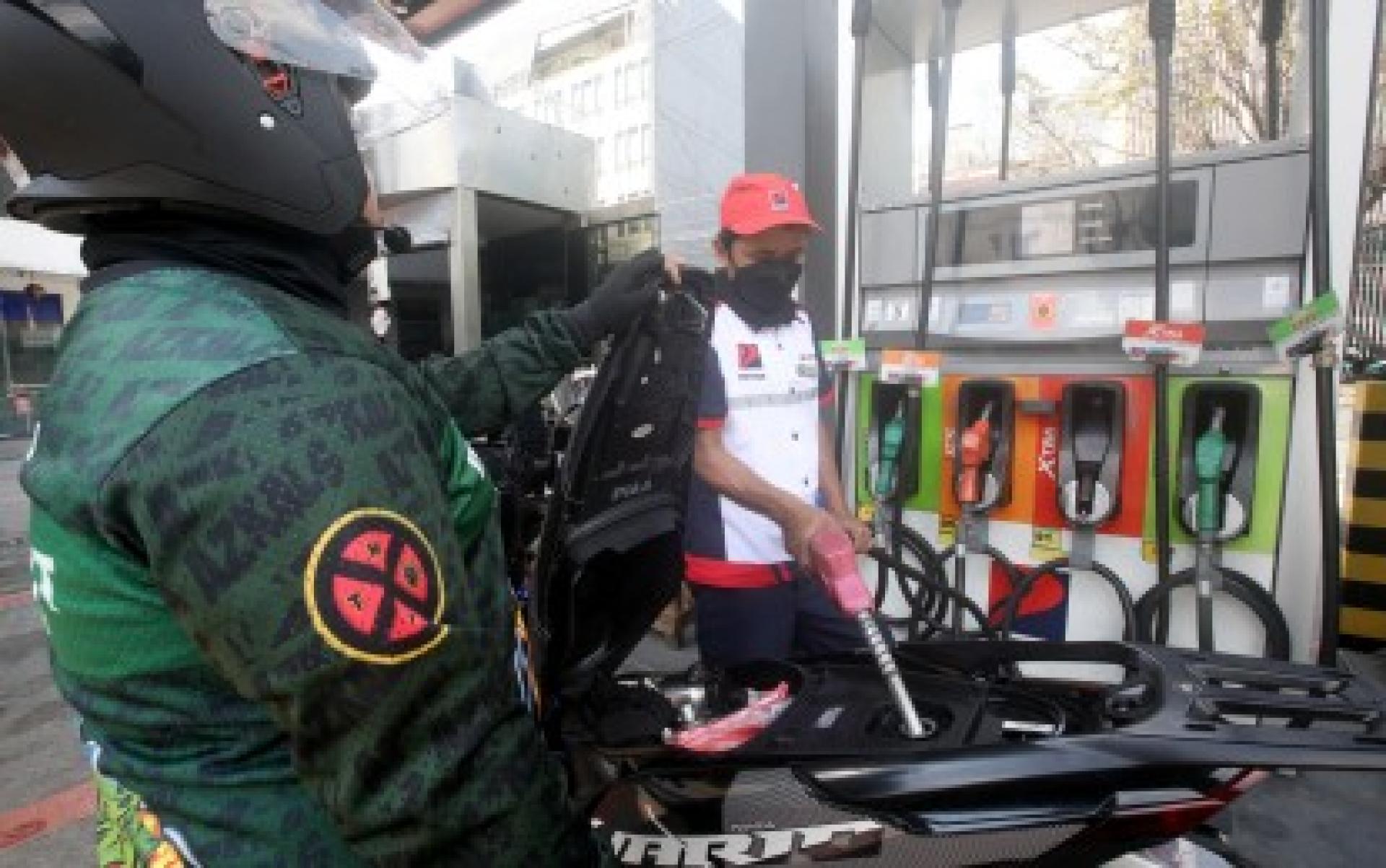
As global oil prices continue to rise, several Philippine senators are calling on the government to take measures to soften the impact on the public, including granting the president greater authority to lower fuel taxes and providing fuel subsidies in advance to workers in the transport and agriculture sectors.
Senator Francis Escudero stated that the Tax Reform for Acceleration and Inclusion (TRAIN) Law should be amended so that when international oil prices exceed the Dubai crude price range used in the government’s budget assumptions, the president would automatically be granted the power to suspend or lower excise and value-added taxes on petroleum products.
He said the relevant law should be adjusted so that once international oil prices go beyond the government’s budgeted Dubai crude price estimates, the president can automatically suspend or reduce fuel excise and value-added taxes.
Escudero pointed out that the government should not reap a “windfall” from excise taxes due to uncontrollable oil price increases, while letting the public bear higher living costs.
He made these suggestions after Philippine President Ferdinand Marcos stated that if Dubai crude prices rise to 80 US dollars per barrel, he would seek emergency powers from Congress to lower excise taxes on petroleum products.
Meanwhile, Senator Raffy Tulfo called on the government to provide fuel subsidies to public transport drivers and workers in the agriculture sector in advance, before international oil prices hit 80 US dollars per barrel.
Tulfo, who chairs the Senate Committee on Public Services, recently held an online coordination meeting with the Department of Transportation, Department of Energy, Department of Agriculture, and the Bureau of Fisheries and Aquatic Resources to understand government measures to address rising oil prices, especially given the tense situation in the Middle East.
He pointed out that Middle East conflicts are bound to impact global oil prices, that many gas stations have already been allowed to increase pump prices, and that public transport drivers, farmers, and fishermen will be among the first to be affected.
Tulfo also questioned why the government’s policy requires waiting for Dubai crude prices to reach 80 US dollars per barrel before distributing fuel subsidies.
He said that even before prices reach that level, oil companies have continued to raise prices, so the government should re-examine this threshold in order to help affected groups earlier.