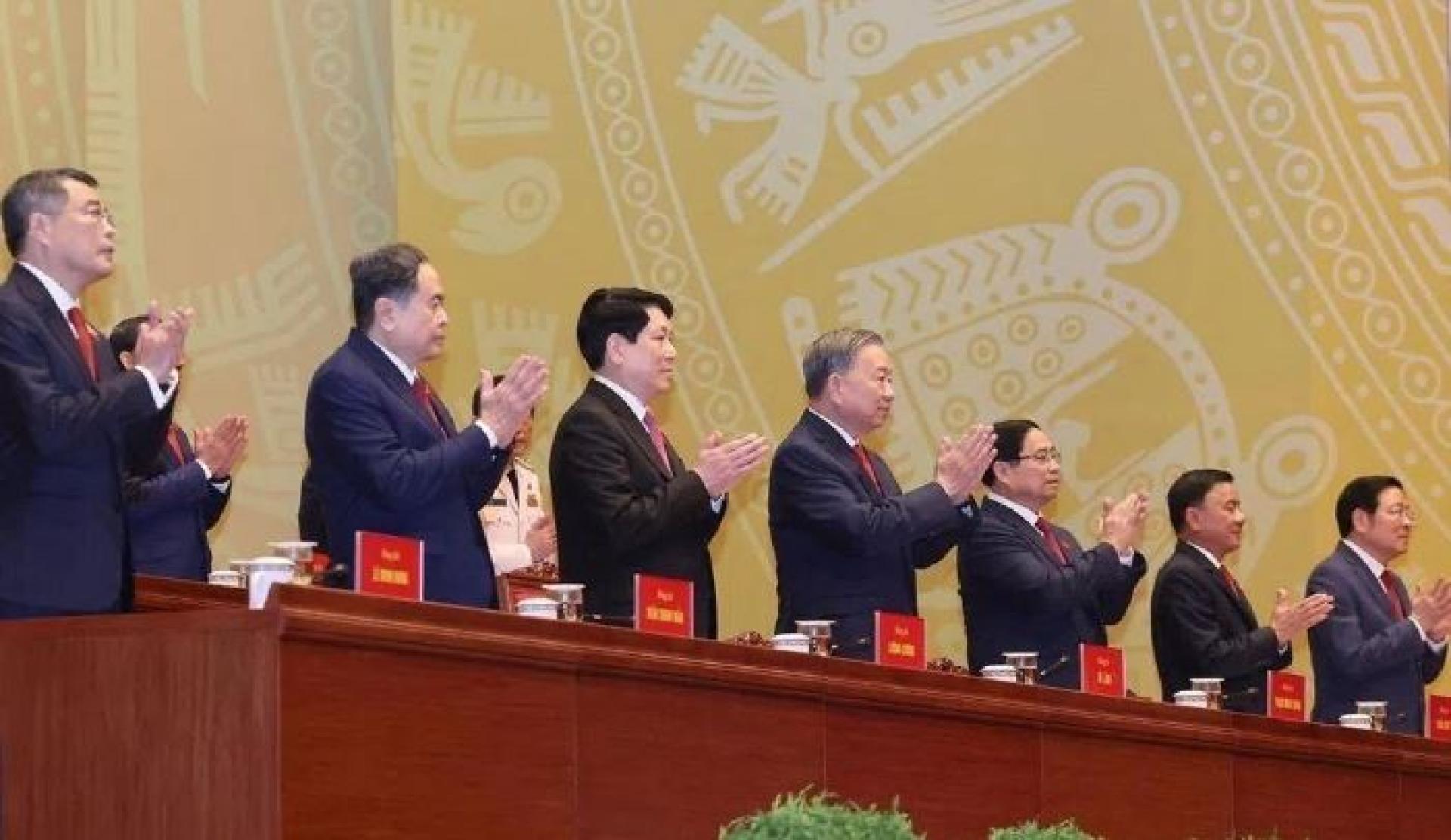
(Hanoi, 21st, Comprehensive News) The 14th National Congress of the Communist Party of Vietnam officially opened in Hanoi on Tuesday (January 20). In a nearly 40-minute policy speech, General Secretary of the Communist Party of Vietnam, To Lam, pledged that during the period from 2026 to 2030, Vietnam's average annual economic growth target would not be less than 10%, and called for the country’s governance system to be reshaped through a “new model.”
In his speech, To Lam emphasized that the country must innovate its thinking, improve its institutions, and enhance its governance capacity, pointing out that many well-intentioned policies in the past have not been effectively implemented. He stated that despite facing challenges such as natural disasters, geopolitical competition, and interruptions in energy supply chains, Vietnam will continue to pursue its ultra-high growth targets.
He reiterated that the private economy would become one of the most important engines for growth, and that technological innovation also played a crucial role. At the same time, To Lam pledged to continue combating corruption, reducing bureaucracy, and strengthening infrastructure construction, ensuring regional, cross-regional, and global connectivity, with development adapted to climate change.
Analysts pointed out that the 10% growth target not only reflects economic expectations but also demonstrates the urgency and determination of Vietnam’s reforms. Foster, Managing Director of Synergy Consulting Management, ASEAN region, stated that ongoing administrative reforms and infrastructure construction help attract foreign investment, but achieving an average annual growth rate of 10% would require high productivity, a stable external environment, strong domestic execution, and profound structural transformation.
The Vietnamese government has previously set long-term development goals, aiming to become an upper-middle-income country by 2030 and a high-income country by 2045. Foster believes that this policy is both a goal and a mobilizing signal, providing policy continuity guarantees for infrastructure, education, and industrial upgrading.
He reiterated that the private economy would become one of the most important engines for growth, and that technological innovation also played a crucial role. At the same time, To Lam pledged to continue combating corruption, reducing bureaucracy, and strengthening infrastructure construction, ensuring regional, cross-regional, and global connectivity, with development adapted to climate change.
Analysts pointed out that the 10% growth target not only reflects economic expectations but also demonstrates the urgency and determination of Vietnam’s reforms. Foster, Managing Director of Synergy Consulting Management, ASEAN region, stated that ongoing administrative reforms and infrastructure construction help attract foreign investment, but achieving an average annual growth rate of 10% would require high productivity, a stable external environment, strong domestic execution, and profound structural transformation.
The Vietnamese government has previously set long-term development goals, aiming to become an upper-middle-income country by 2030 and a high-income country by 2045. Foster believes that this policy is both a goal and a mobilizing signal, providing policy continuity guarantees for infrastructure, education, and industrial upgrading.