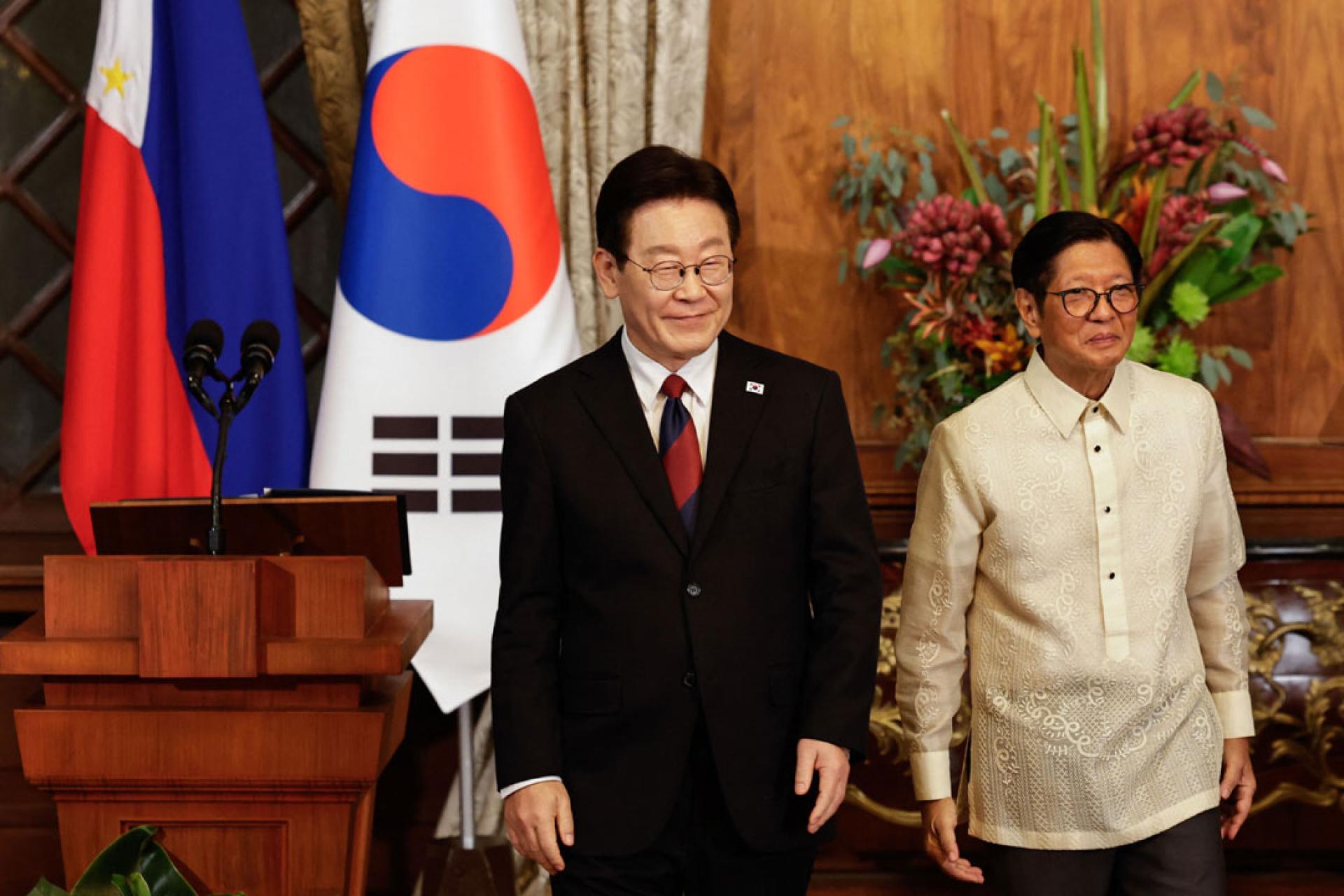
Philippine President Marcos Jr. and visiting South Korean President Lee Jae-myung reached a consensus on the 3rd to deepen cooperation between the two countries in strategic fields such as defense, shipbuilding, and energy, to address the increasingly severe regional situation and uncertainties brought about by the Middle East conflicts.
According to Bloomberg and other foreign media reports, Lee Jae-myung held a summit meeting with Marcos Jr. in Manila on Tuesday. At the subsequent press conference, he said: “South Korea and the Philippines have agreed to further strengthen cooperation in strategic sectors such as infrastructure and the defense industry.”
In addition to traditional trade, the two leaders agreed to expand the scope of cooperation into new areas of growth such as shipbuilding, nuclear energy, supply chains, and artificial intelligence (AI).
South Korea is a major trading partner for the Philippines. In 2023, the two countries signed a free trade agreement, and in the following year elevated their bilateral relationship to a strategic partnership. In the Philippines' push for military modernization, South Korea has played a key role, supplying several frigates and fighter jets to the Philippines. Last year, South Korean shipbuilding giant HD Hyundai Heavy Industries also began shipbuilding operations in Subic Bay, Philippines.
● Concerns Over South China Sea and Middle East Situation
The two leaders also exchanged views on current international affairs. Marcos Jr. pointed out that he and Lee Jae-myung discussed regional issues such as the South China Sea and the Korean Peninsula, and both agreed that geopolitical uncertainties are increasing.
The two national leaders also expressed deep concern about the situation in the Middle East. Lee Jae-myung said: “We hope that peace and stability in the Middle East can be restored soon.”
Due to Tehran’s threats to close the Hormuz Strait, a vital artery for global trade, both the Philippines and South Korea—countries highly dependent on energy imports—are under immense pressure.
During Lee Jae-myung’s state visit, the Philippines and South Korea also signed several memoranda of understanding covering areas such as digital technology, procurement of specific defense equipment, agriculture, intellectual property, culture, education, and police investigations.
Both sides reiterated their commitment to jointly uphold a rules-based international order, especially in the maritime domain, to ensure the region’s long-term security and prosperity.
In addition to traditional trade, the two leaders agreed to expand the scope of cooperation into new areas of growth such as shipbuilding, nuclear energy, supply chains, and artificial intelligence (AI).
South Korea is a major trading partner for the Philippines. In 2023, the two countries signed a free trade agreement, and in the following year elevated their bilateral relationship to a strategic partnership. In the Philippines' push for military modernization, South Korea has played a key role, supplying several frigates and fighter jets to the Philippines. Last year, South Korean shipbuilding giant HD Hyundai Heavy Industries also began shipbuilding operations in Subic Bay, Philippines.
● Concerns Over South China Sea and Middle East Situation
The two leaders also exchanged views on current international affairs. Marcos Jr. pointed out that he and Lee Jae-myung discussed regional issues such as the South China Sea and the Korean Peninsula, and both agreed that geopolitical uncertainties are increasing.
The two national leaders also expressed deep concern about the situation in the Middle East. Lee Jae-myung said: “We hope that peace and stability in the Middle East can be restored soon.”
Due to Tehran’s threats to close the Hormuz Strait, a vital artery for global trade, both the Philippines and South Korea—countries highly dependent on energy imports—are under immense pressure.
During Lee Jae-myung’s state visit, the Philippines and South Korea also signed several memoranda of understanding covering areas such as digital technology, procurement of specific defense equipment, agriculture, intellectual property, culture, education, and police investigations.
Both sides reiterated their commitment to jointly uphold a rules-based international order, especially in the maritime domain, to ensure the region’s long-term security and prosperity.