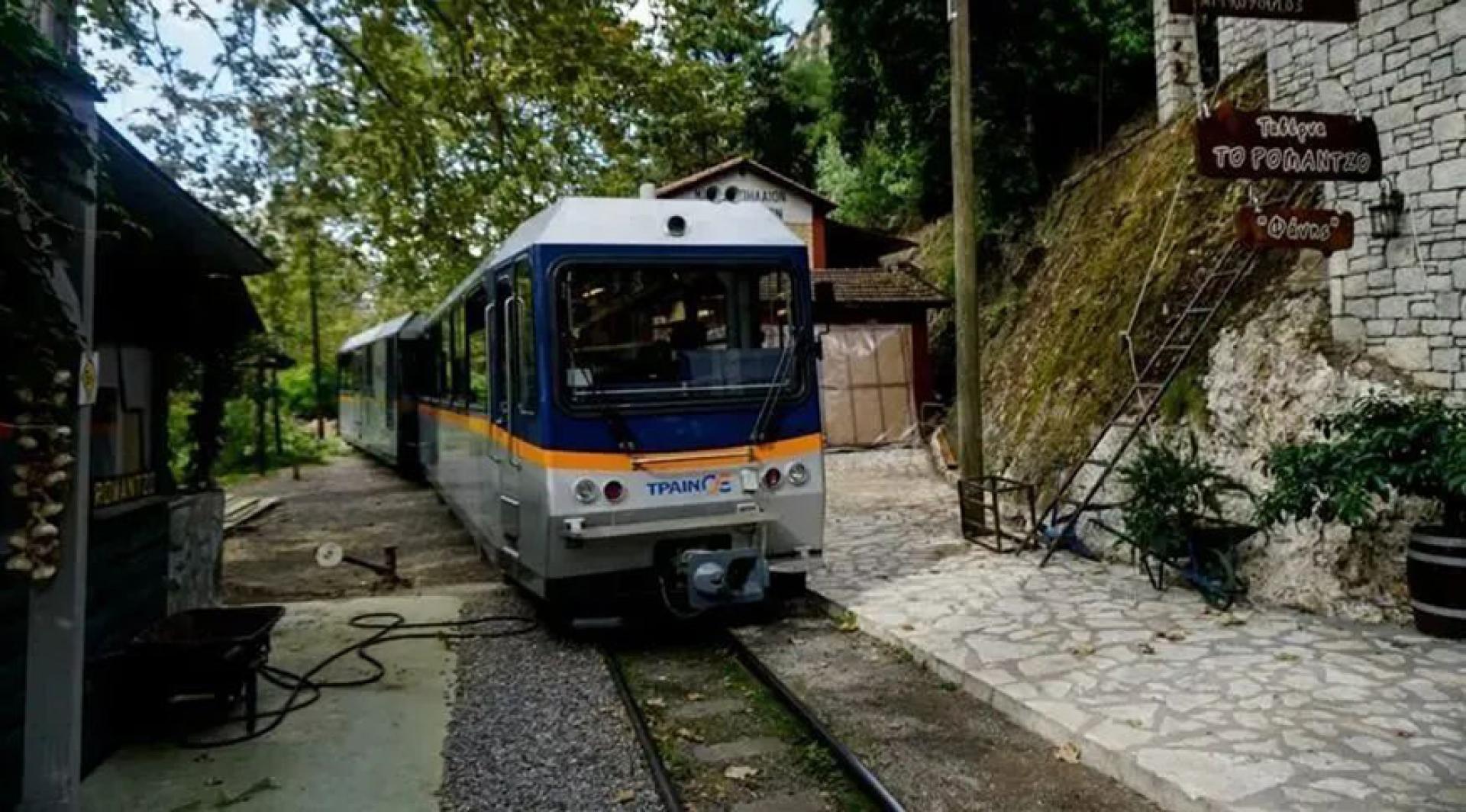
A Greek cog railway with 130 years of history, considered one of the country's most iconic rail tourist routes, has recently announced an indefinite suspension, sparking widespread concern and controversy. The operator, Hellenic Railways Organization (OSE), stated that due to frequent landslides and falling rocks along the route, in order to ensure passenger safety, the historic train connecting Diakopto and Kalavryta will cease operations until new geological assessments and safety studies are completed.
However, this decision has also triggered strong doubts from local governments, experts, and members of the public. Critics argue that the suspension is not due to a "sudden natural disaster," but rather the result of years of insufficient maintenance and policy delays.
Built at the end of the 19th century, this cog railway is one of the most famous mountain railways in Greece. Its steep gradient and spectacular scenery have made it a popular tourist attraction.
According to the statement from the Hellenic Railways Organization, climate change in recent years has led to an increase in extreme weather, resulting in more landslides and falling rocks in the Chelmos mountain region along the line, posing a potential threat to train operations. Therefore, a suspension is necessary.
Official data shows that in the year 2025 alone, this route recorded 25 safety incidents, including 11 equipment failures, 1 infrastructure problem, 7 incidents of rock or mud falling onto the tracks, and 6 other accidents.
In addition, from the beginning of 2023 to the first quarter of 2025, a total of 889 train services on this route were cancelled, with 816 of those related to landslides or falling rocks.
Safety issues have also repeatedly led to passengers being stranded. In February this year, a train traveling from Kalavryta to Diakopto broke down seriously in the mountains, with 77 passengers stranded for several hours and finally needing rescue teams to enter the canyon to organize their evacuation. In January this year, another train collided with a large rock that had rolled down the mountainside, but fortunately, no casualties occurred.
Apart from natural factors, aging train equipment is also considered an important reason for the frequent accidents. The trains currently operating on this line were manufactured in 2007, and some key electronic systems are no longer supported by the manufacturer, making repairs and parts supply increasingly difficult.
However, some local government representatives have questioned this, pointing out that other European railway systems still use similar trains and argue that "lack of spare parts" should not be an excuse for long-term malfunctions.
Ironically, a celebration had just been held locally to mark the line's 130th anniversary, and only a few days later, the suspension was officially announced. Former Greek Prime Minister George Papandreou, who attended the 130th anniversary event, stated that safety must come first, but it should not be used as an excuse to close the line.