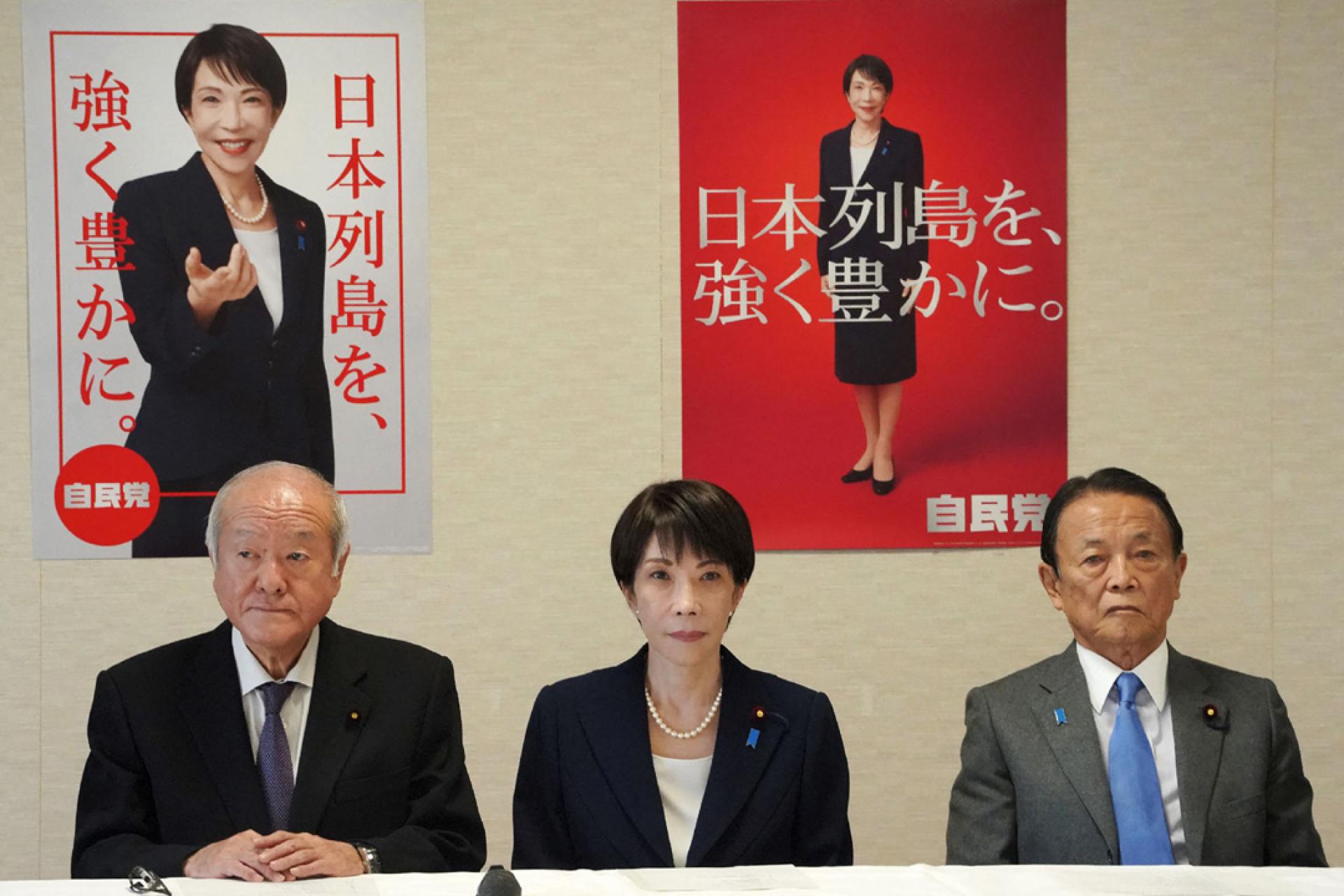
Japanese Prime Minister Sanae Takaichi held a press conference on the 19th, announcing that she would dissolve the House of Representatives at the start of the regular Diet session on the 23rd, with the House of Representatives election to be held on February 8.
At the press conference, she declared, “If I lose this election, I am prepared to step down,” effectively staking her political career.
She indicated that dissolving the Diet this time was to allow the people to directly choose the prime minister.
She said: “I am staking my premiership on this election, hoping the people will directly decide whether to trust Sanae Takaichi to lead the country. If the Liberal Democratic Party (LDP) and the Japan Innovation Party win the majority of seats, Sanae Takaichi will continue as prime minister. While it is an indirect election, it also means the people will effectively choose the prime minister directly.”
With rising prices being a major concern for Japanese households, the ruling LDP and Innovation Party are putting their proposed measure of “cutting the food consumption tax” to the people for judgment.
On diplomacy and security, Sanae Takaichi also believes it is necessary to seek support through this election.
Sanae Takaichi ran for LDP president for the third time on October 4 last year and became prime minister. The new election will be officially announced on the 27th, with voting held on February 8.
As there are only 16 days between the dissolution and the voting day, opposition parties have vigorously criticized Takaichi's decision to hold an early election, arguing that she is only considering her own political interests and taking advantage of her relatively high approval ratings to mislead public opinion.
The term of office for the current Japanese House of Representatives members was originally set to expire in October 2028. According to the Japanese Constitution, the Diet must be convened within 30 days of a House of Representatives election to hold the prime ministerial nomination election.
“Centrist Reform Union” Advocates Upholding the “Three Non-Nuclear Principles”
On the 19th, Japan’s opposition Constitutional Democratic Party and Komeito held a press conference, releasing the platform and basic policies of the new joint party, the “Centrist Reform Union.” The new party advocates upholding the “Three Non-Nuclear Principles.”
In terms of basic policies, the “Centrist Reform Union” also calls for a shift in economic policy to “put people’s lives first,” correction of excessive yen depreciation, and lowering the prices of essential goods. The party platform's main points include sustainable economic growth, building a new type of social security, realizing an inclusive society, and pursuing pragmatic diplomatic and defense policies.
The Constitutional Democratic Party and Komeito officially finalized the formation of the new party, “Centrist Reform Union,” on the 16th, aiming to join forces against Prime Minister Sanae Takaichi’s governing coalition in the upcoming House of Representatives election.
Before the dissolution of the House, the LDP and its affiliated independents held 199 seats, while the other governing partner, the Innovation Party, held 34 seats. The Constitutional Democratic Party and its affiliated independents had 148 seats, and the Citizens’ Party had 24 seats. The Japanese House of Representatives has a total of 465 seats, with the majority being 233 seats.
In the House of Representatives election held in October 2024, the LDP and Komeito's ruling coalition won a total of 215 seats, falling short of a majority, but then-Prime Minister Shigeru Ishiba continued to serve. However, as the LDP continued to lose seats in the House of Councillors election in July 2025, facing internal party pressure, Ishiba announced his resignation.