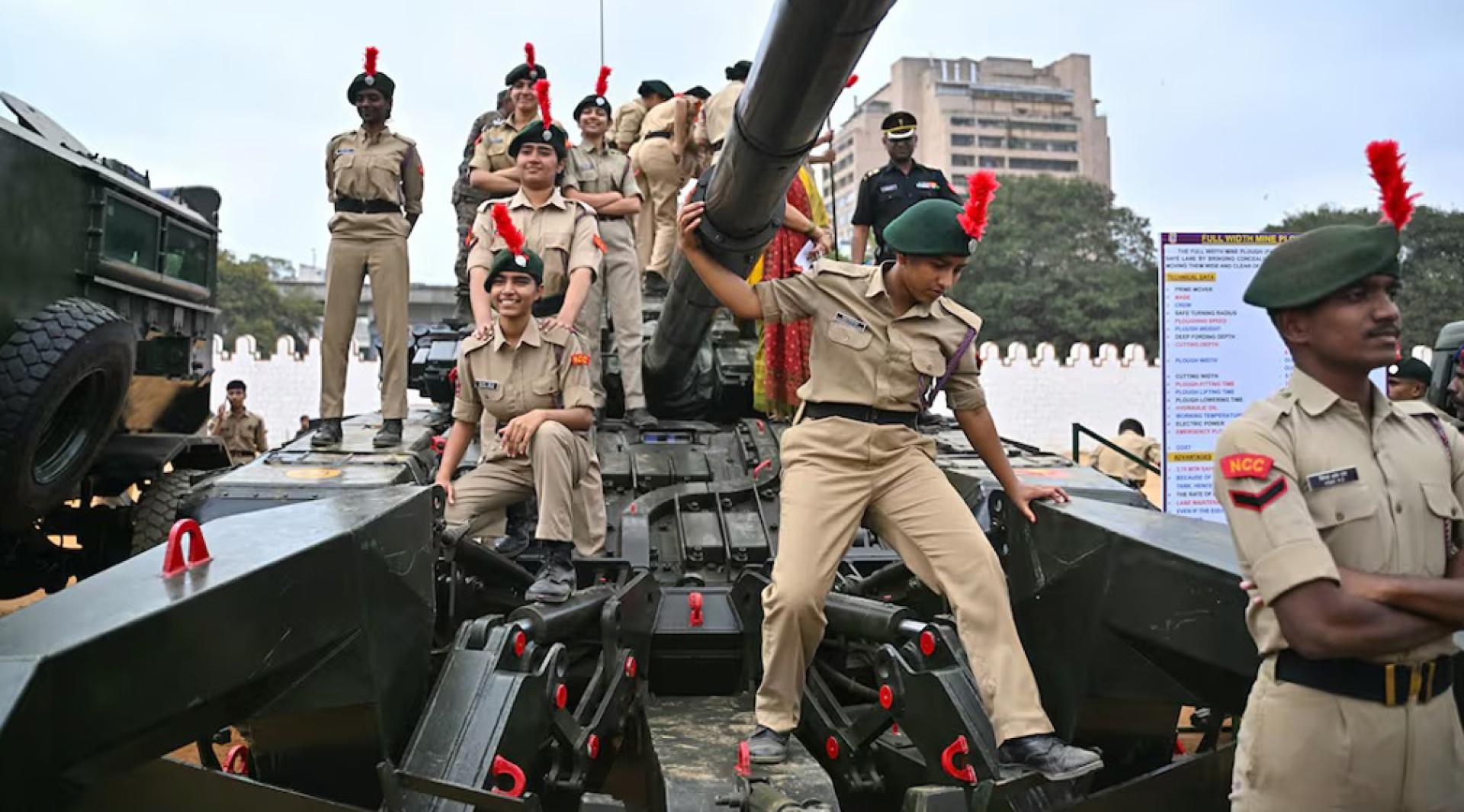
According to the latest report from the Stockholm International Peace Research Institute, global weapons transactions have increased by nearly 10% over the past five years. Against the backdrop of tense relations with China and Pakistan, India has become Asia's largest arms importer.
The report points out that between 2021 and 2025, the volume of major global arms transactions increased by 9.2% compared to the previous five-year period, with India being the largest arms importer in Asia, accounting for 8.2% of the global total, second only to Ukraine.
The Stockholm International Peace Research Institute says that this is mainly due to India's “tense relations with China and Pakistan”. These three nuclear-armed Asian countries have had multiple traditional conflicts, including sporadic clashes along the India-China border, as well as an escalation of hostilities between India and Pakistan in May last year.
Although India is the world’s second largest arms importer, its actual import volume has fallen by 4%. The Stockholm International Peace Research Institute believes that part of the reason is India’s “improved capability to independently design and produce weapons.” In addition, India is also gradually reducing its reliance on Russia, its traditional primary supplier.
China is the world’s fifth largest arms exporter
Chinese weapons are mainly sold to Asia and Oceania, accounting for 77% of total exports.
China is the world’s fifth largest arms exporter, accounting for 5.6% of the global total. In the past five years, weapons sold by China to Pakistan accounted for 61% of its arms exports, with Thailand also being one of the main buyers, making up 4.7%.
In terms of regions, Chinese arms are mainly exported to Asia and Oceania, making up 77% of its total exports. China also exports 13% of its weapons to Africa, including Algeria, and another 6.5% to Serbia. Serbia is one of China’s closest partners in Europe.
Europe becomes the world’s largest arms-receiving region
Additionally, in the past five years, the global volume of weapons transactions has increased by nearly 10%, with Europe’s import volume more than tripling.
According to the report, European countries’ arms purchases have surged, at least partly because countries are procuring weapons to supply Ukraine, as well as seeking to boost their own military capabilities in response to potential threats from Russia. Between 2021 and 2025, the volume of global arms transactions increased by 9.2% compared to the previous five years.
Although Europe’s weapons imports have not yet reached levels seen during the Cold War, the director of the Peace Research Institute’s Arms Transfers Program, George, told AFP: “Europe is now the world’s largest arms-receiving region.”
European countries account for 33% of the world’s total arms imports, a dramatic increase of 210% compared to the previous five-year period.
The Stockholm International Peace Research Institute says that this is mainly due to India's “tense relations with China and Pakistan”. These three nuclear-armed Asian countries have had multiple traditional conflicts, including sporadic clashes along the India-China border, as well as an escalation of hostilities between India and Pakistan in May last year.
Although India is the world’s second largest arms importer, its actual import volume has fallen by 4%. The Stockholm International Peace Research Institute believes that part of the reason is India’s “improved capability to independently design and produce weapons.” In addition, India is also gradually reducing its reliance on Russia, its traditional primary supplier.
China is the world’s fifth largest arms exporter
Chinese weapons are mainly sold to Asia and Oceania, accounting for 77% of total exports.
China is the world’s fifth largest arms exporter, accounting for 5.6% of the global total. In the past five years, weapons sold by China to Pakistan accounted for 61% of its arms exports, with Thailand also being one of the main buyers, making up 4.7%.
In terms of regions, Chinese arms are mainly exported to Asia and Oceania, making up 77% of its total exports. China also exports 13% of its weapons to Africa, including Algeria, and another 6.5% to Serbia. Serbia is one of China’s closest partners in Europe.
Europe becomes the world’s largest arms-receiving region
Additionally, in the past five years, the global volume of weapons transactions has increased by nearly 10%, with Europe’s import volume more than tripling.
According to the report, European countries’ arms purchases have surged, at least partly because countries are procuring weapons to supply Ukraine, as well as seeking to boost their own military capabilities in response to potential threats from Russia. Between 2021 and 2025, the volume of global arms transactions increased by 9.2% compared to the previous five years.
Although Europe’s weapons imports have not yet reached levels seen during the Cold War, the director of the Peace Research Institute’s Arms Transfers Program, George, told AFP: “Europe is now the world’s largest arms-receiving region.”
European countries account for 33% of the world’s total arms imports, a dramatic increase of 210% compared to the previous five-year period.