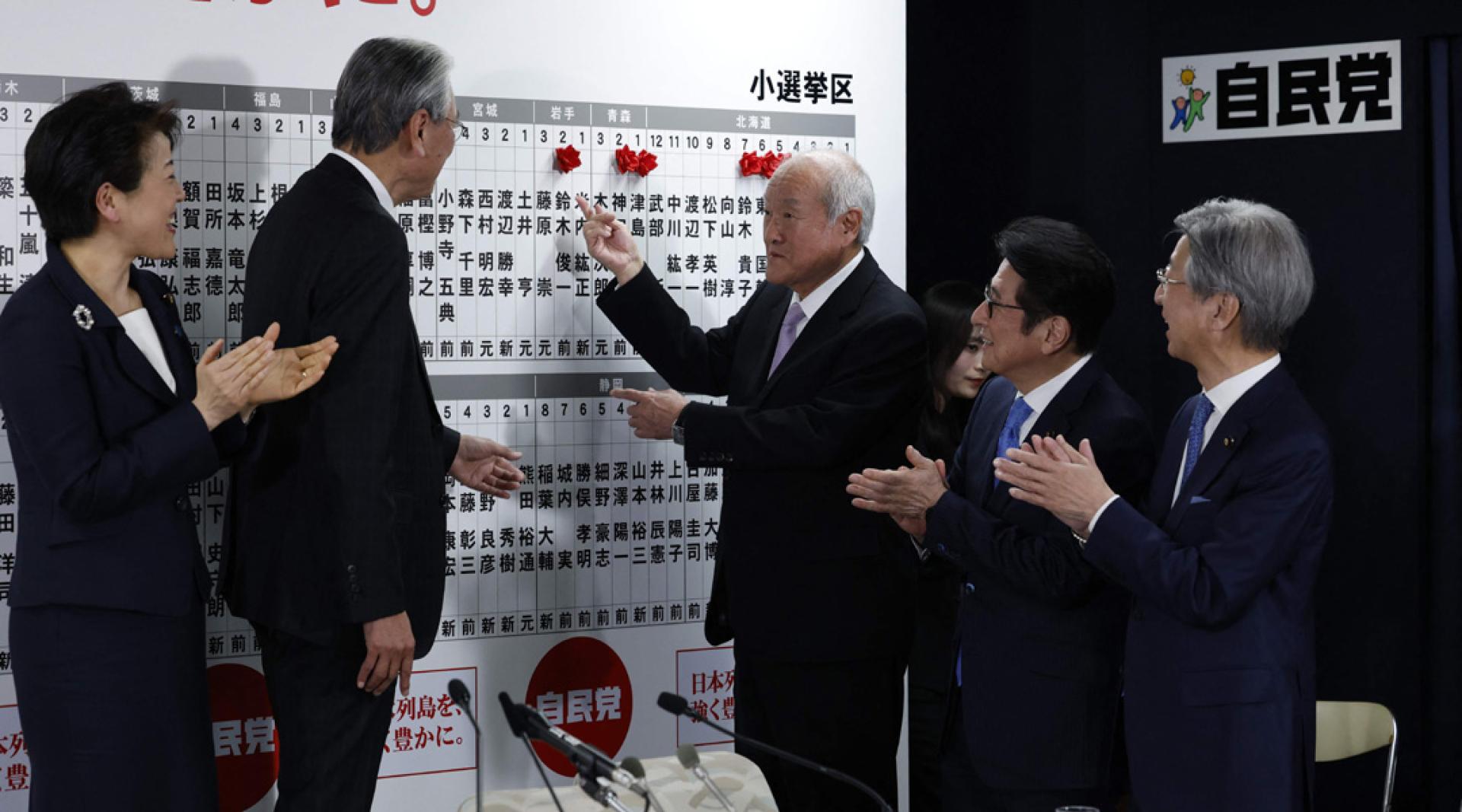
The results of Japan's House of Representatives election were officially announced on the 9th, with the Liberal Democratic Party (LDP) winning more than two-thirds of the seats. This election not only consolidated the LDP’s ruling foundation, but also drew the attention of the international community to the direction of Japanese politics: Why was the LDP able to gain overwhelming support? What changes will occur in Japan’s security, economic, and foreign policies? And how will these changes impact the regional situation?
Several interviewed scholars pointed out that this LDP victory was not accidental, but was closely related to shifts in the Japanese electorate and social sentiment: "There is a very evident trend of conservatism and rightward shift among Japan’s youth and middle-aged groups."
Japanese historian and Yamaguchi University Professor Emeritus Atsushi Koketsu stated that the main reason for the LDP’s victory is that previously apathetic, but increasingly conservative, young and middle-aged voters cast their ballots for the LDP led by Sanae Takaichi.
Liu Jiangyong, Professor at the Department of International Relations at Tsinghua University, believes that Sanae Takaichi's tough stance attracted right-wing voters and those with security anxieties, and her personal popularity became a key factor propelling the LDP to victory.
Lu Yaodong, a researcher at the Chinese Academy of Social Sciences’ Institute of Japanese Studies, also pointed out that Japan's prolonged economic stagnation has led some young people to develop tendencies of extreme nationalism. Meanwhile, the LDP has stirred populist sentiment around issues such as security and foreign labor, and Takaichi's political positions have precisely matched this trend, with her personal popularity further boosting the party’s approval ratings.
Against this backdrop, there is strong interest in Japan’s future policy direction. In the field of security, Atsushi Koketsu believes that the Takaichi administration is very likely to push through long-brewing nationalist and right-leaning legislative policies in one go, such as further expanding the Self-Defense Forces’ armaments. “It is foreseeable that the ‘runaway Takaichi administration’ will fully unfold.”
Liu Jiangyong also noted that Takaichi is likely to push doggedly for her established lines in the future, including advocating constitutional revision, formulating a new national security strategy, and greatly enhancing Japan’s operational capabilities. However, Liu believes that in the short term it may be difficult for the Takaichi administration to actually achieve constitutional revision.
Liu Jiangyong said: “In this election, the LDP's extreme rhetoric was strongly denounced by opposition parties, especially progressive forces. This shows that there are still some insightful people in Japan who can distinguish right from wrong and adhere to peace. Although they are not currently in a leading position, this force will continue to exist, and Japan’s domestic political struggle will not stop because of this.”
In the economic sphere, Sanae Takaichi previously proposed that the LDP would implement a “responsible and proactive fiscal policy”, including measures such as reducing the consumption tax. On this, Lu Yaodong said the LDP is currently using “empty promises” to buy public support. In the short term, pressure might be eased by subsidizing businesses and reducing food taxes, but fundamentally, Japan's economic problems will be hard to resolve. Liu Jiangyong believes the Takaichi administration faces contradictions in its economic policy, and that the LDP’s measures to win votes may ultimately exacerbate the adverse effects of yen depreciation on Japan’s economy.
Regarding Japan’s future diplomacy with neighboring countries and the regional situation, Lu Yaodong pointed out that Japan launched brutal and barbaric aggression against East Asia during World War II, and that today the LDP is stoking anti-China sentiment in Japanese society to push for constitutional amendment, break away from the post-war system, and seek to rearm the nation. This strategic intent will become a negative factor for peace and stability in East Asia.