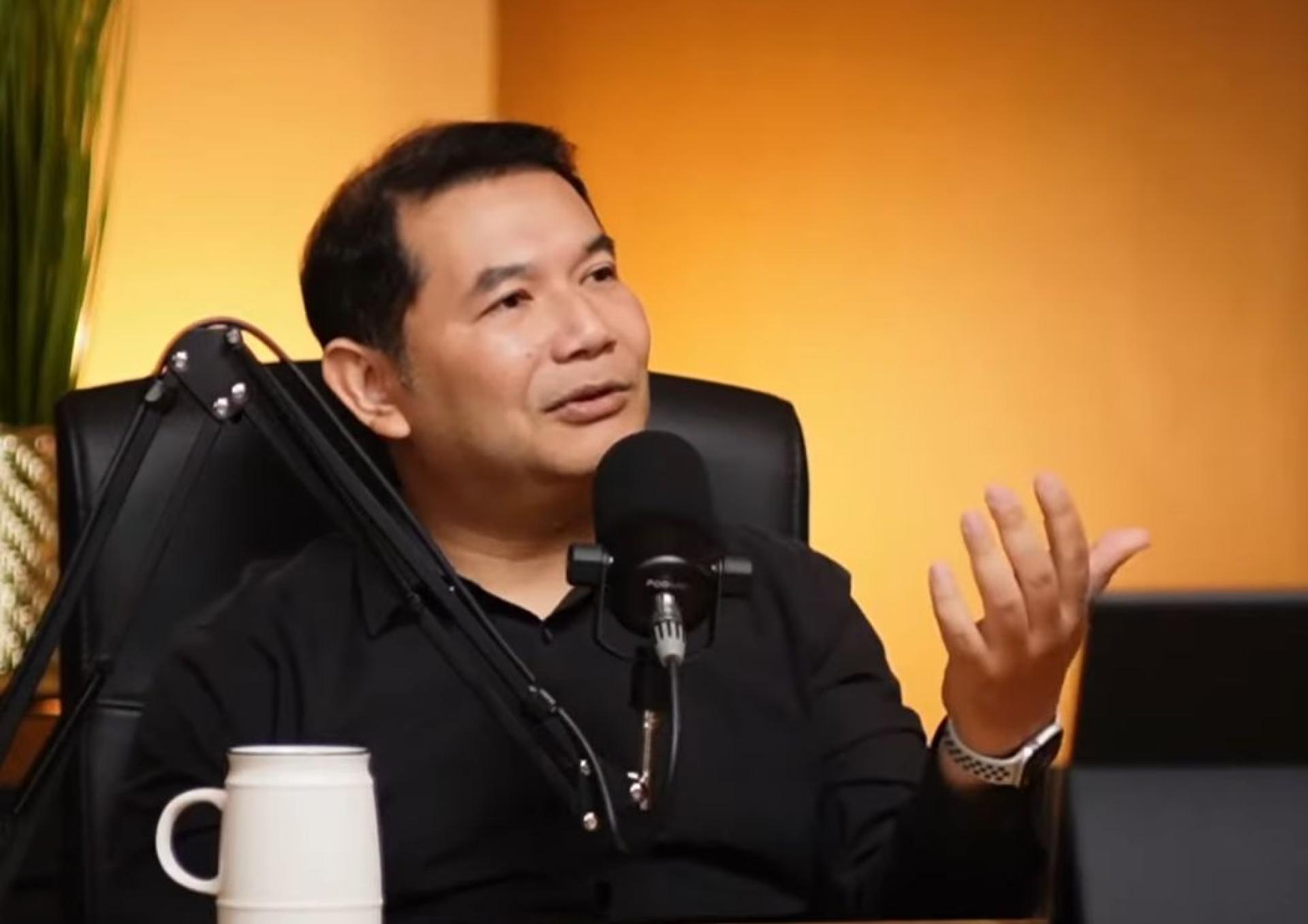
Former Minister of Economy Dato’ Seri Rafizi pointed out that China’s economic strength and global influence are expected to surpass the United States. Therefore, the government and society must move beyond emotions and political frameworks, accelerate the improvement of Malaysians’ proficiency in the Chinese language, and be prepared to embrace a trilingual society in order to meet the development needs of the globalization era.
He said that China’s economic strength and global influence are expected to surpass the United States in 10 to 15 years. Therefore, Malaysia needs to become a trilingual society, enabling our younger generation to communicate fluently in Malay, while also mastering English and Chinese.
“We must pay attention to our children’s future, especially the future of Malay children. But currently, our children are already struggling with their studies. We teach our children English because it is important; with good English proficiency, graduating from university will make it easier for them to find good jobs.”
“However, this situation may no longer apply in the next 20 years, because by then, Chinese is very likely to have surpassed English as the main language of knowledge exchange and business trade. Suppose a five-year-old child grows up in 20 years without understanding Chinese – that would really be problematic.”
He emphasized that this is a reality that must be accepted, and national leaders cannot pretend that Chinese is not important. Instead, it must be clearly recognized that being bilingual is no longer enough, and we must enter the era of trilingualism.
Rafizi, who is also the Member of Parliament for Pandan, expressed these views in the latest episode of his podcast “The Resigned Minister” when discussing the issue of recognizing the Unified Examination Certificate (UEC).
He also said that the issue of recognizing UEC should not be viewed solely from a political angle but should be understood objectively. It is not only about an exam, but also represents the history and efforts of the Chinese community in the field of education.
“It is often claimed that the existence of Chinese schools is the cause of national disunity, and that the UEC will affect the national education system, but in reality, this statement is not correct.”
He said this is because, among the total of 400,000 Chinese secondary students, only about 90,000 enroll to take the UEC, which is about 20% of the total students. The remaining 80% of Chinese students are still within the national education system.
“As Chinese gradually becomes an important advantage and China rises as a world power, interaction with China has become an unavoidable reality. Therefore, excluding the UEC out of narrow political considerations is essentially depriving and denying the next generation the opportunity to learn Chinese.”
At the same time, Rafizi also insisted that the government must not therefore neglect the status of the Malay language.
He also pointed out that the issue of recognizing UEC has long been politicized, becoming a kind of "political dopamine" for all parties in their bid to win supporters, which makes it impossible to conduct rational discussions.
He said, if the UEC is to be included in the national mainstream education system, the government and Dong Zong (United Chinese School Committees’ Association) must negotiate together to discuss how to promote Chinese language education while ensuring that students’ Malay language and history subjects meet passing standards.
“As long as politicians keep stirring things up, this issue will never be resolved. Hopefully, the Madani government can come up with a concrete direction within the next six months so that the UEC will no longer become a topic that is repeatedly brought up during every election.”