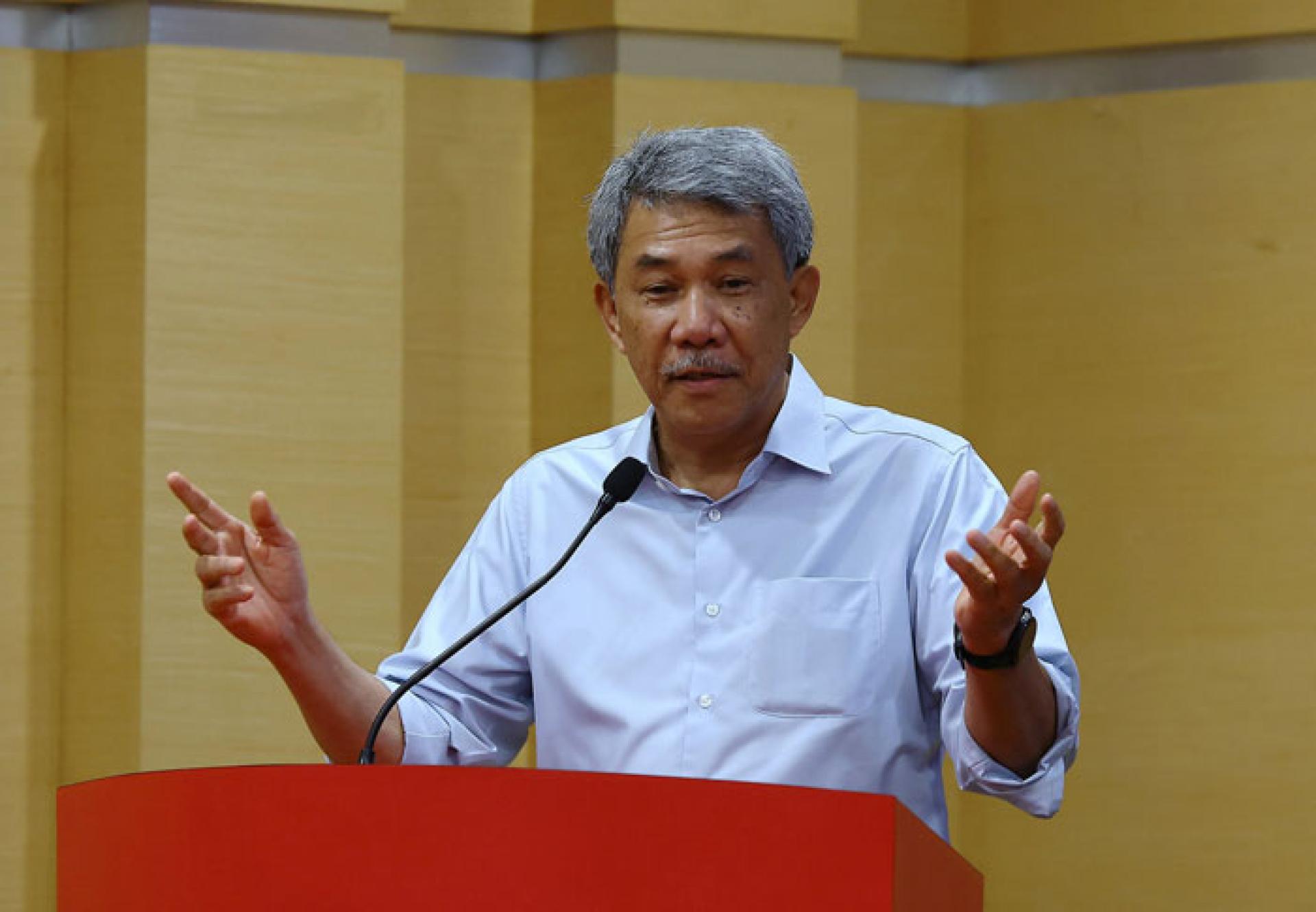
Foreign Minister Datuk Seri Mohamad Hasan stated that any matters involving the Strait of Malacca cannot be decided unilaterally by a single country, but must be handled according to ASEAN’s principle of “consensus” to ensure maritime security for this vital waterway.
Speaking as a special guest at the 10th “Better Nation Forum” session “Impact of the US-Iran Conflict on Malaysia”, he pointed out that Malaysia, Singapore, Indonesia, and Thailand have a “very solid consensus” on strait affairs and have long conducted joint patrols to ensure the safety of navigation in the area. The strait is one of the world’s busiest shipping lanes.
“Any initiatives involving the Strait of Malacca must include the joint participation of these four countries. This is our consensus — no unilateral actions.”
He said that when the four countries first reached an agreement on strait patrols and security, the core principle was not to allow unilateral decision-making.
He emphasized that ASEAN’s operational mechanism is always based on consensus, “Even at the sub-committee level, all decisions must be reached by consensus.”
His remarks come amid ongoing turmoil in the Middle East’s geopolitical situation. Related developments may bring higher risks to global strategic chokepoints, including the Strait of Malacca.
Additionally, Mohamad Hasan stated that Malaysia will continue to strengthen the idea of a “Zone of Peace, Freedom and Neutrality”, and insist on an ASEAN-centric approach in response to an increasingly complex global environment.
He stated that Malaysia must pursue an “active neutrality” foreign policy and avoid involvement in power struggles between major powers.
“Our country is a trading nation with an open economy. We trade with all sides and cannot be seen as favoring anyone, otherwise it would affect our national economic development.”
According to earlier reports, Indonesia is exploring the possibility of imposing fees on ships passing through the Strait of Malacca in order to generate revenues from one of the world’s busiest shipping routes.
Indonesian Finance Minister Purba Yasa stated that this proposal aligns with President Prabowo’s strategic direction, which aims to transform Indonesia from a “fringe economy” to a core participant in global trade.
“Indonesia is not a fringe country. We are located in a key global trade and energy route, yet ships passing through the Strait of Malacca are not charged.”
Purba Yasa made these remarks on Wednesday when attending a seminar hosted by a state-owned infrastructure financing institution in Jakarta.
The Strait of Malacca connects the Indian Ocean and Pacific Ocean, borders Indonesia, Malaysia and Singapore, and is a major artery of global trade, seen as a crucial strategic chokepoint on par with the Strait of Hormuz, Suez Canal, and Panama Canal.
Purba Yasa noted that to implement any fee-levying measures, coordination with neighboring countries would be necessary, while also emphasizing that Indonesia has the largest share of waters in the strait. He also mentioned that Iran had once discussed charging ships passing through the Strait of Hormuz, which could serve as a reference model.
However, this proposal is clearly at odds with Singapore’s position. Singaporean Foreign Minister Vivian Balakrishnan stressed that the Straits of Malacca and Singapore should remain open and ensure freedom of navigation for all users.
“The right of transit passage is guaranteed for all countries. We will not participate in any action that shuts down the channels, restricts passage, or charges transit fees.”
Balakrishnan made these remarks at the Singapore Maritime Week 2026.
Purba Yasa also acknowledged that the proposal is still at a preliminary stage and is difficult to implement in the short term, since it not only requires consensus among littoral states but could also face opposition from the global shipping industry.
He said: “With our current resources, we shouldn’t only adopt a defensive mindset. We need to be more proactive, but must also remain prudent.”