A 58-year-old woman in Greece simply sneezed, only to directly expel a "live bug." Upon further examination, doctors discovered that her sinus was harboring "an entire nest of parasitic larvae," resembling a plot straight out of a horror movie.
According to the New York Post, in September 2025, the woman was working outdoors in a field, with a flock of sheep grazing nearby. The medical report states that many flies were circling around her face at the time, but she didn't think much of it. A week later, she began to experience sinus pain, followed by several weeks of persistent, severe coughing, yet she still did not take it seriously.
On October 15, the woman suddenly sneezed and directly expelled a "wriggling worm." She immediately went to the hospital, where doctors found additional live bugs in her nasal cavity. An ENT (ear, nose, and throat) specialist promptly operated, removing 10 larvae and 1 pupa from her sinus. After treatment, the woman made a full recovery and no one around her exhibited similar symptoms.
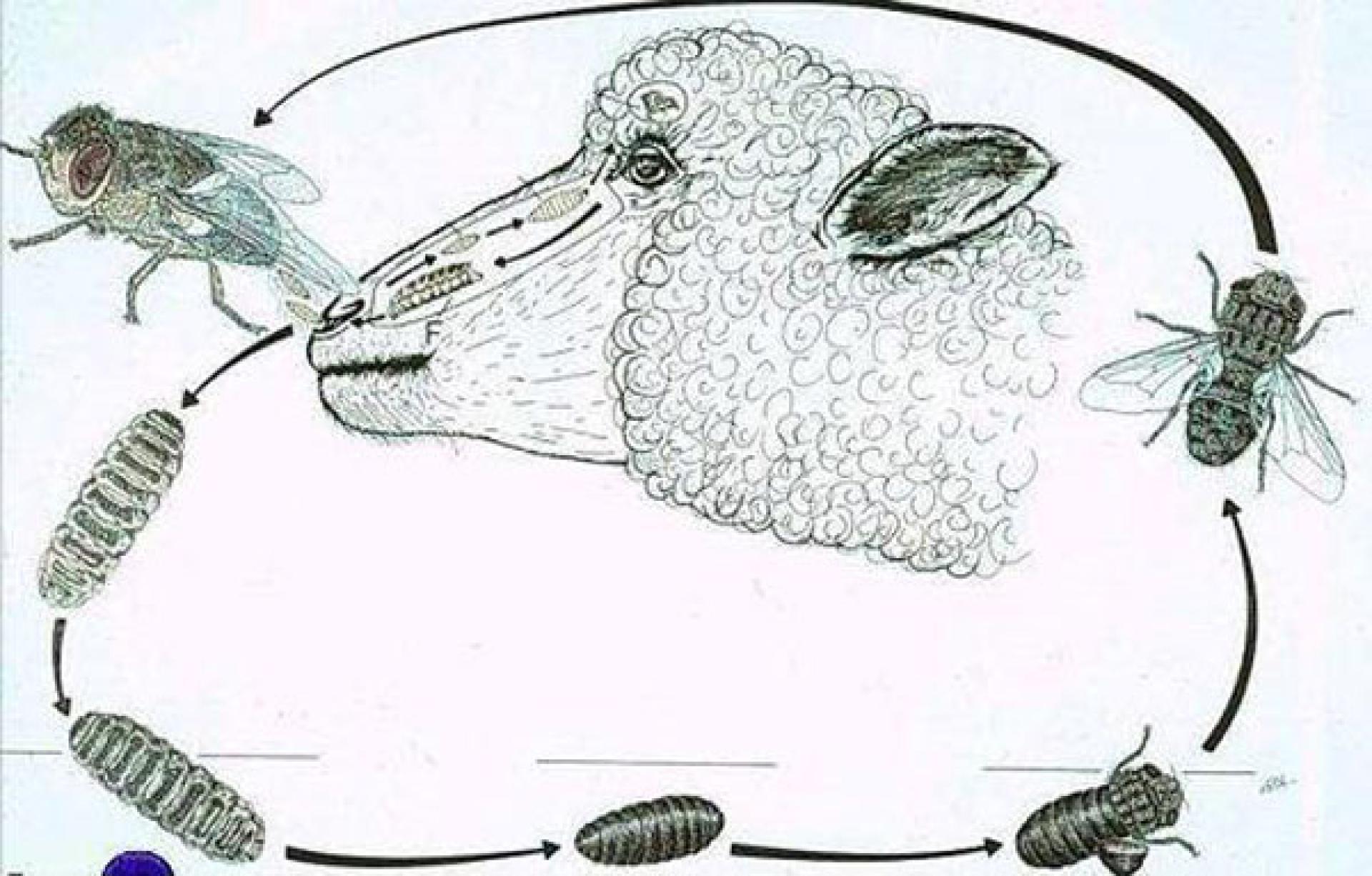
Expert analysis identified these parasites as larvae of the sheep botfly, with the longest approaching 2.5 centimeters. This parasitic insect usually inhabits the nasal cavities of sheep and goats; cases in humans are relatively rare. In medical terms, this condition is called nasal myiasis. Most previously reported human cases have occurred in the eye (ocular myiasis), and the larvae typically cannot mature. Recent research, however, has found that in cases of immunodeficiency or structural abnormalities in the nasal cavity, the larvae may be able to grow further inside the nose.
Generally, the sinus environment is extremely inhospitable for larvae—not only are the temperature and humidity unsuitable, but mucus and immune responses also hinder larval development. It turns out this woman had severe nasal septum deviation, so the larvae not only weren't expelled smoothly, but were "camping out" in the sinus, even developing into pupae. This is highly unusual, as experts have long believed that it is "biologically impossible" for such parasites to complete pupation inside a mammalian host.