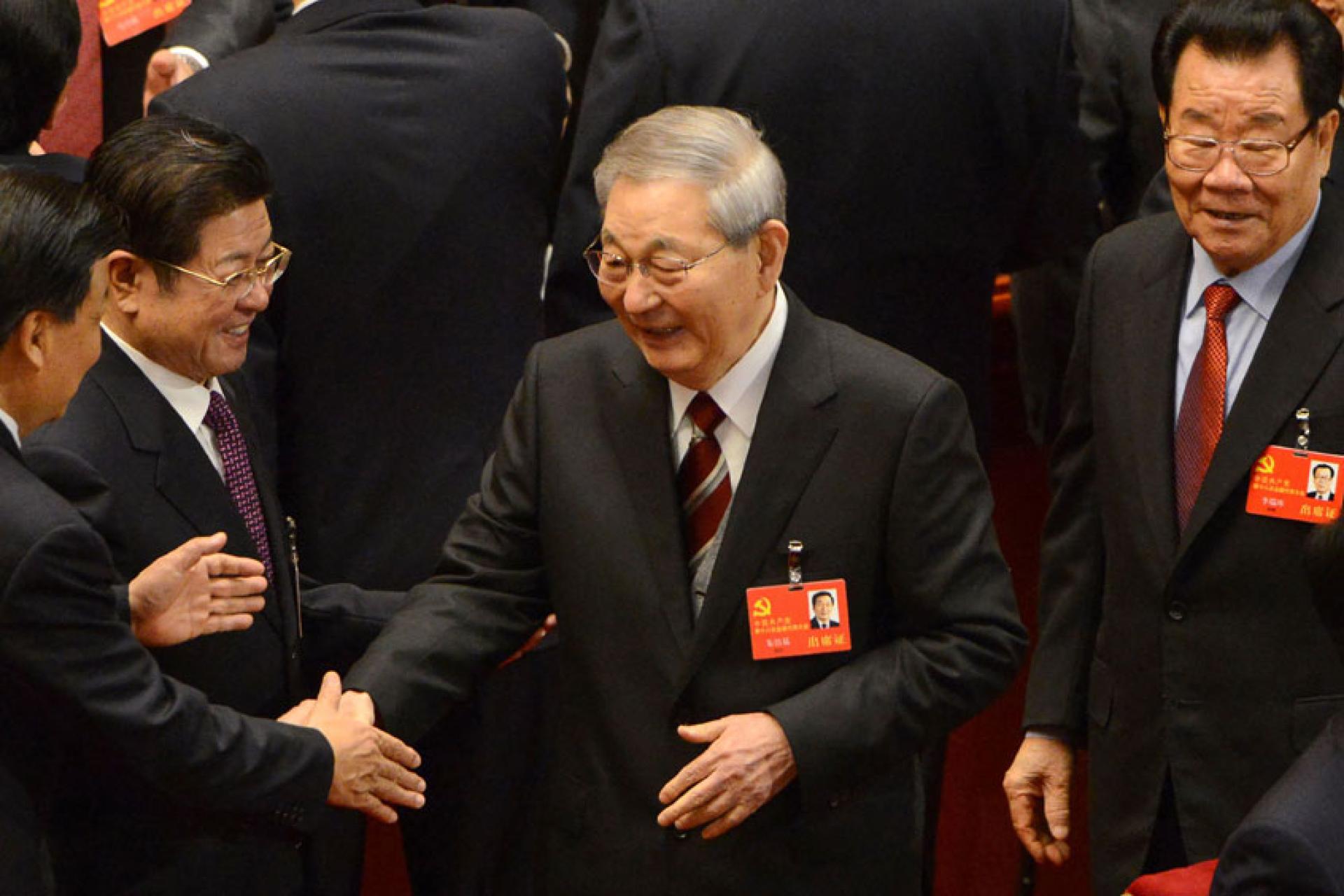
Former Chinese Premier Zhu Rongji passed away in Beijing on August 12, 2026, at the age of 98. If one were to sum up the 'Economic Czar' Zhu Rongji with just the three words 'reformist,' it would actually misinterpret his historical position. What truly set Zhu Rongji apart was that he was a technocrat who viewed the market economy as a tool, but remained extremely conservative politically. Today, most of his reform achievements have largely disappeared.
During his tenure as Premier from 1998 to 2003, China was in a period of integrating into globalization, completing negotiations to join the World Trade Organization (WTO), and joined the WTO in 2001. After this, China’s exports, foreign investment, and manufacturing expanded rapidly, and its status as the 'world’s factory' gradually took shape. Also in 2001, Beijing secured the right to host the 2008 Olympic Games—a symbol of China's rapidly rising national strength, urban development, and international standing.
It was in this context that Zhu Rongji became the official orchestrator of revitalizing China’s economy. He vigorously promoted the reform and privatization of state-owned enterprises, and the construction of China’s socialist market economy. Yet such achievements were highly tied to their era. Zhu Rongji’s economic rise capitalized on China’s cheap labor, enormous population, the dividends of globalization, and the post-WTO export boom. Zhu happened to catch this favorable wind and converted these conditions into economic growth. Today, these drivers of economic growth in China have disappeared.
Zhu Rongji was keen on marketization, aimed to establish an efficient government, modern financial system, and market-oriented enterprise system, and sought to reduce direct government intervention in the micro-management of enterprises. In 1998, he even launched the largest government restructuring since the founding of the People’s Republic of China, aiming to achieve separation of Party and government, separation of government functions from enterprises, and to transform government functions—attempting to build an administrative system to match China's socialist market economy.
To truly ensure market fairness and openness to competition, democratic government, freedom of speech, and a clean and efficient exercise of public power are necessary companions. But it was clear Zhu Rongji did not take this step. His focus remained on using a highly centralized political system to build a more marketized economic system—shrinking government size and reducing interference in enterprises and the market. This laid the seeds for enormous structural problems: beneath an opaque marketization, the power elite and vested interests became the biggest beneficiaries, while ordinary Chinese citizens became the victims.
The reform of China's state-owned enterprises (SOEs) is the most typical example. The SOE reform during Zhu Rongji’s era was essentially a government-led privatization. Across the provinces and cities, local SOE reform plans were drafted and promoted by local government Economic System Reform Commissions (known as Tigaowei). These plans were often products of personal relationships, power networks, and profiteering. A large number of SOEs and state-owned assets were sold off cheaply, with the buyers often being the offspring of red aristocrats or bureaucratic groups—they were the first to profit from this imbalanced market reform. The original ordinary workers of these SOEs only received a one-time severance pay based on years of service and had to seek new livelihoods on their own. Massive numbers of SOEs were closed, merged, or restructured, resulting in large-scale layoffs. To this day, the main source of urban disadvantaged groups in China are the laid-off workers from Zhu Rongji's time. The unequal distribution of income and the widening wealth gap are closely linked to this unbalanced SOE reform.
Zhu Rongji is seen as a 'reformist' overseas mainly because, compared to traditional Chinese Communist Party bureaucrats, he did attach more importance to the market, efficiency, financial systems, and international economic rules. But being an 'economic reformer' is not the same as being a 'political liberal.'
His SOE reform and government institution reform by the State Council seemed high-profile on the surface, but in fact were merely system patchwork within limited authority.
Looking back on the Zhu Rongji era, he pushed China further from a planned economy toward a market economy and from a relatively closed country toward globalization. He indeed brought the first bucket of gold to many ordinary Chinese, but also led many into hardship. This hardship should never be simply brushed aside as 'reform pains.' He never touched on political reform, nor did he have any interest in it. What he left behind was an incomplete reform model: pursuing government-led marketization while maintaining highly concentrated politics, without sufficient checks on power. Compared to the subsequent Hu-Wen era, he was evidently more conservative in fostering intellectual freedom and liberal atmosphere, and also shaped the totem of social 'involution' seen in today's Chinese society. He also failed to suppress official corruption. The reform results he pursued have already ebbed, and most are now barely traceable in present-day China.