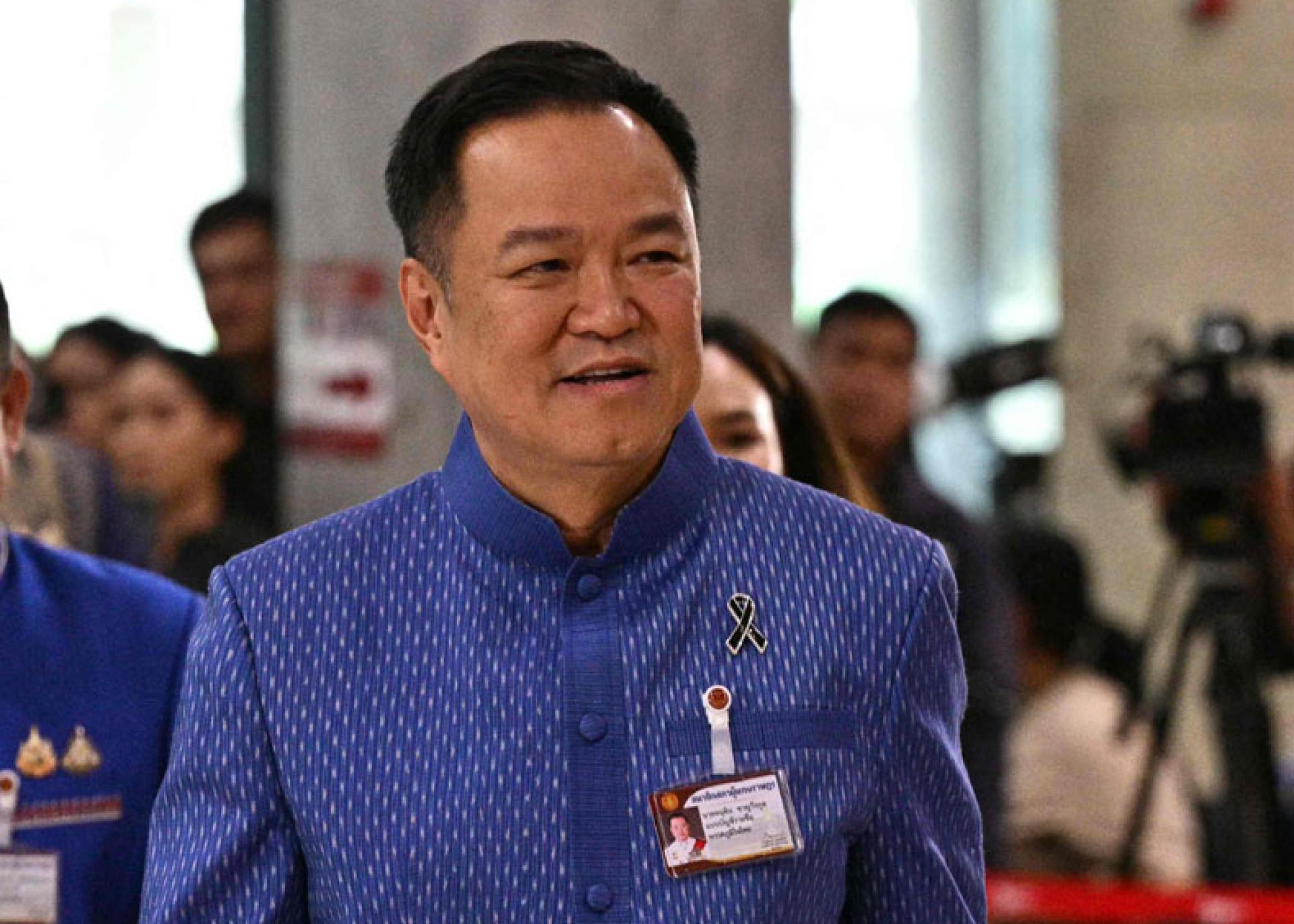
Anutin, the candidate from Thailand's Bhumjaithai Party, received support from over half of the 250 seats in the House of Representatives during the Prime Ministerial election held on the 19th, and has been re-elected as the Prime Minister of Thailand.
The new government must face the consequences of the war in West Asia, sluggish economic growth, and persistent border tensions with neighboring Cambodia.
Last December, Thailand's opposition People's Party attempted a no-confidence motion against Anutin's administration, prompting Anutin to dissolve the House of Representatives. On March 4, the Election Commission announced the official vote count for the House elections, confirming the 499 seats produced by the election. Anutin's Bhumjaithai Party secured 191 seats, becoming the largest party in parliament, but, having failed to win more than half of the seats, needed to form a coalition government with other parties.
Coming in third in the election, the Pheu Thai Party, led from prison by former Prime Minister Thaksin, agreed to join the alliance along with several smaller parties.
The 59-year-old heir from an architectural family, who has previously championed marijuana legalization in Thailand, was first elected Prime Minister last September.
Former Prime Minister Paetongtarn (daughter of Thaksin) was dismissed by the court last year over an ethics complaint, after which Anutin assumed power.
"I hope I can stay at my post and do my best to serve the people," Anutin told reporters before the parliamentary vote. "Those who know me understand that whenever problems arise affecting the public, I immediately respond to their demands."
Thailand's economic growth slowed last year, and the new government faces a struggling tourism sector, while fast-growing Vietnam is currently attracting more foreign direct investment.
On the day after US-Israeli coalition forces attacked Iran, igniting a war that shook global markets, Anutin vowed to “turn this West Asian crisis into an opportunity for Thailand.”
However, Thailand is currently being severely impacted by rising fuel prices and supply chain disruptions.
Political scholar Yutthapong stated that the government's top agenda has shifted to addressing tough external challenges, including the economic consequences of the war in West Asia.
He told AFP: “So far, the cabinet has failed to come up with decisive measures to reduce fuel costs, offering only stopgap solutions like 'working from home.'”
Despite a fragile ceasefire agreement, the long-standing border conflict with neighboring Cambodia remains a challenge.
Soon after Anutin first became Prime Minister, he authorized the armed forces to take whatever actions they deemed necessary at the border.
The two countries' 800-kilometer border has not yet been fully agreed upon. In the most recent fighting in December 2025, the Thai military controlled several disputed areas.
However, Yutthapong noted that voters’ attention has shifted. “The economy is now the public’s top priority.”
Last December, Thailand's opposition People's Party attempted a no-confidence motion against Anutin's administration, prompting Anutin to dissolve the House of Representatives. On March 4, the Election Commission announced the official vote count for the House elections, confirming the 499 seats produced by the election. Anutin's Bhumjaithai Party secured 191 seats, becoming the largest party in parliament, but, having failed to win more than half of the seats, needed to form a coalition government with other parties.
Coming in third in the election, the Pheu Thai Party, led from prison by former Prime Minister Thaksin, agreed to join the alliance along with several smaller parties.
The 59-year-old heir from an architectural family, who has previously championed marijuana legalization in Thailand, was first elected Prime Minister last September.
Former Prime Minister Paetongtarn (daughter of Thaksin) was dismissed by the court last year over an ethics complaint, after which Anutin assumed power.
"I hope I can stay at my post and do my best to serve the people," Anutin told reporters before the parliamentary vote. "Those who know me understand that whenever problems arise affecting the public, I immediately respond to their demands."
Thailand's economic growth slowed last year, and the new government faces a struggling tourism sector, while fast-growing Vietnam is currently attracting more foreign direct investment.
On the day after US-Israeli coalition forces attacked Iran, igniting a war that shook global markets, Anutin vowed to “turn this West Asian crisis into an opportunity for Thailand.”
However, Thailand is currently being severely impacted by rising fuel prices and supply chain disruptions.
Political scholar Yutthapong stated that the government's top agenda has shifted to addressing tough external challenges, including the economic consequences of the war in West Asia.
He told AFP: “So far, the cabinet has failed to come up with decisive measures to reduce fuel costs, offering only stopgap solutions like 'working from home.'”
Despite a fragile ceasefire agreement, the long-standing border conflict with neighboring Cambodia remains a challenge.
Soon after Anutin first became Prime Minister, he authorized the armed forces to take whatever actions they deemed necessary at the border.
The two countries' 800-kilometer border has not yet been fully agreed upon. In the most recent fighting in December 2025, the Thai military controlled several disputed areas.
However, Yutthapong noted that voters’ attention has shifted. “The economy is now the public’s top priority.”