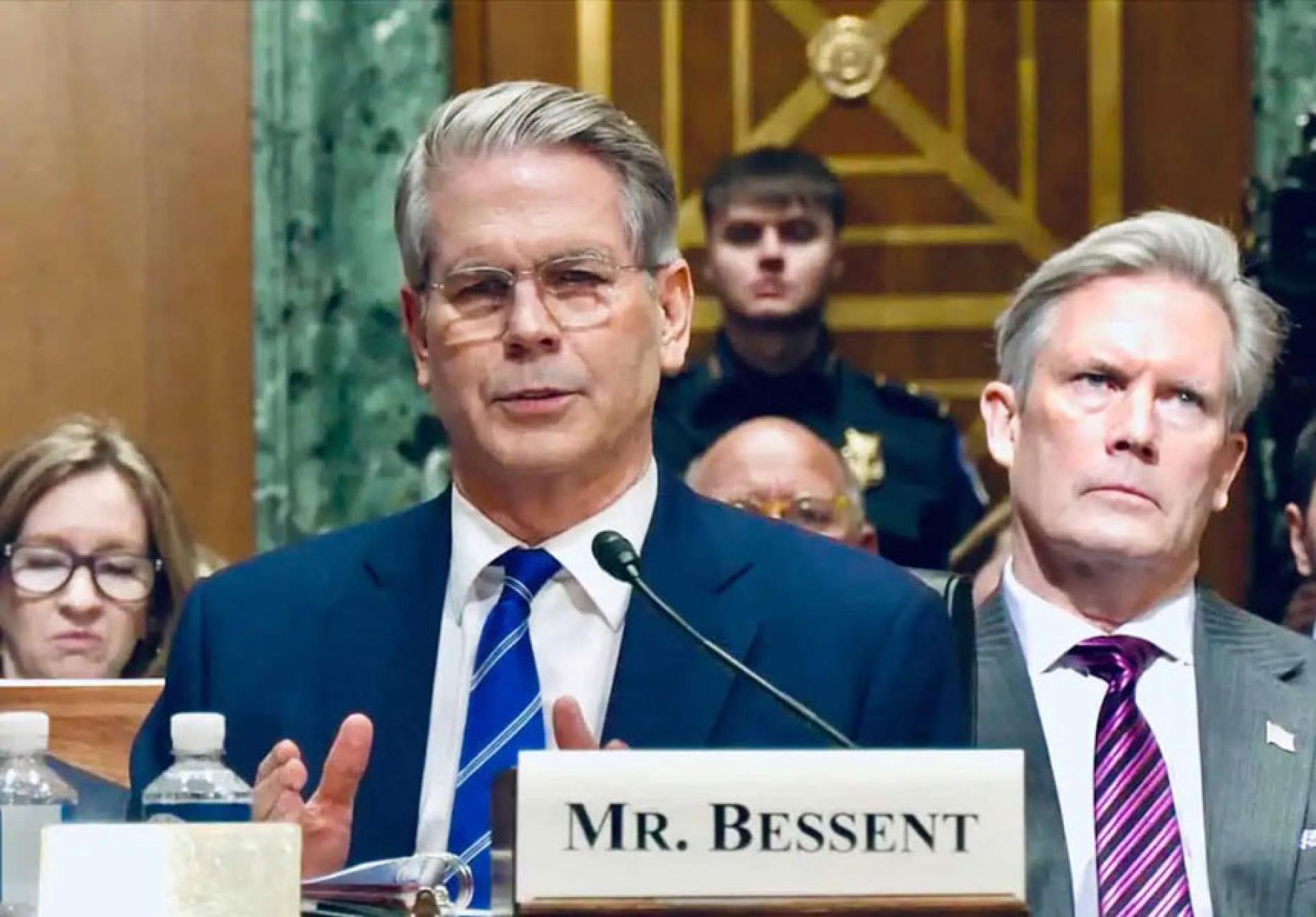
US Treasury Secretary Benson said that the US is preparing to strengthen economic sanctions against Iran, describing the related measures as "financial strikes equivalent to bombing operations."
Benson stated that the US has issued warnings to companies and several countries that if they purchase Iranian oil or allow Iranian funds to be stored in local banks, the US will implement 'secondary sanctions', describing it as a very severe measure. He emphasized that such actions would have "an equivalent financial impact on Iran."
He also said the US Treasury has sent warning letters to financial institutions in places including China, Hong Kong, the UAE, and Oman, cautioning that commercial dealings with Iran may face secondary sanctions.
Benson noted that the US will no longer extend exemptions that allowed certain Iranian and Russian oil transactions without sanctions, stating these measures will end as scheduled. He said: "We will not renew the general license for Russian oil, nor for Iranian oil." He said the current arrangements only apply to oil already at sea before March 11, and that the existing supply has already been fully absorbed.
Benson also responded to questions on fuel prices, saying US citizens can decide on their own how to use tax rebates. He predicted that gasoline prices may fall back to about $3 (11.86 ringgit) per gallon in the summer, and said that if the Strait of Hormuz reopens, oil supplies could resume within a week.
●Ceasefire Agreement Expires Next Tuesday
White House spokesperson Levitt said the US has not "formally requested an extension" of the ceasefire agreement with Iran, which is currently set to expire next Tuesday. Levitt said that the US remains actively engaged in these negotiations and talks, "Both sides are discussing the possibility of more indirect meetings, but until there is an official announcement from the White House, nothing is set in stone." She said the next round of talks will "very likely" be held in Islamabad, the capital of Pakistan, as before.