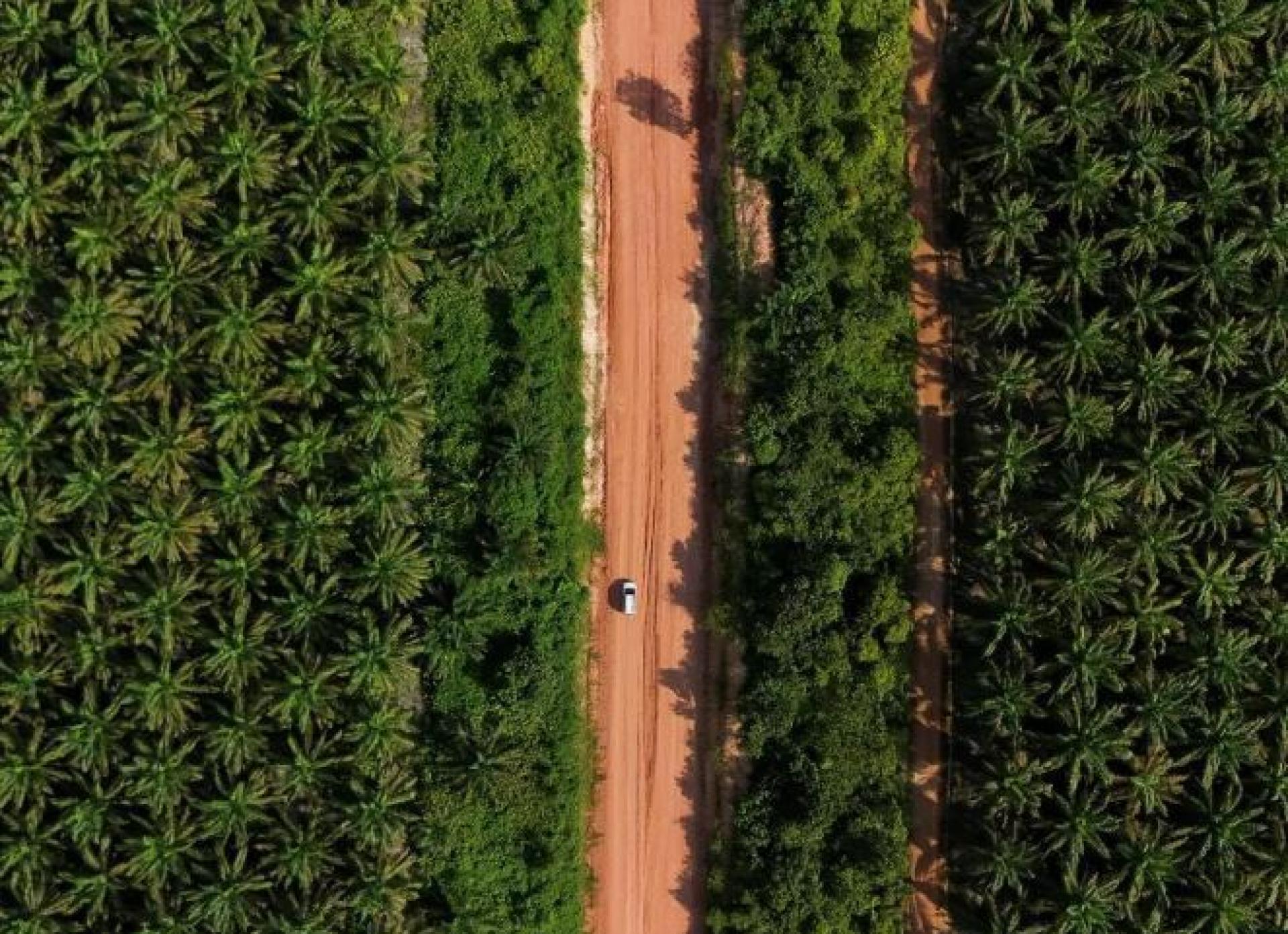
The Indonesian government continues to tighten its control over domestic resources and land, having already reclaimed and nationalized more than 4 million hectares of plantations, mining concessions, and related processing facilities—an area equivalent to the size of Switzerland—drawing widespread attention and criticism. This move has also made investors uneasy about Indonesia's investment environment.
The Forest Area Law Enforcement Task Force, overseen by Indonesia’s Defense Minister Prabowo Subianto, has been carrying out nationwide enforcement since last year, focusing on cracking down on plantations and mines that illegally occupy land originally designated as protected forest areas. The task force not only fines the companies involved, but also directly confiscates illegal land and hands it over to the newly established state-owned enterprise, Nusantara Palm Plantation, for unified management.
In March last year, the task force first took over 221,000 hectares of land originally owned by the Duta Palma Group. This group is owned by tycoon Surya Darmadi, who has been the focus of public attention in recent years due to investigations into money laundering and corruption. The government’s takeover was seen as a landmark case in the resources enforcement campaign.
As the operation expanded nationwide, the fines imposed on offending enterprises became substantial. According to the Indonesian Attorney General’s Office, a total of 48 palm oil companies were ordered to pay fines totaling around USD 560 million, while 22 mining companies were fined over USD 1.7 billion, reflecting the unprecedented intensity of the enforcement campaign.
Notably, the government’s actions have begun to affect foreign companies as well. Singaporean company Wilmar International has confirmed that thousands of hectares of its plantations could be impacted and is currently in discussions with the relevant authorities. IOI Group CEO Lee Yeow Chor from Malaysia stated that the company will apply stricter risk assessments to future investments in Indonesia. Both Bumitama Agri and SD Guthrie declined to comment on the matter.
Tonko T. Sibayong, chairman of the Indonesian Palm Oil Agribusiness Strategic Policy Institute, pointed out that overlapping land use issues in Indonesia have long existed. Some areas classified as forest land were previously approved by the government for cultivation or development, leading to disputes between current enforcement standards and actual land use.
At the local level, some long-term farmers have also been affected. Rubahan, a farmer from Kalimantan, revealed that about 500 families in his village, totaling 2,000 hectares of farmland, were confiscated by the government. Although they are allowed to continue farming, they are required to surrender a portion of their profits. He stated he cannot accept the government's terms, emphasizing that the trees and land have been cultivated and cared for by the villagers over many years.
Bima Yudhistira, executive director of Indonesia’s Center of Economic and Law Studies, believes that the government’s approach is increasingly showing “Prabowo-style command economy” characteristics, which may dampen investor interest and be detrimental to the long-term development of the plantations and environmental protection sectors.
Lis Wobberton, a scholar at the Australian National University who researches Indonesian governance and resource nationalism, along with other analysts, also pointed out that Indonesia’s current policy implementation is highly politicized, which could weaken the credibility of resource governance and undermine foreign investor confidence.
As the world’s largest exporter of coal and palm oil, the largest producer of nickel, and a key supplier of other major resources such as copper and tin, Indonesia plays a crucial role in global supply chains but still relies heavily on foreign capital and technology to improve its production methods. Analysts believe that this wave of nationalization-driven turbulence may spill over into global markets in the future, affecting investment flows and the landscape of commodity exports.
In March last year, the task force first took over 221,000 hectares of land originally owned by the Duta Palma Group. This group is owned by tycoon Surya Darmadi, who has been the focus of public attention in recent years due to investigations into money laundering and corruption. The government’s takeover was seen as a landmark case in the resources enforcement campaign.
As the operation expanded nationwide, the fines imposed on offending enterprises became substantial. According to the Indonesian Attorney General’s Office, a total of 48 palm oil companies were ordered to pay fines totaling around USD 560 million, while 22 mining companies were fined over USD 1.7 billion, reflecting the unprecedented intensity of the enforcement campaign.
Notably, the government’s actions have begun to affect foreign companies as well. Singaporean company Wilmar International has confirmed that thousands of hectares of its plantations could be impacted and is currently in discussions with the relevant authorities. IOI Group CEO Lee Yeow Chor from Malaysia stated that the company will apply stricter risk assessments to future investments in Indonesia. Both Bumitama Agri and SD Guthrie declined to comment on the matter.
Tonko T. Sibayong, chairman of the Indonesian Palm Oil Agribusiness Strategic Policy Institute, pointed out that overlapping land use issues in Indonesia have long existed. Some areas classified as forest land were previously approved by the government for cultivation or development, leading to disputes between current enforcement standards and actual land use.
At the local level, some long-term farmers have also been affected. Rubahan, a farmer from Kalimantan, revealed that about 500 families in his village, totaling 2,000 hectares of farmland, were confiscated by the government. Although they are allowed to continue farming, they are required to surrender a portion of their profits. He stated he cannot accept the government's terms, emphasizing that the trees and land have been cultivated and cared for by the villagers over many years.
Bima Yudhistira, executive director of Indonesia’s Center of Economic and Law Studies, believes that the government’s approach is increasingly showing “Prabowo-style command economy” characteristics, which may dampen investor interest and be detrimental to the long-term development of the plantations and environmental protection sectors.
Lis Wobberton, a scholar at the Australian National University who researches Indonesian governance and resource nationalism, along with other analysts, also pointed out that Indonesia’s current policy implementation is highly politicized, which could weaken the credibility of resource governance and undermine foreign investor confidence.
As the world’s largest exporter of coal and palm oil, the largest producer of nickel, and a key supplier of other major resources such as copper and tin, Indonesia plays a crucial role in global supply chains but still relies heavily on foreign capital and technology to improve its production methods. Analysts believe that this wave of nationalization-driven turbulence may spill over into global markets in the future, affecting investment flows and the landscape of commodity exports.