Hungary's Political Upheaval: Orbán's 16-Year Strongman Rule Ends
Published atApr 13, 2026 11:34 am
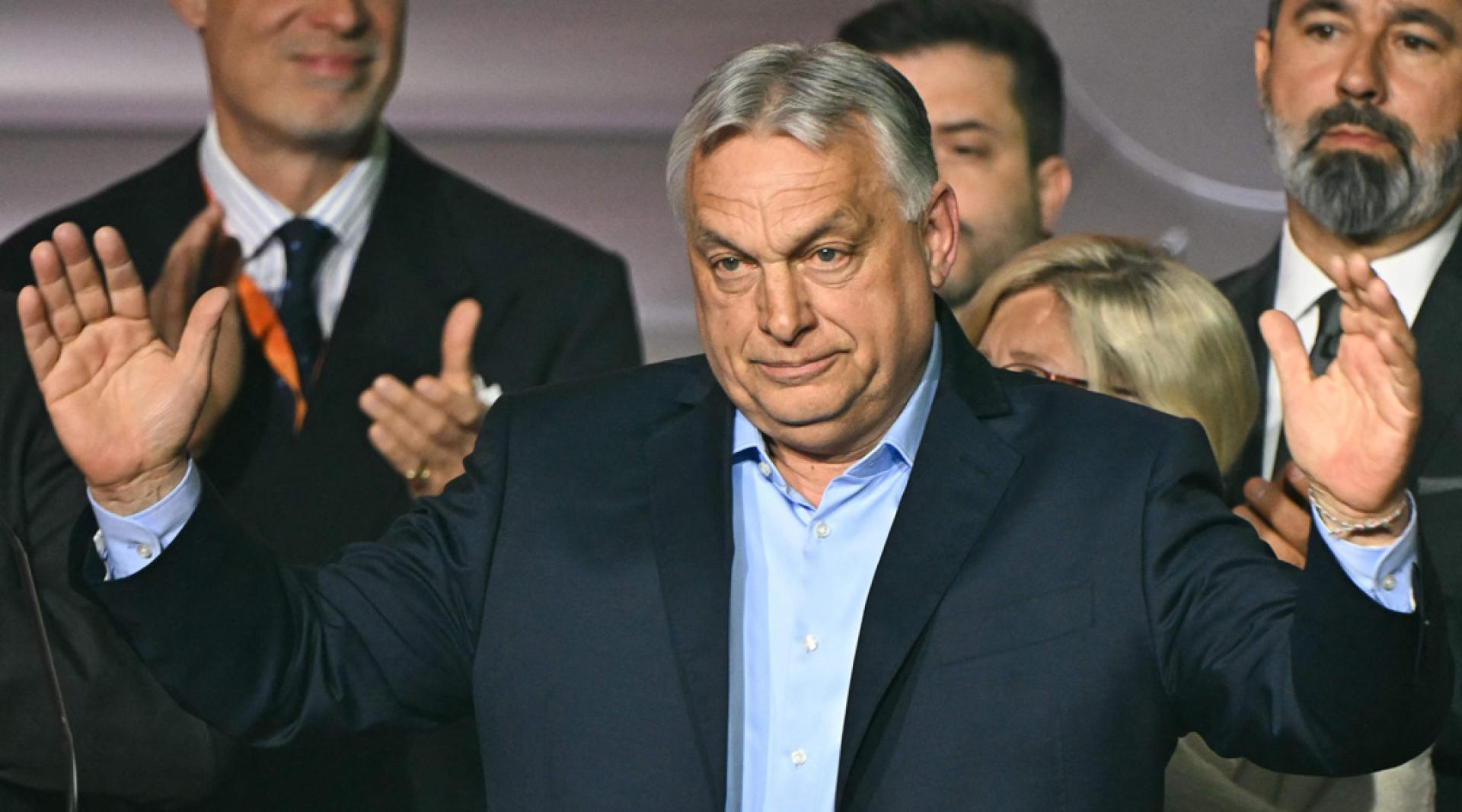
Self-proclaimed as the EU's “thorn in the side” and advocate of “illiberal democracy”, Hungarian Prime Minister Orbán has admitted defeat to his conservative opponent Magyar after 16 years in power in the parliamentary elections.
According to a compilation of foreign media reports and official election results, with 98.15% of ballots counted, Magyar’s center-right opposition TISZA party is in the lead with 53.6% of the vote, winning 138 out of 199 parliamentary seats and securing a two-thirds majority; Orbán’s Fidesz party gained 37.9% of the vote with 55 seats. Voter turnout reached a record high of 79.50%.
62-year-old Orbán acknowledged defeat on the evening of the 12th, admitted the outcome was “painful,” and congratulated the winning party.
Over 16 years of governance, Orbán established a “strongman” image in Hungary through tough political tactics and pragmatic policies, leaving a unique imprint on European politics as well.
Originally seeking a fifth consecutive term, Orbán had transformed the country into a model of “illiberal democracy” during his term, clashing repeatedly with Brussels on rule of law issues and support for Ukraine in the ongoing war.
The EU has repeatedly accused the Orbán administration of “undermining judicial independence,” suspended funding for Hungary as a result, and launched sanction proceedings. 45-year-old Magyar (center) was formerly a member of the ruling party, splitting off two years ago to join the little-known TISZA party.Orbán: The World Is Entering an Era of Nation-States
As early as 2014, when mainstream politicians were still discussing multiculturalism, Orbán shocked the world by introducing the concept of the “illiberal state” in a speech. He asserted that liberal hegemony was waning and “nation-states” would return. At a press conference three months ago, Orbán claimed the world was entering an “era of nation-states.”
Within the EU, Orbán is considered an “outlier” on issues of rule of law, but among U.S. right-wing circles, his governing model is seen as a political prototype worthy of study.
U.S. President Trump once promised that if Orbán’s party won, the United States would bring “economic strength” to Hungary. U.S. Vice President Vance visited Hungary last week to support Orbán’s campaign and criticized Brussels’ “bureaucrats” for interfering in Hungarian affairs. Hungary, with a population of 9.5 million, held parliamentary elections on the 12th.Public Complaints Over Economic Stagnation
Once revered as the creator of the “illiberal” democratic model by European and American conservatives, Orbán gradually lost domestic support amid discontent over economic stagnation, international isolation, and oligarchic accumulation of wealth.
“We can’t even afford a kilo of cheese,” a voter in Budapest complained to the media.
45-year-old Magyar, formerly a member of the ruling party, split off two years ago to join the little-known TISZA party. By capitalizing on public dissatisfaction with the stagnant economy and the younger generation's desire for change, he rapidly led the party to prominence.
He said voters “liberated Hungary and took back our homeland,” calling the victory a “miracle” for the Central European nation of 9.5 million.
France and Germany: Joint Efforts for a Strong Europe
European countries rushed to congratulate Magyar, with France and Germany calling on him to work together toward “a strong Europe.”
Ukrainian President Zelensky said he would work with Magyar “for the benefit of both countries and to promote peace, security, and stability in Europe.”
This article has been translated using our AI technology. While we strive for accuracy,
AI translations
may contain errors. For the most precise information, please refer to the original article.