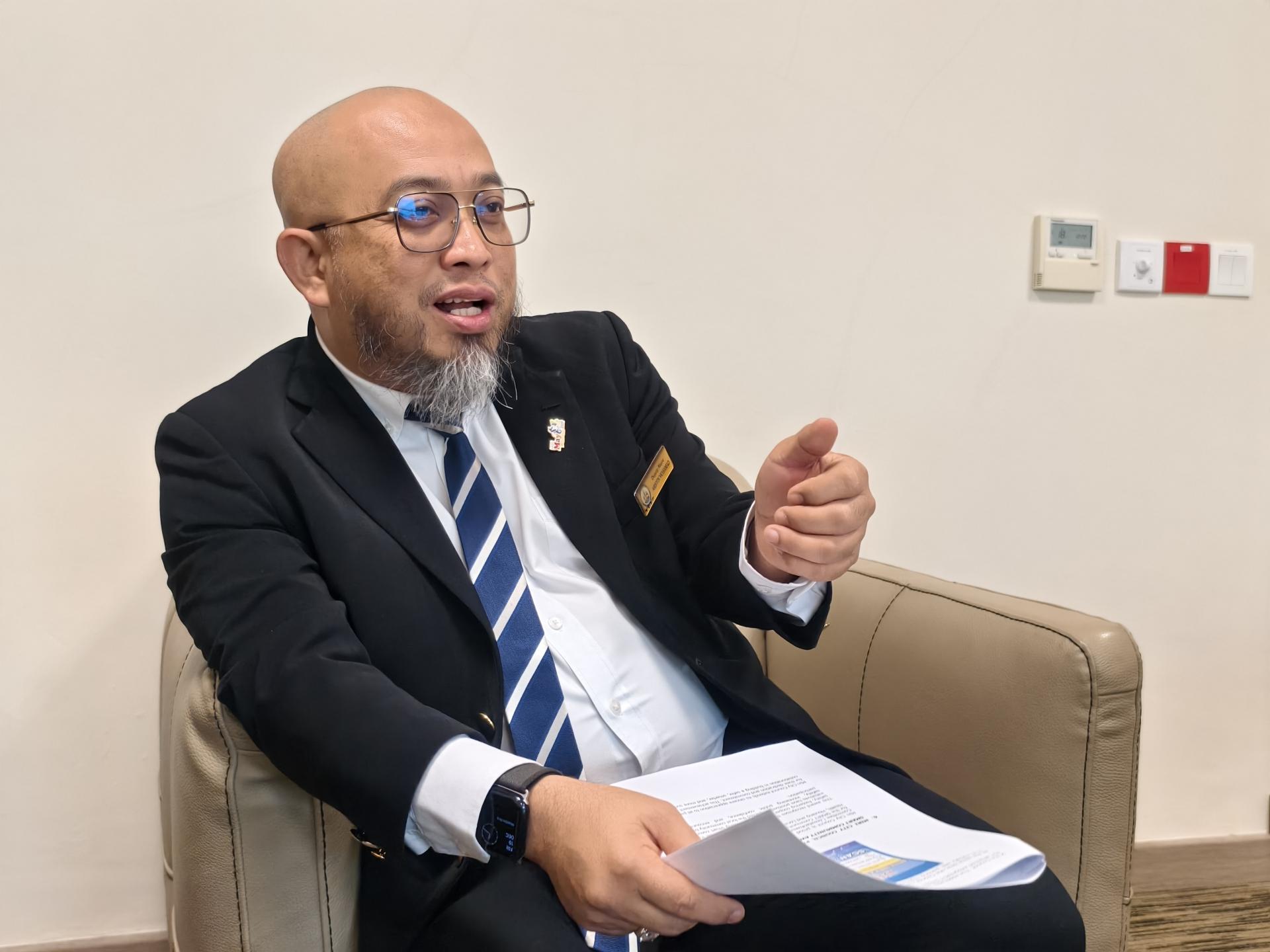
(Miri, 21st) Deputy Mayor of Miri, Ariffin, stated that unlicensed commercial activities not only affect the municipal council's revenue but also involve public safety and fairness issues. The Miri City Council is expected to take more proactive enforcement actions next year, strengthening inspections and crackdowns on unlicensed operations.
Ariffin pointed out that anyone engaging in commercial activities is required by law to apply for a business license themselves, which is the operator's responsibility. He revealed that he had already suggested to relevant council officials in an internal meeting that next year they should no longer “wait for complaints before acting,” but rather take the initiative to send personnel for on-site inspections and dual verifications to identify unlicensed operators.
He said that unlicensed operations not only constitute an enforcement issue but also directly impact the council’s financial revenue. “If there are 10 businesses without licenses, that’s 10 times the revenue loss, and these funds could have been used for municipal development and public services.”
He further clarified that the council's enforcement actions do not target any particular ethnic group. Regardless of ethnicity, anyone operating without a license will face enforcement. He pointed out that some business owners have portrayed enforcement as a “victim’s narrative” on social media, overlooking their own violations and misleading public perception.
“Operating lawfully is a fundamental principle of a rule-of-law society. Doing business means you must have a license, and this is to protect consumer and public safety, not simply for punitive purposes.”
Ariffin emphasized that the role of city councillors and municipal leadership is not just to enforce and penalize, but to serve as a bridge between the government and the community—helping operators understand regulations, find legal business spaces, and educate the public on why enforcement actions are necessary.
He noted that some business owners operate in residential areas. If an accident occurs—such as structural collapse or customer injury—without a license or insurance, the operator must bear legal responsibility personally, which involves extremely high risks. Therefore, the council has a duty to intervene and educate in advance.
Regarding businesses operating in residential areas, he said he is not entirely opposed to home-based businesses, but food and beverage (F&B) businesses are not suitable in such areas due to hygiene, waste, and unfair competition with legal commercial zone businesses.
He said that next year’s enforcement focus will include commercial activities in residential areas that involve licensing issues. In its enforcement process, the council usually issues warnings first, followed by re-inspection and fines if necessary. Serious or repeat offenders may face even stricter measures.
“As long as a complaint is received, the council must take action; otherwise, it will not only be audited but may even attract attention from anti-corruption authorities.” He emphasized that enforcement is not selective but is about fulfilling duties according to the law.
He called on community residents to support the initiatives of municipal councillors and Community Development Committees (JKP), actively participate in community affairs, and reflect problems through legal channels, thereby jointly maintaining urban order and public interest.