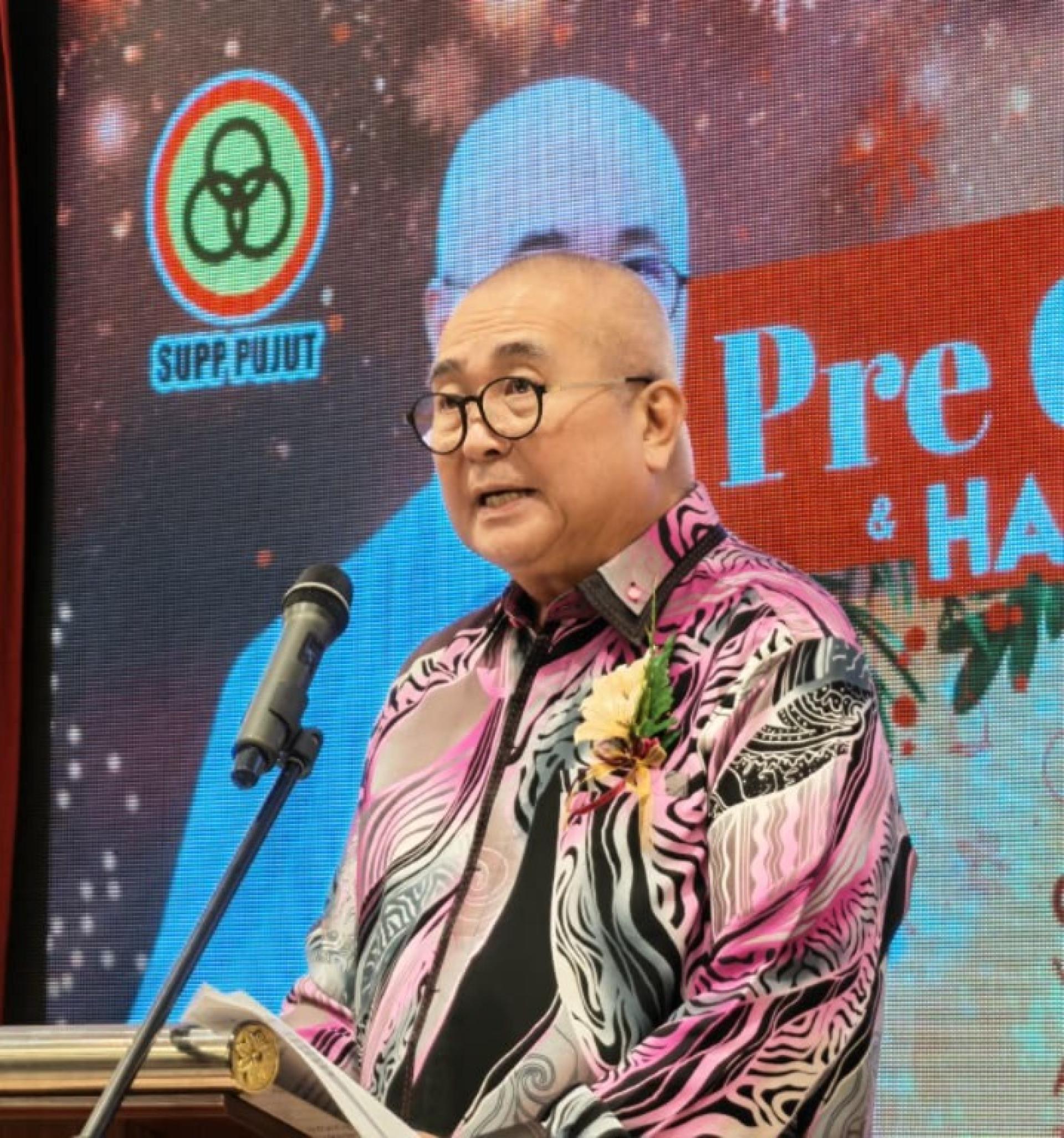
(Miri, 21st) – SUPP Central Publicity Secretary Yu Xiaoshan issued a statement pointing out that following the federal government's announcement of the latest cabinet reshuffle, two Members of Parliament from Sarawak Pakatan Harapan have been appointed as deputy ministers. On the surface, this seems to symbolize that the federal government is placing greater emphasis on Sarawak's voice. However, when this event is examined in a broader political context, it becomes clear that these appointments are more a calculated political maneuver rather than a substantive contribution to Sarawak’s development.
He said that after the crushing by-election defeat in Sabah, Pakatan Harapan is now desperate to stabilize its political footing in East Malaysia to prevent a similar scenario from recurring in the next Sarawak elections. Appointing deputy ministers from Sarawak PH is clearly intended to send the signal that Sarawak is being “valued” to appease supporters and to supply a lifeline to Sarawak PH, ensuring it can withstand upcoming political competition.
“However, the people of Sarawak must be clear-minded and recognize that these deputy minister appointments are reluctant political maneuvers, not actual devolution of power—these are symbolic compensations, not real development promises.”
He further stated that what Sarawak has long been fighting for is real power, resources, and policy autonomy—including the rights accorded by MA63, independent decision-making in energy and education, as well as a fairer fiscal allocation.
He said that the fundamental difference between federal politics and Sarawak's real needs is clear. Sarawak is currently at a critical stage of development, advancing solidly in line with PCDS2030 from the hydrogen economy, green industries, and renewable energy, to educational autonomy, digital transformation, and upgrading rural infrastructure. This is a blueprint unique to Sarawak, created by Sarawak, implemented by Sarawak, and must be safeguarded by Sarawak itself.
“Therefore, we must shift the focus away from ‘who the federal government has appointed’ to ‘what Sarawak truly needs’.”
He pointed out that what the GPS-led Sarawak government has demonstrated over the years is stability, executive capacity, and long-term planning; the federal government's political arrangements, on the other hand, often change according to formality and elections, making it difficult to sync with Sarawak’s development pace. Sarawak has already proven that only by breaking free from the pull of Peninsular (Malayan) politics can policy continuity be maintained, international investment attracted, and economic transformation realized.
“People of Sarawak must see that our future does not depend on how many positions are given by the federal government, but on how determined we are to persist down the path of Sarawak-first development. No matter how the political situation changes, Sarawak’s development cannot be swayed by the winds of Malayan politics. We must not let symbolic appointments dilute Sarawak’s pursuit of true autonomy and long-term development, nor allow outside political maneuvers to disrupt Sarawak's progress.”
“Sarawak is already on the road to take-off. What is most needed now is to continue steadfastly along our own development path.” Yu Xiaoshan stressed that what the people of Sarawak deserve is not reluctant appeasement made for party interests or votes, but true power, resources, and a future that rightly belong to Sarawak.
“However, the people of Sarawak must be clear-minded and recognize that these deputy minister appointments are reluctant political maneuvers, not actual devolution of power—these are symbolic compensations, not real development promises.”
He further stated that what Sarawak has long been fighting for is real power, resources, and policy autonomy—including the rights accorded by MA63, independent decision-making in energy and education, as well as a fairer fiscal allocation.
He said that the fundamental difference between federal politics and Sarawak's real needs is clear. Sarawak is currently at a critical stage of development, advancing solidly in line with PCDS2030 from the hydrogen economy, green industries, and renewable energy, to educational autonomy, digital transformation, and upgrading rural infrastructure. This is a blueprint unique to Sarawak, created by Sarawak, implemented by Sarawak, and must be safeguarded by Sarawak itself.
“Therefore, we must shift the focus away from ‘who the federal government has appointed’ to ‘what Sarawak truly needs’.”
He pointed out that what the GPS-led Sarawak government has demonstrated over the years is stability, executive capacity, and long-term planning; the federal government's political arrangements, on the other hand, often change according to formality and elections, making it difficult to sync with Sarawak’s development pace. Sarawak has already proven that only by breaking free from the pull of Peninsular (Malayan) politics can policy continuity be maintained, international investment attracted, and economic transformation realized.
“People of Sarawak must see that our future does not depend on how many positions are given by the federal government, but on how determined we are to persist down the path of Sarawak-first development. No matter how the political situation changes, Sarawak’s development cannot be swayed by the winds of Malayan politics. We must not let symbolic appointments dilute Sarawak’s pursuit of true autonomy and long-term development, nor allow outside political maneuvers to disrupt Sarawak's progress.”
“Sarawak is already on the road to take-off. What is most needed now is to continue steadfastly along our own development path.” Yu Xiaoshan stressed that what the people of Sarawak deserve is not reluctant appeasement made for party interests or votes, but true power, resources, and a future that rightly belong to Sarawak.