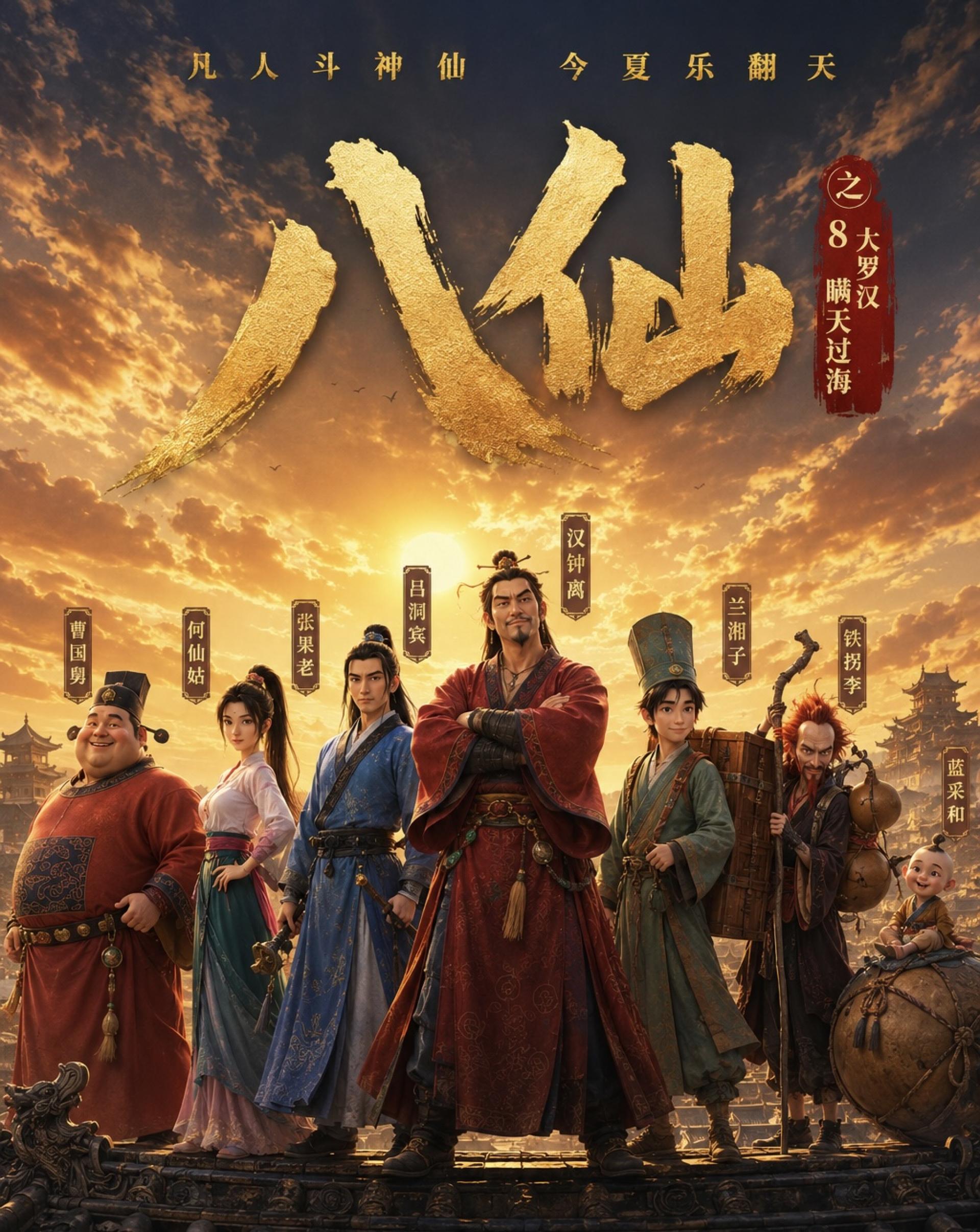
Following the animation boom sparked by ‘Ne Zha,’ another Chinese animated film, ‘Eight Immortals,’ has recently become a dark horse in the market thanks to growing word-of-mouth. The movie has not relied on large-scale promotional campaigns; instead, it has gradually built up popularity through its focus on Eastern mythology, exquisite animation production, and positive audience reviews. In fact, last weekend in China, its single-day box office performance was impressive, even surpassing that of ‘Kung Fu Soccer,’ which was endorsed by Stephen Chow, showcasing strong staying power.
From its initially low-key release to now becoming a topic of heated discussion, the box office trajectory of ‘Eight Immortals’ has once again drawn attention to the potential for growth in Chinese mythological animation. Facing strong competition, the film has stood out thanks to its own merits, becoming a major surprise in the animation market recently. As audience interest continues to rise, whether ‘Eight Immortals’ can maintain its momentum and reach even higher box office achievements has become a hot topic within the industry.
Mention ‘Eight Immortals,’ and many viewers will immediately think of the classic folk legend ‘The Eight Immortals Crossing the Sea, Each Shows Their Divine Powers.’ However, ‘Eight Immortals’ is not simply a retelling of the traditional story; rather, it attempts to breathe new life into these familiar mythological characters, presenting their unique charm within the context of modern animation.
