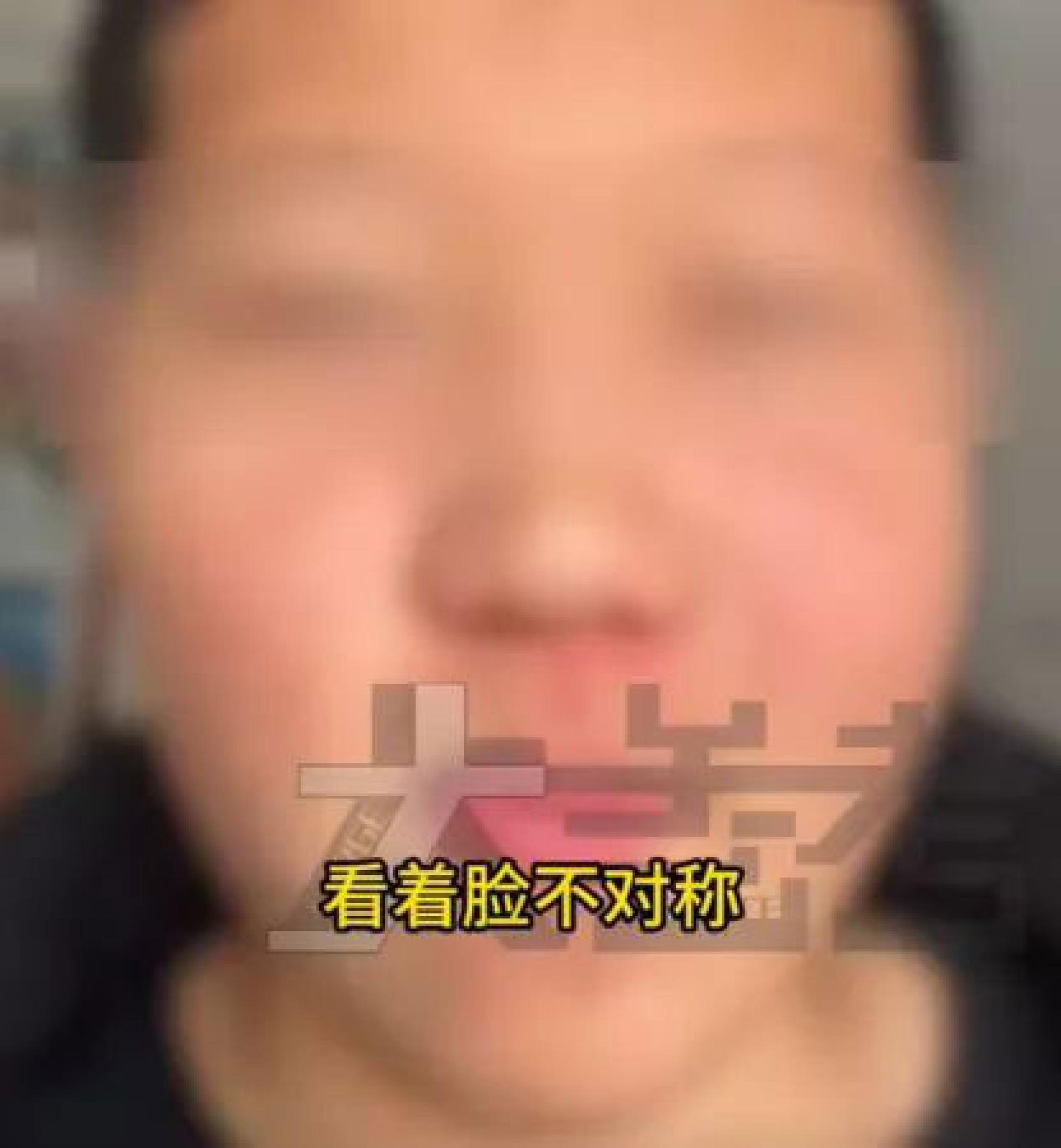
In Zhengzhou, Henan Province, China, a 15-year-old boy recently sought medical attention after his left cheek suddenly became swollen and his face gradually began to appear crooked. At first, his family thought the change was simply because he had gained weight, but to their shock, examinations revealed that an abnormally growing wisdom tooth had been pushed by a dental cyst all the way to near his eye socket, leaving doctors stunned.
According to the report by 'Da Cankao,' the boy, Xiao Ze, initially only experienced swelling on his left cheek. His mother thought he was just getting chubbier, but as time went by, his face became increasingly asymmetrical, and his mouth even started to develop a slant. After seeking medical advice, doctors found through a CT scan that his upper jaw wisdom tooth, due to abnormal development, had been continuously pushed by a dental cyst until it ended up underneath the eye socket.
Doctors explained that a dental cyst will gradually expand over time, and in the process, may push unerupted teeth into abnormal positions. Although it is extremely rare for a wisdom tooth to be pushed up near the eye socket, ectopic eruption of wisdom teeth is not unheard of in clinical practice. There have been cases of wisdom teeth growing into the nasal cavity, the temporomandibular joint, and even into soft tissue.
Experts point out that wisdom tooth developmental issues are highly insidious. Statistics show that about 65% of adolescents have impacted or ectopic wisdom teeth, with early symptoms usually being just mild toothaches or facial swelling, which are easily mistaken for 'heatiness' or ordinary gingivitis.
If left untreated for a long time, a cyst that continues to enlarge can compress surrounding nerves and organs, leading to facial distortion, impaired vision, or even serious complications such as orbital or intracranial infections.
Doctors remind that ages 12 to 16 are a critical period for observing wisdom tooth development, and recommend monitoring tooth bud development via panoramic dental CT scans so that abnormalities can be addressed early.
In general, if wisdom teeth repeatedly cause pericoronitis, are impacted or inverted, affect the health of adjacent teeth, or form cysts that compress nerves and organs, early extraction is usually recommended. Experts advise that surgery performed when the roots are not yet fully formed (ages 16 to 20) is less complicated, recovery is faster, and risks of complications can be effectively reduced.