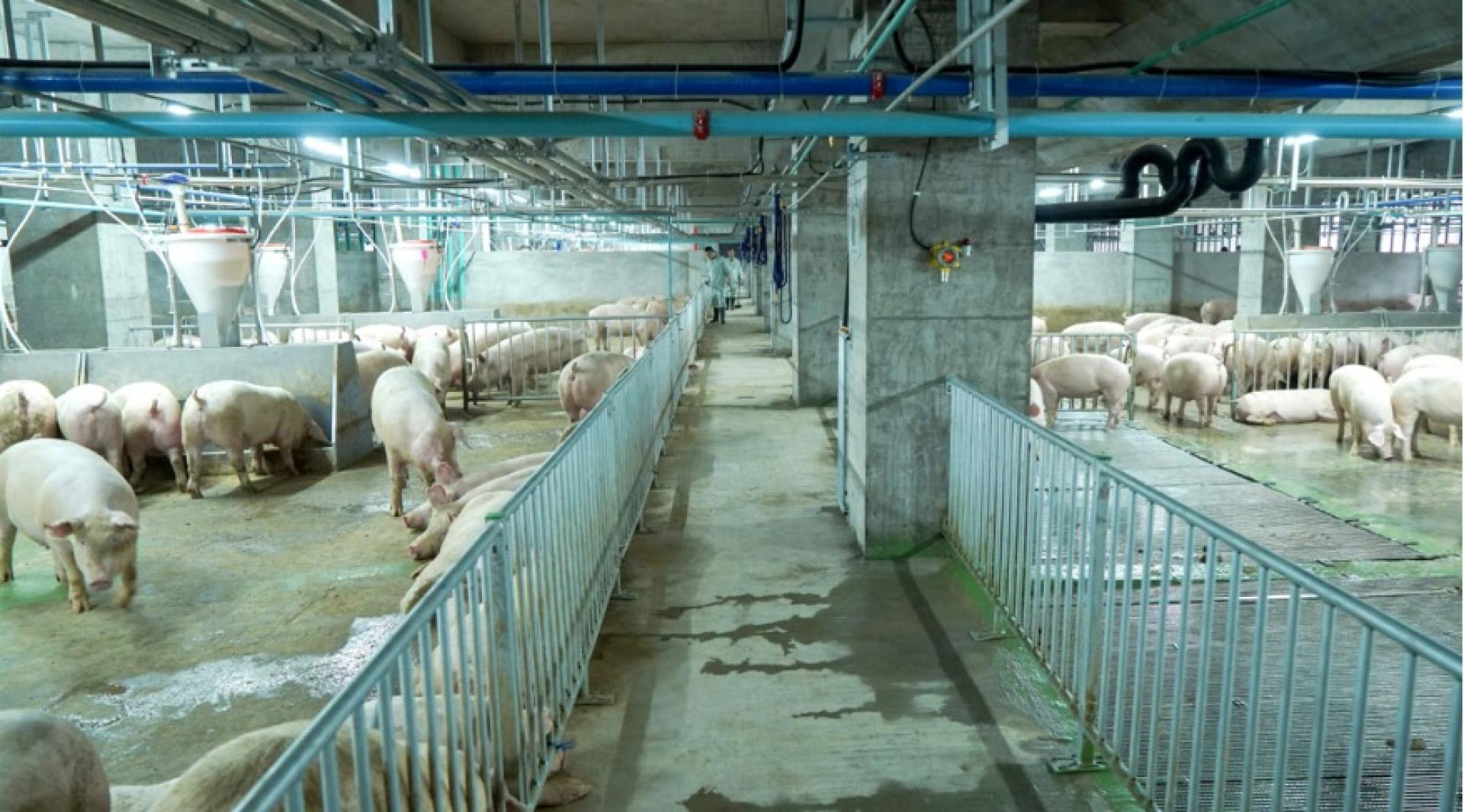
Pork prices in China have fallen to their lowest point in nearly seven years, approaching the 5 yuan/jin (2.81 ringgit) mark, with all pig farmers incurring losses. Farmers are caught in a dilemma: whether to sell their stock and take a loss, or keep feeding the pigs and burn through feed costs. What is even more despairing to farmers is that, despite pork prices having dropped for 10 months straight, there's still no sign of a rebound.
Taiwan’s “The Epoch Times” cites reports, according to disclosures by “China Pig Network”, that on Monday (March 16), the national average price for 'external three-way crossbred' hogs fell to 10.29 yuan (5.80 ringgit) per kilogram (5.15 yuan/jin), nearing the 5 yuan/jin level, down 29.7% from 14.63 yuan (8.25 ringgit) per kilogram the same period last year, and down 16.75% from the same period in February.
This price not only smashed through the industry’s recognized psychological barrier, but also set a 7-year low since 2019. The lowest pork price in the past 10 years appeared in Q2 2018, about 9.92 yuan (5.59 ringgit) per kilogram, and current prices are only about 0.30 yuan/kg higher than the historical low.
Currently, the average loss per head in the industry’s self-breeding/self-raising model has widened to about 283 yuan (159 ringgit), and this situation has persisted for several weeks. Coupled with the recent continuous rise in feed prices, farmers' losses have deepened and the industry is inevitably entering a phase of "collective cash outflow. "
“I don’t believe in any price rebound. This is a bottom upon a bottom in the cycle. March and April will only get tougher. Small-scale farmers are clearing out and leaving the market. This round is truly washing out half the small farmers, forcing the entire industry to cut capacity. Breaking below 5 isn’t the low point, it’s the point of despair.”
Social media account “Xiao Xue Talks Getting Rich” is also very pessimistic about future pork price trends and the prospects for small pig farmers.
In a recent video on Douyin (TikTok China), he said, “If you can’t take it, get out early. If you can survive, tough it out. Whether there can be a turnaround in the second half of the year depends on who can survive until then. This bitter winter is even scarier than you think—colder, harsher, and more despairing.”
This round of falling hog prices began in May 2025, and has lasted ten months. According to China’s National Bureau of Statistics data on medium-sized hogs sold in farmers’ markets, from May 2025 to February this year, hog prices were down year-on-year by 4.1%, 14.6%, 19.3%, 26.4%, 26.0%, 27.9%, 25.9%, 24.3%, 19.0%, and 18.7%, respectively.
Pork prices have also dropped in sync with hog prices. From May last year to February this year, pork (boneless mixed meat) prices in wholesale markets were down year-on-year by 0.4%, 11.4%, 15.3%, 22.5%, 22.6%, 22.7%, 21.4%, 20.2%, 17.0%, and 13.4%, respectively.
Deep Losses in Pig Farming Industry—Farmers “Damned if You Do, Damned if You Don’t”
With plummeting prices and rising feed costs, small-scale pig farmers are experiencing deep financial losses.
On Monday (the 16th), blogger “Pig Farmer Yan’er” tearfully posted a video, saying, “At these prices—4.8, 5 yuan per jin—when I look at my pigs, I’ve cried a long, long time in the pigsty. This isn’t a joke or an attempt to get sympathy—this is the harshest reality for us pig farmers. What can you do when you’ve already raised the pigs so big?”
Social media personality “Xiao Xue Talks Getting Rich” last week posted a video on Douyin saying, “Pork prices have comprehensively fallen below 5 yuan. There’s no suspense, no resistance at all, just a complete break through every farmers’ psychological bottom line. The entire Northeast, North China, and Northwest have fallen. In many places it can go as low as 4.7. This isn’t a so-called correction, nor is it a squeeze, but a bloody account.”
He continued, “The cost of self-raising pigs is now close to 6.5 yuan, so there’s a loss of over 200 yuan per pig. The longer you delay selling, the more you lose; but if you sell, it’s like cutting your own flesh. If you don’t sell, you burn feed money every day—either way, it’s a dead end!”
Blogger “TCM Veterinary Manufacturer” posted a video asking, “Why are the losses so great? The main culprit is the price scissors difference. Pig prices keep dropping on one side, while feed costs remain high on the other, so of course the business is hard to do. With this high-in, low-out situation, external fattening pigs are losing an average of 463 yuan per head.”
The livestock industry’s WeChat account 'zhuguanbaba', which has been active for over a decade, and veteran blogger “Pig Keeper Baba” recently wrote an analysis that this round of industry reshuffling is leading to a sharper divide between small/mid-sized farmers and the top players. For those breeding fewer than 500 head annually, costs, disease, and financial pressure are like three mountains blocking their way.
He said that many are being forced to speed up their exit from the industry, and that in some northern areas, the smallholder inventory is already down 20% year-on-year.
Listed Pig Companies: “Volume Up, Prices Down”—A Shadow Over Q1 Earnings
Farmers are struggling, and even the big corporate breeders are mired in losses.
According to the most recent January–February 2026 sales briefings, major pig-raising companies are showing “volume up, prices down”—with lower prices for pigs causing overall sales revenue to drop.
According to a First Financial reporter’s statistics, 19 listed pig companies disclosed their January–February sales reports, with total hog sales of 30.43 million head, up 9.9% year-on-year. Industry leader Muyuan Foods led the sector with 11.612 million head sold; its January and February sales revenues were 10.566 billion yuan and 6.405 billion yuan, respectively, down 11.93% and 23.98% year-on-year—the main reason for the decline being a sharp drop in average prices.
From January to February, Wens Foodstuff and New Hope Group sold 5.66 million and 2.61 million head, respectively. Like Muyuan, both companies posted lower revenues.
Wens’ February sales were 3.956 billion yuan, down 15.58% year-on-year and 15.79% month-on-month, setting the lowest revenue since the same period in 2025. New Hope’s February revenue fell by 7.42%.
Oversupply and Weak Demand Squeeze Prices—Hard for Pork Prices to Rebound
The persistent decline in pork prices is a result of both oversupply and weak demand.
An article from “China Pig Network” notes that farmers are facing deep losses, with an average loss per self-raised pig of about 283 yuan. Feed costs keep increasing, with corn and soybean meal prices at high levels, further worsening the cash flow pressures on the industry. Currently, the market is in a supply–demand stalemate: on one hand, producers are reluctant to sell and trying to hold out for higher prices (with some engaging in a second round of fattening to support prices); on the other hand, there's still a lot of supply pressure, consumption is in a slack season, and slaughterhouse operating rates are only about 27.5%–31.98%.
Meanwhile, the main feed ingredients—soybean meal and corn—have continued to rise since August 2024, hitting their highest prices since then, adding further cost pressure for farmers.
In the short term, pork prices are unlikely to rebound sharply—expect a bottoming out and mild fluctuations. In the mid-to-long term, a real reversal will have to wait for demand to recover, inventory of frozen products to clear, and production capacity to gradually adjust.
Looking forward, a private equity fund manager told First Financial that “capacity reduction won't happen overnight, especially since there's about a ten-month hog fattening cycle. Combined with current high herd numbers, rising feed costs, weak pork consumption, and constraints on secondary fattening, hog prices may continue to trend down in the short term.”
The pig futures market remains dismal, reflecting a bearish outlook for prices in the long run. First Financial reports that the main contract price for live hog futures has continued to hit new lows recently. On March 16, the LH2605 hog futures contract closed at 10,860 yuan, down 3.14%, setting the lowest price since the contract was launched, reflecting the market’s pessimistic view of future prices.
This price not only smashed through the industry’s recognized psychological barrier, but also set a 7-year low since 2019. The lowest pork price in the past 10 years appeared in Q2 2018, about 9.92 yuan (5.59 ringgit) per kilogram, and current prices are only about 0.30 yuan/kg higher than the historical low.
Currently, the average loss per head in the industry’s self-breeding/self-raising model has widened to about 283 yuan (159 ringgit), and this situation has persisted for several weeks. Coupled with the recent continuous rise in feed prices, farmers' losses have deepened and the industry is inevitably entering a phase of "collective cash outflow. "
“I don’t believe in any price rebound. This is a bottom upon a bottom in the cycle. March and April will only get tougher. Small-scale farmers are clearing out and leaving the market. This round is truly washing out half the small farmers, forcing the entire industry to cut capacity. Breaking below 5 isn’t the low point, it’s the point of despair.”
Social media account “Xiao Xue Talks Getting Rich” is also very pessimistic about future pork price trends and the prospects for small pig farmers.
In a recent video on Douyin (TikTok China), he said, “If you can’t take it, get out early. If you can survive, tough it out. Whether there can be a turnaround in the second half of the year depends on who can survive until then. This bitter winter is even scarier than you think—colder, harsher, and more despairing.”
This round of falling hog prices began in May 2025, and has lasted ten months. According to China’s National Bureau of Statistics data on medium-sized hogs sold in farmers’ markets, from May 2025 to February this year, hog prices were down year-on-year by 4.1%, 14.6%, 19.3%, 26.4%, 26.0%, 27.9%, 25.9%, 24.3%, 19.0%, and 18.7%, respectively.
Pork prices have also dropped in sync with hog prices. From May last year to February this year, pork (boneless mixed meat) prices in wholesale markets were down year-on-year by 0.4%, 11.4%, 15.3%, 22.5%, 22.6%, 22.7%, 21.4%, 20.2%, 17.0%, and 13.4%, respectively.
Deep Losses in Pig Farming Industry—Farmers “Damned if You Do, Damned if You Don’t”
With plummeting prices and rising feed costs, small-scale pig farmers are experiencing deep financial losses.
On Monday (the 16th), blogger “Pig Farmer Yan’er” tearfully posted a video, saying, “At these prices—4.8, 5 yuan per jin—when I look at my pigs, I’ve cried a long, long time in the pigsty. This isn’t a joke or an attempt to get sympathy—this is the harshest reality for us pig farmers. What can you do when you’ve already raised the pigs so big?”
Social media personality “Xiao Xue Talks Getting Rich” last week posted a video on Douyin saying, “Pork prices have comprehensively fallen below 5 yuan. There’s no suspense, no resistance at all, just a complete break through every farmers’ psychological bottom line. The entire Northeast, North China, and Northwest have fallen. In many places it can go as low as 4.7. This isn’t a so-called correction, nor is it a squeeze, but a bloody account.”
He continued, “The cost of self-raising pigs is now close to 6.5 yuan, so there’s a loss of over 200 yuan per pig. The longer you delay selling, the more you lose; but if you sell, it’s like cutting your own flesh. If you don’t sell, you burn feed money every day—either way, it’s a dead end!”
Blogger “TCM Veterinary Manufacturer” posted a video asking, “Why are the losses so great? The main culprit is the price scissors difference. Pig prices keep dropping on one side, while feed costs remain high on the other, so of course the business is hard to do. With this high-in, low-out situation, external fattening pigs are losing an average of 463 yuan per head.”
The livestock industry’s WeChat account 'zhuguanbaba', which has been active for over a decade, and veteran blogger “Pig Keeper Baba” recently wrote an analysis that this round of industry reshuffling is leading to a sharper divide between small/mid-sized farmers and the top players. For those breeding fewer than 500 head annually, costs, disease, and financial pressure are like three mountains blocking their way.
He said that many are being forced to speed up their exit from the industry, and that in some northern areas, the smallholder inventory is already down 20% year-on-year.
Listed Pig Companies: “Volume Up, Prices Down”—A Shadow Over Q1 Earnings
Farmers are struggling, and even the big corporate breeders are mired in losses.
According to the most recent January–February 2026 sales briefings, major pig-raising companies are showing “volume up, prices down”—with lower prices for pigs causing overall sales revenue to drop.
According to a First Financial reporter’s statistics, 19 listed pig companies disclosed their January–February sales reports, with total hog sales of 30.43 million head, up 9.9% year-on-year. Industry leader Muyuan Foods led the sector with 11.612 million head sold; its January and February sales revenues were 10.566 billion yuan and 6.405 billion yuan, respectively, down 11.93% and 23.98% year-on-year—the main reason for the decline being a sharp drop in average prices.
From January to February, Wens Foodstuff and New Hope Group sold 5.66 million and 2.61 million head, respectively. Like Muyuan, both companies posted lower revenues.
Wens’ February sales were 3.956 billion yuan, down 15.58% year-on-year and 15.79% month-on-month, setting the lowest revenue since the same period in 2025. New Hope’s February revenue fell by 7.42%.
Oversupply and Weak Demand Squeeze Prices—Hard for Pork Prices to Rebound
The persistent decline in pork prices is a result of both oversupply and weak demand.
An article from “China Pig Network” notes that farmers are facing deep losses, with an average loss per self-raised pig of about 283 yuan. Feed costs keep increasing, with corn and soybean meal prices at high levels, further worsening the cash flow pressures on the industry. Currently, the market is in a supply–demand stalemate: on one hand, producers are reluctant to sell and trying to hold out for higher prices (with some engaging in a second round of fattening to support prices); on the other hand, there's still a lot of supply pressure, consumption is in a slack season, and slaughterhouse operating rates are only about 27.5%–31.98%.
Meanwhile, the main feed ingredients—soybean meal and corn—have continued to rise since August 2024, hitting their highest prices since then, adding further cost pressure for farmers.
In the short term, pork prices are unlikely to rebound sharply—expect a bottoming out and mild fluctuations. In the mid-to-long term, a real reversal will have to wait for demand to recover, inventory of frozen products to clear, and production capacity to gradually adjust.
Looking forward, a private equity fund manager told First Financial that “capacity reduction won't happen overnight, especially since there's about a ten-month hog fattening cycle. Combined with current high herd numbers, rising feed costs, weak pork consumption, and constraints on secondary fattening, hog prices may continue to trend down in the short term.”
The pig futures market remains dismal, reflecting a bearish outlook for prices in the long run. First Financial reports that the main contract price for live hog futures has continued to hit new lows recently. On March 16, the LH2605 hog futures contract closed at 10,860 yuan, down 3.14%, setting the lowest price since the contract was launched, reflecting the market’s pessimistic view of future prices.