KUCHING: The shared identity of ‘Anak Sarawak’, founded on trust and mutual respect, should continue to unite Sarawak’s diverse ethnic and religious communities.
Deputy Director-General (Planning) of the National Unity and Integration Department (JPNIN), Norzahiruddin Amin Husin said the common identity reflected a sense of belonging that transcended ethnic and religious differences without requiring anyone to abandon their own identity.
“We do not ask anyone to abandon their ethnic or religious identity in the name of unity,” he added.
“Keep your identity as Iban, Bidayuh, Chinese, Melanau, Orang Ulu or Malay, but place them under one larger umbrella as ‘Anak Sarawak’.
“When we are united under this shared identity, no external elements can undermine our unity.”
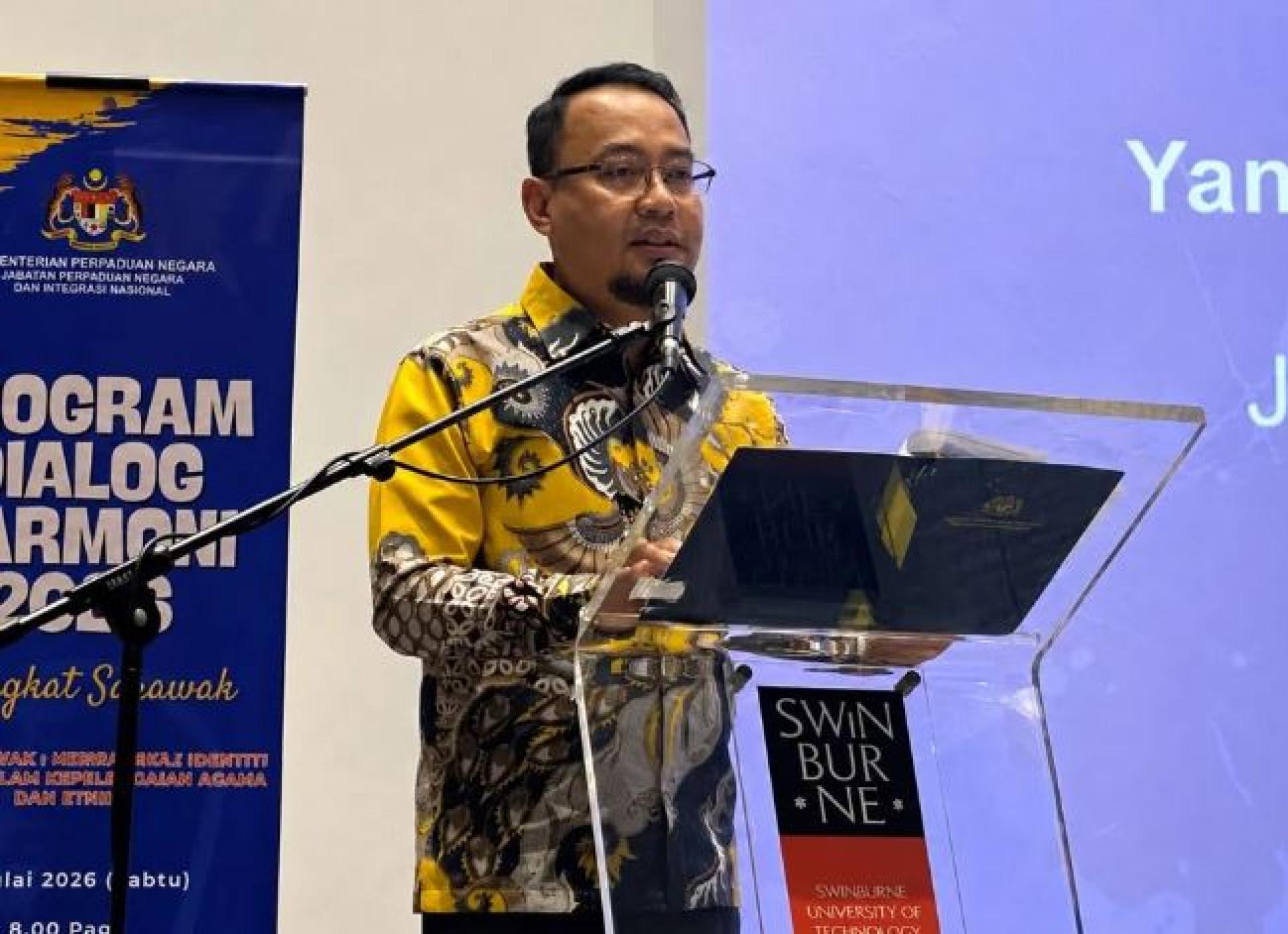
He said this when officiating at the Sarawak-level ‘Dialog Harmoni 2026’ programme at Swinburne University of Technology Sarawak today (Jul 25).
Norzahiruddin described Sarawak as a model of harmony, where people of different ethnicities and religions have long lived together in mutual respect.
He said this was reflected in the National Unity Index, with Sarawak recording the country’s highest score of 0.791, surpassing the national average of 0.701.
“The achievement proves that Sarawak is indeed a harmonious state,” he said.
On the same note, Norzahiruddin urged young Sarawakians to become ambassadors of unity by using social media responsibly to promote harmony and engaging in respectful dialogue across communities.
He said university students would become the nation’s future leaders and decision-makers, making it crucial for them to champion unity both on campus and online.
He said higher learning institutions provide the ideal environment for students to interact with peers from different ethnic, religious and cultural backgrounds, allowing them to better understand diversity and break down stereotypes.
“You are the intellectuals and decision-makers of the future. Universities are not just places to earn a degree, but the best social laboratories for learning to understand differences.
“Go out, engage in dialogue and find common ground that strengthens our unity,” he said.
The dialogue programme, themed ‘Anak Sarawak: Elevating a Shared Identity Amid Religious and Ethnic Diversity’, was moderated by Swinburne University lecturer Dr Seri Banyan.
The panellists comprised Universiti Malaysia Sarawak Faculty of Law lecturer Dr Lucy Sebli Seidelson, National Security Council (MKN) Sarawak director Mohammad Haffizie Putit, and Unit for Other Religions (Unifor) director Datuk Georgina Apphia Ngau.
The programme brought together students and representatives from higher learning institutions, non-governmental organisations and relevant agencies.
“We do not ask anyone to abandon their ethnic or religious identity in the name of unity,” he added.
“Keep your identity as Iban, Bidayuh, Chinese, Melanau, Orang Ulu or Malay, but place them under one larger umbrella as ‘Anak Sarawak’.
“When we are united under this shared identity, no external elements can undermine our unity.”
He said this when officiating at the Sarawak-level ‘Dialog Harmoni 2026’ programme at Swinburne University of Technology Sarawak today (Jul 25).
Norzahiruddin described Sarawak as a model of harmony, where people of different ethnicities and religions have long lived together in mutual respect.
He said this was reflected in the National Unity Index, with Sarawak recording the country’s highest score of 0.791, surpassing the national average of 0.701.
“The achievement proves that Sarawak is indeed a harmonious state,” he said.
On the same note, Norzahiruddin urged young Sarawakians to become ambassadors of unity by using social media responsibly to promote harmony and engaging in respectful dialogue across communities.
He said university students would become the nation’s future leaders and decision-makers, making it crucial for them to champion unity both on campus and online.
He said higher learning institutions provide the ideal environment for students to interact with peers from different ethnic, religious and cultural backgrounds, allowing them to better understand diversity and break down stereotypes.
“You are the intellectuals and decision-makers of the future. Universities are not just places to earn a degree, but the best social laboratories for learning to understand differences.
“Go out, engage in dialogue and find common ground that strengthens our unity,” he said.
The dialogue programme, themed ‘Anak Sarawak: Elevating a Shared Identity Amid Religious and Ethnic Diversity’, was moderated by Swinburne University lecturer Dr Seri Banyan.
The panellists comprised Universiti Malaysia Sarawak Faculty of Law lecturer Dr Lucy Sebli Seidelson, National Security Council (MKN) Sarawak director Mohammad Haffizie Putit, and Unit for Other Religions (Unifor) director Datuk Georgina Apphia Ngau.
The programme brought together students and representatives from higher learning institutions, non-governmental organisations and relevant agencies.