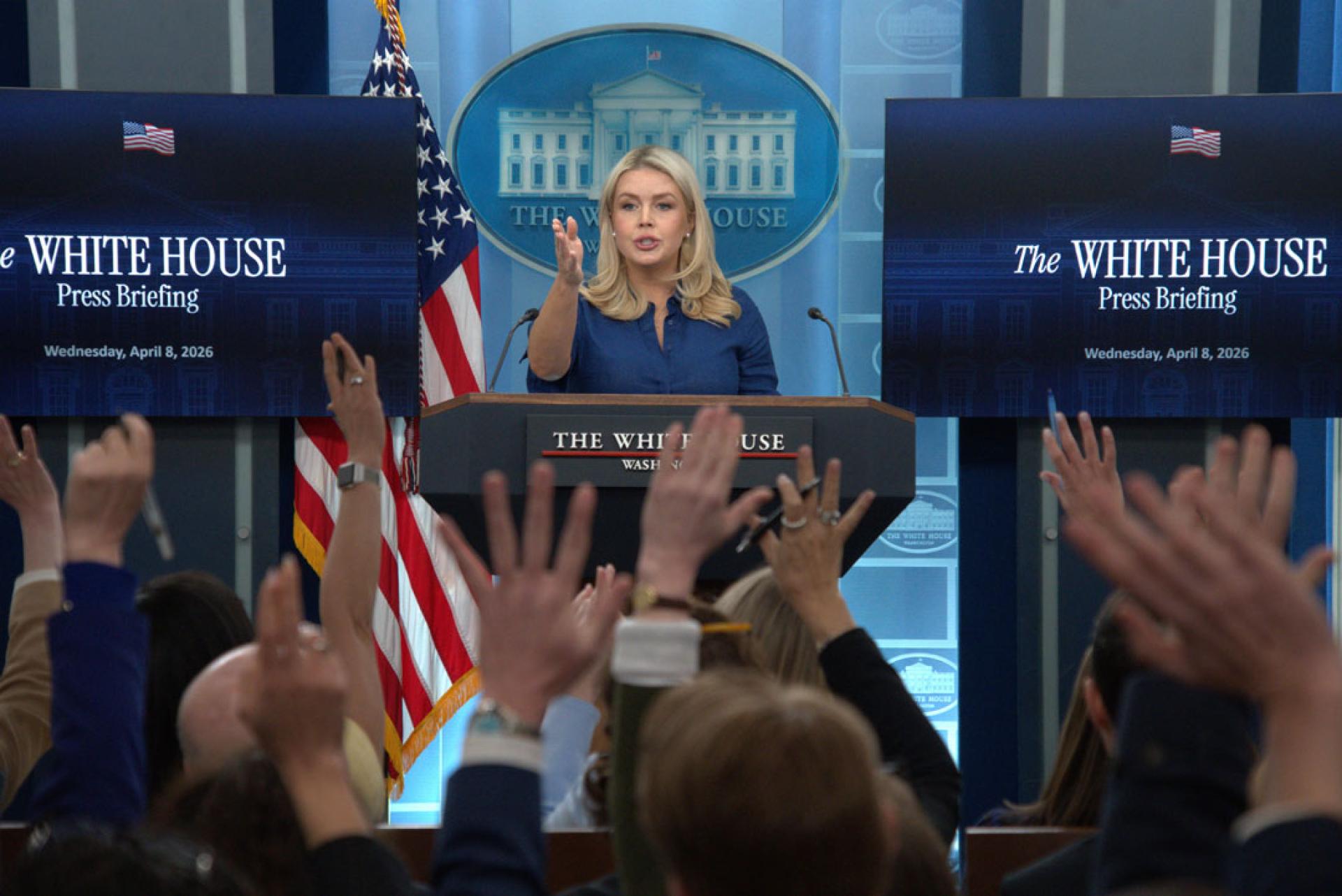
The United States and Iran have reached a ceasefire agreement, temporarily easing tensions. US President Trump later revealed that he believed China played a key mediating role in the process. On the 8th, a White House spokesperson confirmed that the US and Chinese governments had recently held high-level talks regarding the Iran issue, drawing attention to Beijing's influence in this crisis.
White House spokesperson Levitt, responding to reporters' questions, said: “Regarding the China aspect, the US and Chinese governments have conducted high-level discussions.” She did not provide further details, but added that President Trump has great respect for President Xi Jinping, maintains a good working relationship with him, and looks forward to visiting China in several weeks.
Earlier, after announcing a two-week "mutual" ceasefire agreement with Iran, Trump told AFP that he heard China was also involved in urging Iran to accept the ceasefire. The New York Times also cited information from three Iranian officials, saying that before the deadline set by Trump expired, it was China who had persuaded Tehran to show flexibility and ultimately agree to the ceasefire.
● Beijing: Always Actively Promoting Peace and Ending War
In Beijing, Foreign Ministry spokeswoman Mao Ning responded at the regular press conference on Wednesday, stating that since the outbreak of the Iran conflict, China has always actively promoted peace talks, consistently advocating for a prompt ceasefire and end to hostilities, and for resolving disputes through political and diplomatic means. She emphasized that China will continue to play a constructive role and contribute to the restoration of peace and stability in the Middle East.
Under this ceasefire agreement, the US agreed to suspend attacks on Iran in exchange for the resumption of navigation in the Strait of Hormuz. After the ceasefire was brokered, Pakistani Prime Minister Sharif also publicly thanked China, Saudi Arabia, Turkey, Egypt, and Qatar for their valuable support.