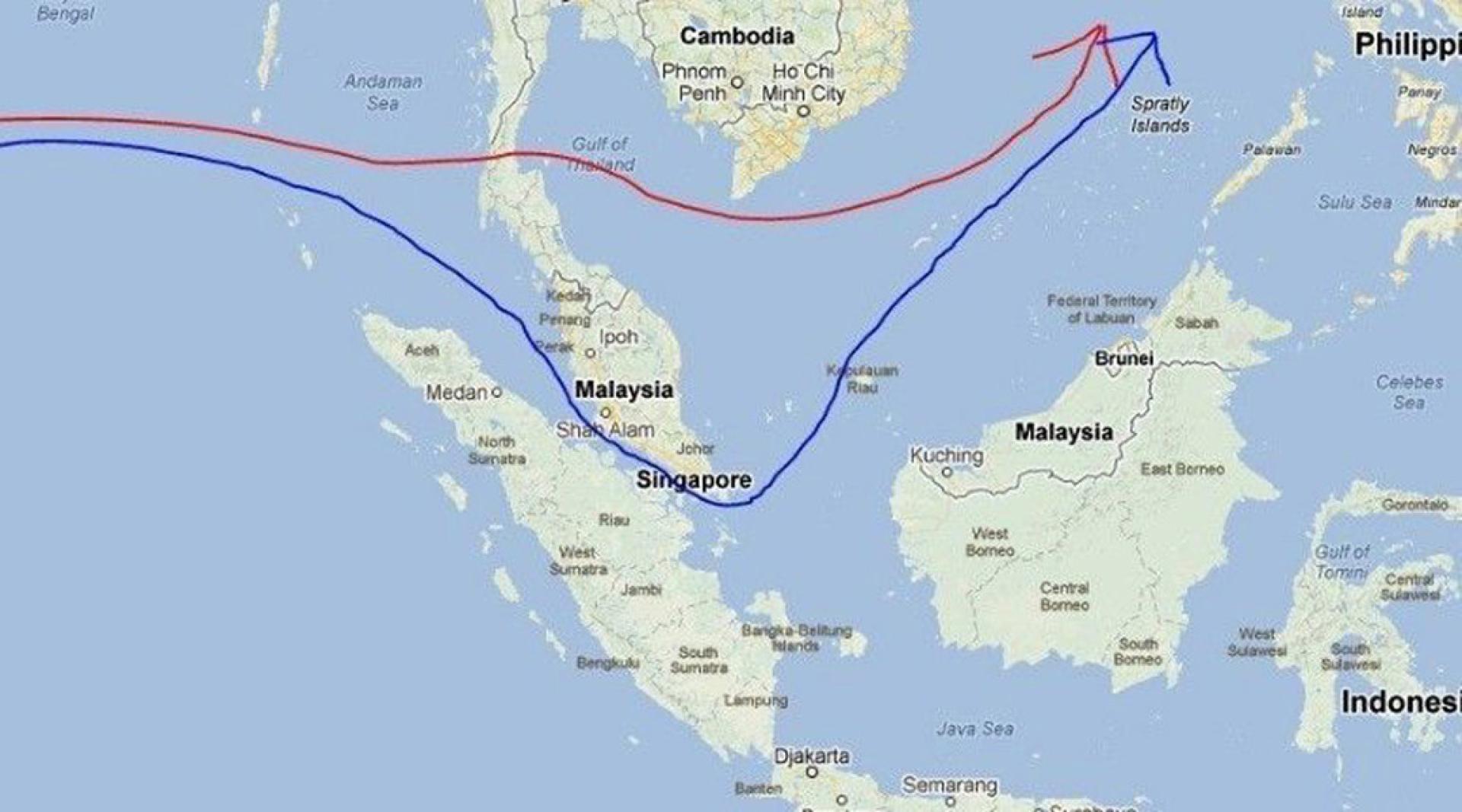
The Thai government’s feasibility review of the southern land bridge project found that the project lacks commercial viability and faces significant environmental risks. The plan is to shelve this mega-project, which costs up to 1 trillion baht (about 121.3 billion ringgit). Authorities will instead expand the existing port at Ranong in the south and upgrade related rail networks to improve logistics and transportation.
According to Thai media reports, Finance Minister Ekniti, along with other officials, announced the final research conclusions of the project on the 24th.
The original land bridge plan proposed building a deep-water port in each of Chumphon and Ranong provinces, along with a 90-kilometer road and railway connecting the two ports to facilitate the transfer of containers. Upon completion, vessels traveling between the Middle East and East Asia could bypass the busy Strait of Malacca, potentially shortening transportation time by up to five days. Thailand hoped the land bridge would become an alternative trade route to the Malacca Strait and turn Thailand into a regional logistics hub. The land bridge was also seen as an alternative to the earlier Kra Canal project.
However, the land bridge project has long been questioned, and Prime Minister Anutin earlier ordered a re-evaluation.
Ekniti revealed that the committee’s research results indicate that the feasibility level of the land bridge project is low, mainly due to budgetary risks and multiple uncertainties. Accordingly, the committee decided to compile a report for consideration by the Prime Minister and cabinet, recommending the termination of the project in its original form.
He said that among the world’s 10 largest shipping companies, nine have already invested in other competing projects and have little interest in Thailand’s land bridge plan.
According to reports, based on updated research data reflecting the global economy in 2025, the project’s financial return rate has dropped from an originally expected 8% to just 4.8%.
In terms of operational risk, the transfer of goods involves multiple connections between shipping, trucking, and railway, with several transfer points, making the actual operation highly risky.
In addition, the project poses environmental risks, including impacts on Ranong’s mangroves, wetland reserves, marine ecosystems, and coastal fisheries, as well as threatening the area’s crucial marine tourism industry.