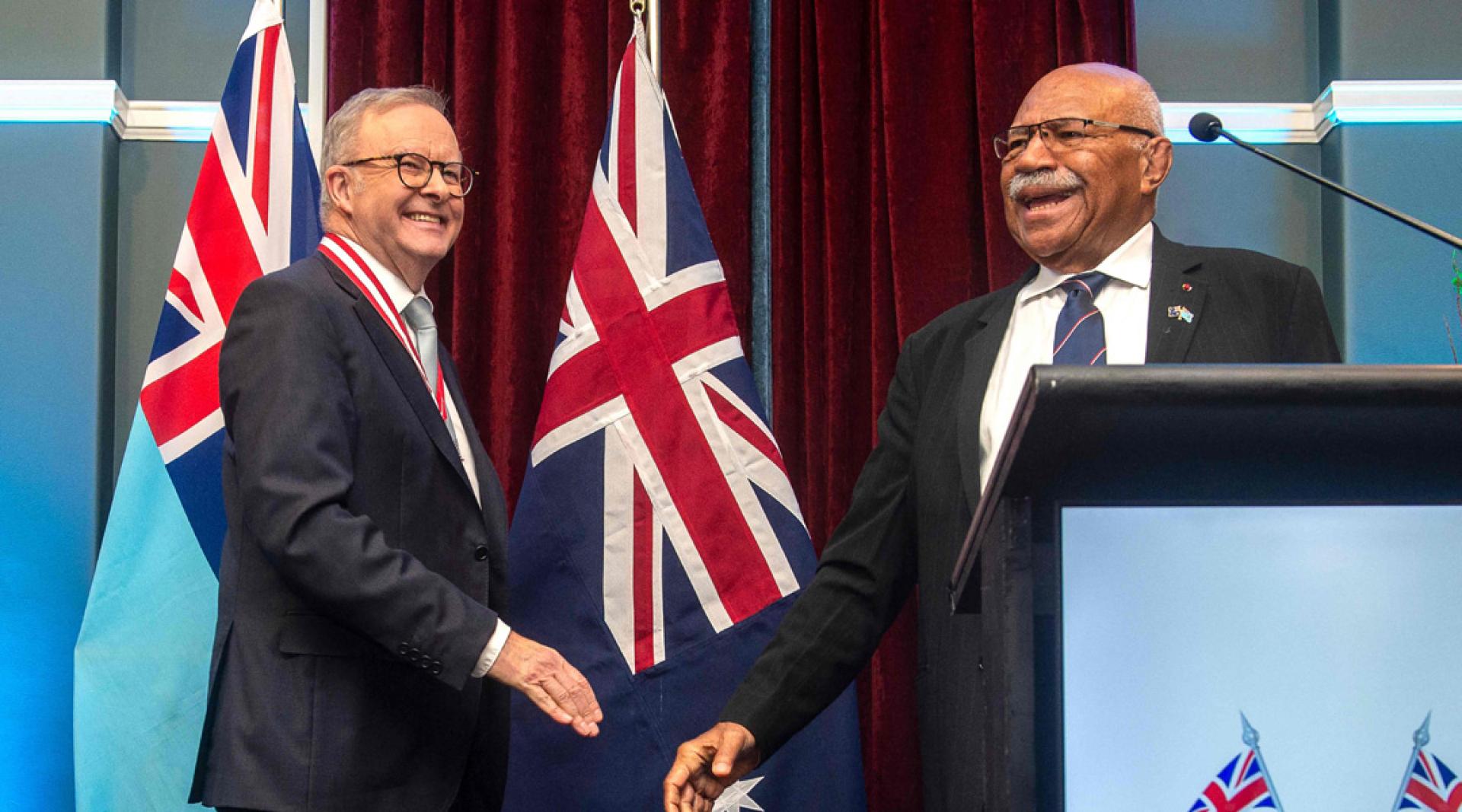
On the 6th, Australia and Fiji signed a new defense alliance agreement to further deepen bilateral security cooperation and, as China continues to expand its influence in the South Pacific, to strengthen their regional strategic positioning.
According to AFP, the two sides signed the “Vuvale Partnership for Peace”, making Fiji one of the few countries to have a formal defense treaty with Australia, with both committing to fulfill obligations of “collective defense”.
China signed a secretive security agreement with the Pacific island nation of Solomon Islands in 2022, causing a stir in the South Pacific region and deepening concerns that Beijing might establish a permanent military foothold there in the future.
In recent years, Australia has ramped up its diplomatic efforts, signing new cooperation agreements with countries such as Papua New Guinea, Vanuatu, and Tuvalu in response.
During a visit to Fiji’s capital Suva, Australian Prime Minister Anthony Albanese signed the alliance agreement jointly with Fiji’s Prime Minister Sitiveni Rabuka.
Australia’s Department of Foreign Affairs stated: “This alliance agreement will further consolidate the joint commitment of Australia and Fiji to uphold regional peace, prosperity, and security.”
The agreement states: “This treaty aims to recognize and reaffirm both parties’ commitment to safeguard each other’s sovereignty, ensure mutual defense and security interests, and promote stability and security in the Pacific region.”
Since Rabuka took office in 2022, Fiji has refocused on its traditional partnerships with Australia and New Zealand, and in 2025, rejected speculation that Fiji and other South Pacific nations might allow China to station permanent troops in the future.
Australia and Vanuatu signed a wide-ranging security agreement this June, explicitly prohibiting any foreign military bases from being established in this Pacific nation.
China, meanwhile, has warned Australia not to play “geopolitical games” in the Pacific region.
China signed a secretive security agreement with the Pacific island nation of Solomon Islands in 2022, causing a stir in the South Pacific region and deepening concerns that Beijing might establish a permanent military foothold there in the future.
In recent years, Australia has ramped up its diplomatic efforts, signing new cooperation agreements with countries such as Papua New Guinea, Vanuatu, and Tuvalu in response.
During a visit to Fiji’s capital Suva, Australian Prime Minister Anthony Albanese signed the alliance agreement jointly with Fiji’s Prime Minister Sitiveni Rabuka.
Australia’s Department of Foreign Affairs stated: “This alliance agreement will further consolidate the joint commitment of Australia and Fiji to uphold regional peace, prosperity, and security.”
The agreement states: “This treaty aims to recognize and reaffirm both parties’ commitment to safeguard each other’s sovereignty, ensure mutual defense and security interests, and promote stability and security in the Pacific region.”
Since Rabuka took office in 2022, Fiji has refocused on its traditional partnerships with Australia and New Zealand, and in 2025, rejected speculation that Fiji and other South Pacific nations might allow China to station permanent troops in the future.
Australia and Vanuatu signed a wide-ranging security agreement this June, explicitly prohibiting any foreign military bases from being established in this Pacific nation.
China, meanwhile, has warned Australia not to play “geopolitical games” in the Pacific region.