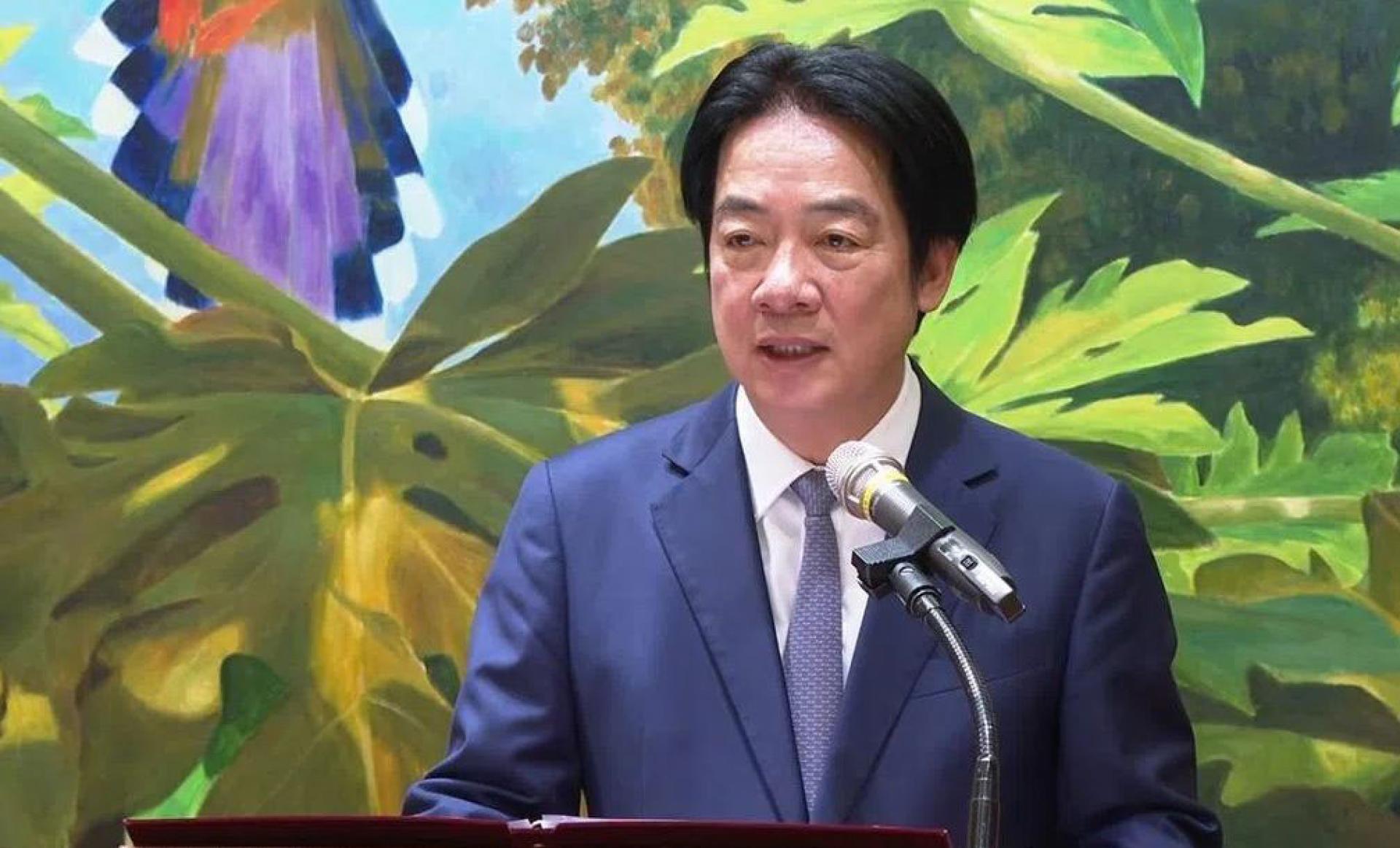
Following last week’s statement that mainland China is no longer Taiwan’s largest export market for agricultural products, Taiwan President Lai Ching-te said, during a meeting with Taiwan’s Top Ten Outstanding Agricultural Experts, that mainland China has weaponized agricultural products in an attempt to use agriculture to force political concessions.
According to a press release from the Presidential Office website, Lai Ching-te said on Monday that agriculture is the foundation of Taiwan’s economy and social stability, and the government will continue to support farmers and promote the upgrading of agriculture, allowing Taiwan’s agricultural sector to shine on the international stage.
He mentioned that Taiwan’s industries should be “rooted in Taiwan, positioned globally, and marketed to the world,” and agriculture is no exception. Taiwanese agricultural products need to reduce their dependence on a single market and continue to move toward diversified, high-end global markets.
Lai Ching-te said that because mainland China has weaponized agricultural products and is trying to use agriculture to pressure politically, sometimes banning imports under various pretexts or raising tariffs, the share of Taiwan’s agricultural exports to mainland China has dropped from 20.5% in 2015 to 11.5% last year. Taiwan is actively opening up international markets, and now the USA and Japan have become the top two export markets for Taiwanese agricultural products.
He also said that, thanks to joint efforts by the Ministry of Agriculture, farmers, and other parties, this month Taiwanese mangoes, lychees, and dragon fruit have been exported to Europe’s premium markets for the first time. The government will continue to improve cold chain technology and quarantine capabilities so that Taiwan’s agricultural products can keep reaching markets around the world.
Last Thursday, Lai Ching-te said at the Jiji Railway Line full-line opening ceremony in Nantou that mainland China is no longer the largest export market for Taiwanese agricultural products. Although the market across the strait is huge, in the past, many Taiwanese farmers or businesses brought their farming techniques and crop varieties to the mainland. Now, with large-scale cultivation in mainland China, Taiwanese agricultural products are facing competition.
Lai Ching-te believes that this has also led to changes in Beijing’s policies toward Taiwanese agricultural products in recent years, often banning imports on the grounds of failing inspection standards. Last year, Beijing also canceled tariff exemptions for 34 Taiwanese agricultural products, including 15 fruits, 11 vegetables, and 8 aquatic products.