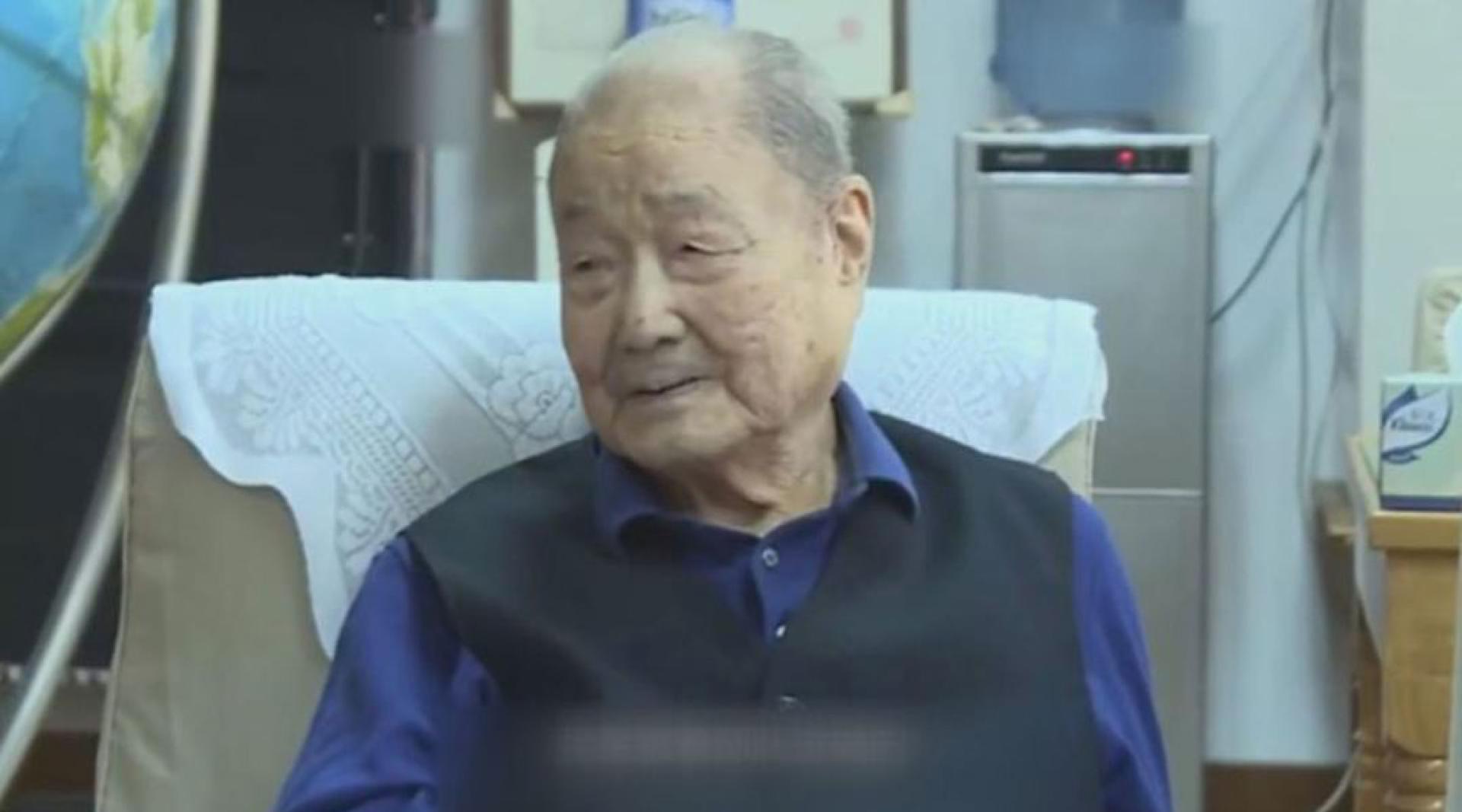
Senior Chinese Communist Party elder and former member of the Politburo Standing Committee, Song Ping, passed away in Beijing at 3:36 PM on the 4th, aged 109. Song Ping's life spanned over a century, crossing all the important periods from the revolution, the War of Resistance against Japan, the founding of the PRC, to reform and opening up. He once served as Zhou Enlai’s political secretary, and held positions such as director of the State Planning Commission and head of the CCP Organization Department. In the 1980s, he recommended former state leader Hu Jintao enter the core of power and was thus known as “the greatest talent scout in the political arena.” Song Ping’s last public appearance was at the opening and closing ceremonies of the 20th National Congress of the Communist Party of China in October 2022.
In its report on the evening of the 4th, Xinhua described Song Ping as “an excellent member of the Chinese Communist Party, a loyal and time-tested communist fighter, an outstanding proletarian revolutionary and statesman, and an outstanding leader of the Party and the country.”
Song Ping, original name Song Yanping, was born on April 24, 1917, in Juxian, Shandong Province. He was an intelligent youth, skipped several grades, and quickly completed primary and middle school. In 1935, he was admitted to the Department of Chemistry at Tsinghua University.
In 1937, at the age of 20, Song Ping joined the Chinese Communist Party. During the War of Resistance against Japan, he moved between Yan'an and Chongqing, was responsible for propaganda work, and served as Zhou Enlai’s political secretary.
● Viewed as a Bridge Between the 'Conservative' and 'Reformist' Factions
After the founding of the People's Republic of China, Song Ping worked for a long time in the State Planning Commission and once served as the First Secretary of the Gansu Provincial Committee. After the Cultural Revolution, he successively served as Director of the State Planning Commission, State Councillor, and Organization Department Minister. In that era of intense ideological debate, he was seen as an important balance between ‘conservatives’ and ‘reformers.’ In 1989, at age 72, Song Ping, along with Jiang Zemin and Li Ruihuan, was promoted as a Politburo Standing Committee member at the 4th plenary session of the 13th CCP Central Committee, ranked fifth among them.
The most well-known period in Song Ping’s political career was his years leading Gansu Province, where he vigorously promoted then-Gansu Provincial Construction Commission deputy director Hu Jintao. With Song Ping’s strong recommendation, Hu Jintao was transferred from Gansu to Beijing to serve as First Secretary of the Secretariat of the Central Committee of the Communist Youth League, rapidly putting this young cadre on the fast track. Hu Jintao eventually became the fourth-generation top leader of the Communist Party.
After the 14th Party Congress, Song Ping retired with honors. He occasionally attended major official events such as Party Congresses and National Day military parades, often appearing in a Mao suit.
Song Ping, original name Song Yanping, was born on April 24, 1917, in Juxian, Shandong Province. He was an intelligent youth, skipped several grades, and quickly completed primary and middle school. In 1935, he was admitted to the Department of Chemistry at Tsinghua University.
In 1937, at the age of 20, Song Ping joined the Chinese Communist Party. During the War of Resistance against Japan, he moved between Yan'an and Chongqing, was responsible for propaganda work, and served as Zhou Enlai’s political secretary.
● Viewed as a Bridge Between the 'Conservative' and 'Reformist' Factions
After the founding of the People's Republic of China, Song Ping worked for a long time in the State Planning Commission and once served as the First Secretary of the Gansu Provincial Committee. After the Cultural Revolution, he successively served as Director of the State Planning Commission, State Councillor, and Organization Department Minister. In that era of intense ideological debate, he was seen as an important balance between ‘conservatives’ and ‘reformers.’ In 1989, at age 72, Song Ping, along with Jiang Zemin and Li Ruihuan, was promoted as a Politburo Standing Committee member at the 4th plenary session of the 13th CCP Central Committee, ranked fifth among them.
The most well-known period in Song Ping’s political career was his years leading Gansu Province, where he vigorously promoted then-Gansu Provincial Construction Commission deputy director Hu Jintao. With Song Ping’s strong recommendation, Hu Jintao was transferred from Gansu to Beijing to serve as First Secretary of the Secretariat of the Central Committee of the Communist Youth League, rapidly putting this young cadre on the fast track. Hu Jintao eventually became the fourth-generation top leader of the Communist Party.
After the 14th Party Congress, Song Ping retired with honors. He occasionally attended major official events such as Party Congresses and National Day military parades, often appearing in a Mao suit.