KUALA LUMPUR, Aug 26 (Bernama) -- The future of the country's higher education requires a comprehensive review of acts related to higher education, including the Universities and University Colleges Act 1971 (AUKU).
Higher Education Minister Datuk Seri Dr Zambry Abd Kadir said the move to review and improve the existing legal framework are important to ensure that the higher education ecosystem remains relevant and is not further constrained by old regulations.
"We need to review the existence of acts related to higher education...among the acts that are always in focus is of course, AUKU itself.
"We admit that there are constraints that existed before. That is why we are looking at new aspects, including in terms of guaranteeing academic freedom, freedom of expression, and student empowerment," he said here today.
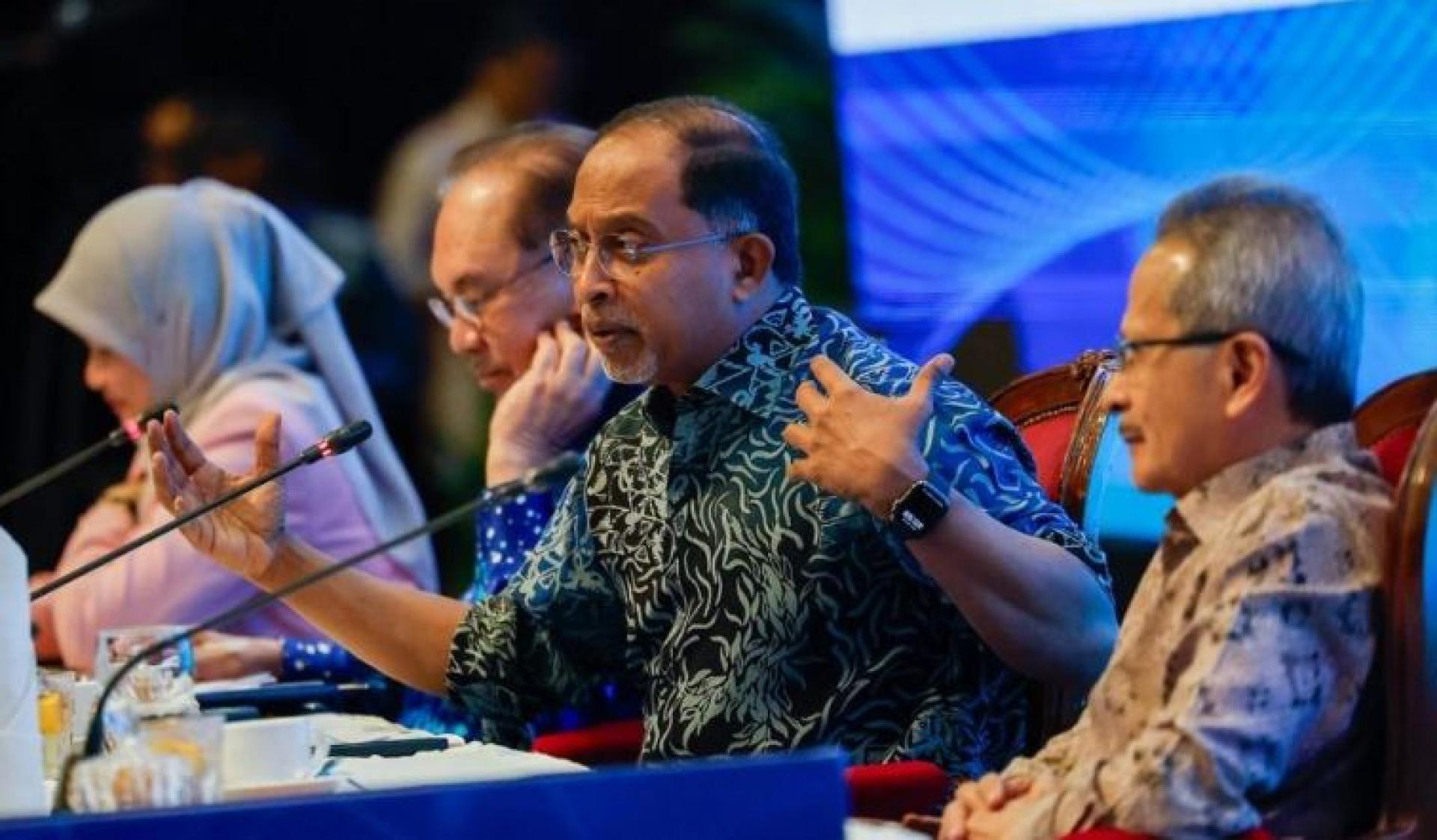
He said this as a panelist at the MADANI Malaysian Scholars Forum Series 13, National Future Education and the Universities and University College Act (AUKU) at Dewan Tunku Chancellor, University of Malaya tonight, which was also attended by Prime Minister Datuk Seri Anwar Ibrahim.
The forum also featured Education Minister Datuk Seri Fadhlina Sidek and president of the Academy of Sciences Malaysia Tengku Datuk Mohd Azzman Shariffadeen as panelists, while Anwar acted as the moderator.
Meanwhile, Zambry said the Ministry of Higher Education (KPT) was also considering the drafting of a new act such as One Higher Education Act to coordinate various acts related to higher education under a more comprehensive framework.
To realise this, he said an Independent Committee had been established to collect and evaluate various memorandums and views from academics and student representatives.
Meanwhile, Fadhlina said the Ministry of Education (MOE) is committed to expanding access to the country's education system through a 'humane education' approach to ensure that every child gets an equitable learning opportunity.
She said MOE has always adhered to the principle that access to education must reach all students regardless of location or where they are.
"Humane education was born to tap into the various talents and potentials of our children. That is why initiatives such as Schools in Hospital (SDH), schools in rehabilitation centres and the K9 and K11 School models for Orang Asli students continue to be strengthened.
"At the same time, access to pre-schools has also been expanded on a large scale for free because education starts at an early stage, in addition to helping ease the financial burden of families," she said.
Fadhlina said the country's education system should not be oriented solely on examination grades or simply providing human capital for the job market, but rather should focus on developing balanced, visionary individuals who have mental resilience and strong moral values.
"Children are not just numbers or exam grades. They come to school with intellect, emotions, ambitions and some come with anxieties or shortcomings that we need to address," she said.
"We need to review the existence of acts related to higher education...among the acts that are always in focus is of course, AUKU itself.
"We admit that there are constraints that existed before. That is why we are looking at new aspects, including in terms of guaranteeing academic freedom, freedom of expression, and student empowerment," he said here today.
He said this as a panelist at the MADANI Malaysian Scholars Forum Series 13, National Future Education and the Universities and University College Act (AUKU) at Dewan Tunku Chancellor, University of Malaya tonight, which was also attended by Prime Minister Datuk Seri Anwar Ibrahim.
The forum also featured Education Minister Datuk Seri Fadhlina Sidek and president of the Academy of Sciences Malaysia Tengku Datuk Mohd Azzman Shariffadeen as panelists, while Anwar acted as the moderator.
Meanwhile, Zambry said the Ministry of Higher Education (KPT) was also considering the drafting of a new act such as One Higher Education Act to coordinate various acts related to higher education under a more comprehensive framework.
To realise this, he said an Independent Committee had been established to collect and evaluate various memorandums and views from academics and student representatives.
Meanwhile, Fadhlina said the Ministry of Education (MOE) is committed to expanding access to the country's education system through a 'humane education' approach to ensure that every child gets an equitable learning opportunity.
She said MOE has always adhered to the principle that access to education must reach all students regardless of location or where they are.
"Humane education was born to tap into the various talents and potentials of our children. That is why initiatives such as Schools in Hospital (SDH), schools in rehabilitation centres and the K9 and K11 School models for Orang Asli students continue to be strengthened.
"At the same time, access to pre-schools has also been expanded on a large scale for free because education starts at an early stage, in addition to helping ease the financial burden of families," she said.
Fadhlina said the country's education system should not be oriented solely on examination grades or simply providing human capital for the job market, but rather should focus on developing balanced, visionary individuals who have mental resilience and strong moral values.
"Children are not just numbers or exam grades. They come to school with intellect, emotions, ambitions and some come with anxieties or shortcomings that we need to address," she said.