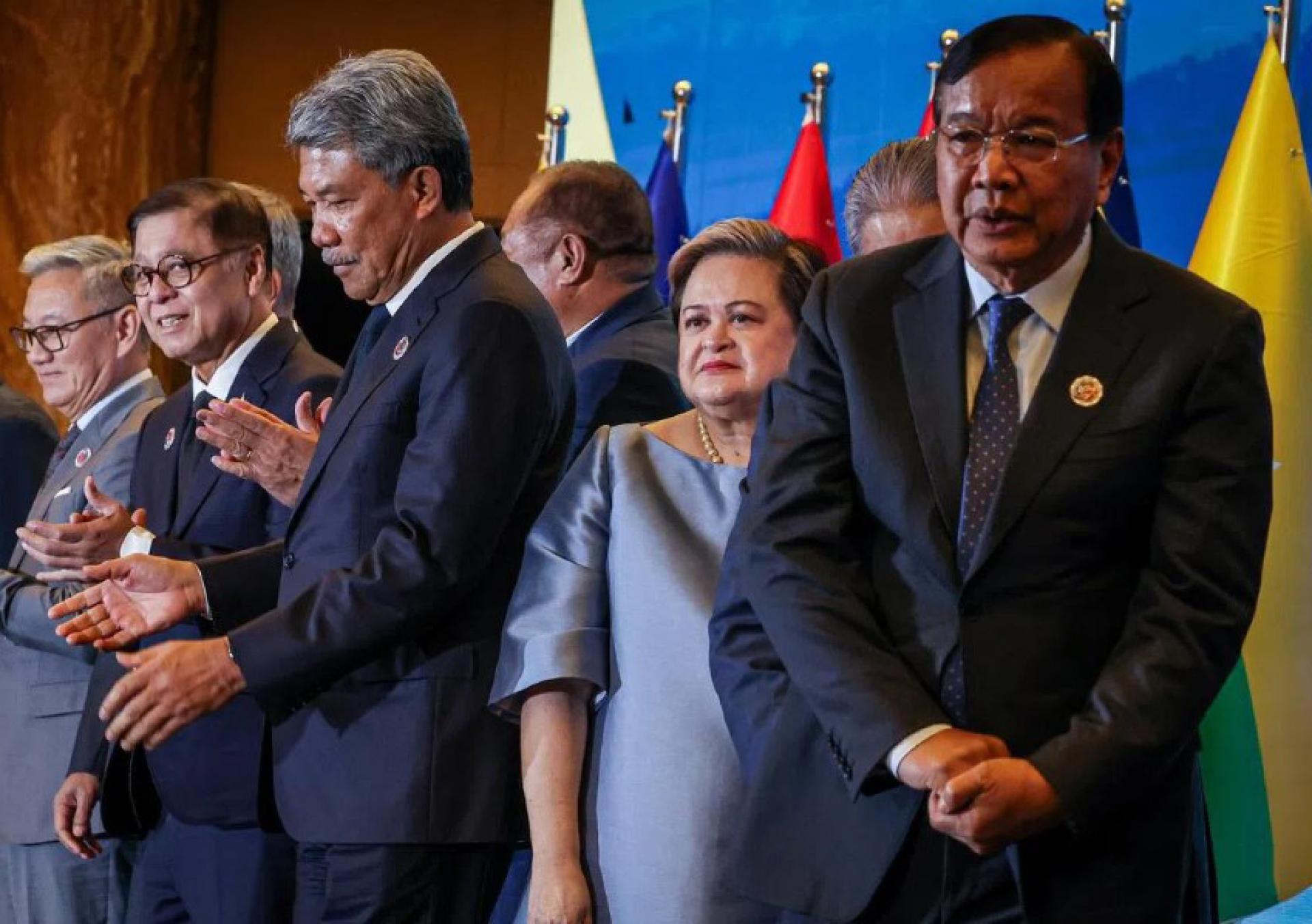
(Kuala Lumpur, 23rd) Thailand and Cambodia have agreed to meet again this week to discuss a ceasefire along the border. Analysis suggests that while a quick reconciliation may not be reached, both countries are sending out positive signals.
The representatives of Thailand and Cambodia held talks on Monday (December 22) during the special ASEAN Foreign Ministers' Meeting. After the meeting, Thai Foreign Minister Sihasak said that Thai and Cambodian defense officials will meet again later this week to discuss the ceasefire along the border.
Sihasak told reporters at a press conference that military representatives from both countries will hold a special meeting on Wednesday (24th) in Chanthaburi Province, Thailand, near the border. Thailand will request that Cambodian troops withdraw from the border and carry out demining operations.
The Thai Ministry of Foreign Affairs issued a statement saying that under the framework of the Joint Border Affairs Committee, both sides will have "detailed discussions on the implementation of the ceasefire, related steps, and verification work" through their respective military representatives.
The Cambodian Ministry of Interior said it welcomes regional efforts to secure a ceasefire and end hostilities. The statement said: "We remain optimistic that the Thai side will show goodwill and fully implement the ceasefire agreement so as to align with ASEAN's objectives."
This special meeting was held in Kuala Lumpur. In his opening speech, Malaysian Foreign Minister Mohamad Hasan said ASEAN should take all necessary measures to maintain regional peace and stability.
"Our goal is not just to ease tensions, but also to strengthen trust-building among the parties in conflict, opening up prospects for dialogue."
Singaporean Foreign Minister Vivian Balakrishnan, after attending the meeting on Monday, wrote on Facebook that the meeting is an important step towards resuming the ceasefire.
He said: "I urge both sides to de-escalate the situation, resume dialogue, and resolve disputes peacefully. Only by uniting can ASEAN secure a brighter collective future."
On Monday, China's Special Envoy for Asian Affairs, Deng Xijun, also met with Thai Prime Minister Anutin to discuss the border conflict.
After the meeting, Anutin told reporters: "(Deng Xijun) came here not to ask us to reach any agreement. He expressed China's desire to see peace, and Thailand's position on the need for peace remains firm."
The representatives of Thailand and Cambodia held talks on Monday (December 22) during the special ASEAN Foreign Ministers' Meeting. After the meeting, Thai Foreign Minister Sihasak said that Thai and Cambodian defense officials will meet again later this week to discuss the ceasefire along the border.
Sihasak told reporters at a press conference that military representatives from both countries will hold a special meeting on Wednesday (24th) in Chanthaburi Province, Thailand, near the border. Thailand will request that Cambodian troops withdraw from the border and carry out demining operations.
The Cambodian Ministry of Interior said it welcomes regional efforts to secure a ceasefire and end hostilities. The statement said: "We remain optimistic that the Thai side will show goodwill and fully implement the ceasefire agreement so as to align with ASEAN's objectives."
This special meeting was held in Kuala Lumpur. In his opening speech, Malaysian Foreign Minister Mohamad Hasan said ASEAN should take all necessary measures to maintain regional peace and stability.
"Our goal is not just to ease tensions, but also to strengthen trust-building among the parties in conflict, opening up prospects for dialogue."
Singaporean Foreign Minister Vivian Balakrishnan, after attending the meeting on Monday, wrote on Facebook that the meeting is an important step towards resuming the ceasefire.
He said: "I urge both sides to de-escalate the situation, resume dialogue, and resolve disputes peacefully. Only by uniting can ASEAN secure a brighter collective future."
On Monday, China's Special Envoy for Asian Affairs, Deng Xijun, also met with Thai Prime Minister Anutin to discuss the border conflict.
After the meeting, Anutin told reporters: "(Deng Xijun) came here not to ask us to reach any agreement. He expressed China's desire to see peace, and Thailand's position on the need for peace remains firm."
The latest round of border clashes between Cambodia and Thailand has lasted 16 days. On Monday, the Cambodian Ministry of Interior said the conflict has resulted in 20 civilian deaths, 79 injuries, and 525,000 people displaced.
The ministry also said that on the same day, Thai troops fired shells into civilian areas of Battambang Province, Cambodia, "completely destroying a residential building and injuring a Chinese citizen."
However, Sihasak warned that the two sides might not immediately reach a ceasefire agreement at the Wednesday meeting. "Our position is that a ceasefire is not something that can be achieved by mere declaration, but by actions."
Monday's talks aimed to salvage the "Kuala Lumpur Peace Agreement," reached between Thailand and Cambodia in October under the witness of U.S. President Trump.
Sihasak said that this agreement was reached too hastily.
The ministry also said that on the same day, Thai troops fired shells into civilian areas of Battambang Province, Cambodia, "completely destroying a residential building and injuring a Chinese citizen."
However, Sihasak warned that the two sides might not immediately reach a ceasefire agreement at the Wednesday meeting. "Our position is that a ceasefire is not something that can be achieved by mere declaration, but by actions."
Monday's talks aimed to salvage the "Kuala Lumpur Peace Agreement," reached between Thailand and Cambodia in October under the witness of U.S. President Trump.
Sihasak said that this agreement was reached too hastily.
"The U.S. hoped to sign a declaration during President Trump's visit... Sometimes, we really need to sit down and have a good discussion so that the consensus we reach can truly be observed and respected."
In this meeting, Thailand's tone has changed. Previously, Thailand had insisted that Cambodia must publicly announce a ceasefire and cooperate on demining before peace could be restored.
But after the talks, Sihasak proposed that the next meeting's date and location be set by the Cambodian side, and only emphasized the demining issue, no longer insisting on a prior ceasefire announcement by Cambodia.
Analysts believe that although Thailand and Cambodia have not fully shifted towards reconciliation, both sides are indeed returning to a pragmatic approach, which is a positive signal.
In this meeting, Thailand's tone has changed. Previously, Thailand had insisted that Cambodia must publicly announce a ceasefire and cooperate on demining before peace could be restored.
But after the talks, Sihasak proposed that the next meeting's date and location be set by the Cambodian side, and only emphasized the demining issue, no longer insisting on a prior ceasefire announcement by Cambodia.
Analysts believe that although Thailand and Cambodia have not fully shifted towards reconciliation, both sides are indeed returning to a pragmatic approach, which is a positive signal.
Dr. Lynn Wei-Ling, Director of the ASEAN Studies Centre at the ISEAS – Yusof Ishak Institute in Singapore, said in an interview with Lianhe Zaobao that negotiations between Thailand and Cambodia should be cautious and gradual. "Both sides should first focus on building trust, such as demining, communication between commanders, and preventing misjudgment in the border area."
As for whether a ceasefire can be achieved in the short term, Lynn Wei-Ling pointed out that this largely depends on whether the two sides can prevent nationalist sentiment from dominating the talks. "Once domestic politics and public pressure begin to dictate the narrative, the space for constructive dialogue shrinks rapidly."
Dr. Pongkwan Sawasdipakdi, a lecturer at Thammasat University in Thailand, said in an interview that another challenge to the ceasefire is coordination between the government and the army.
"The militaries of both countries are still clashing over strategic locations, and both sides differ in their accounts of the facts, such as whether landmines were newly planted. Therefore, even if a ceasefire agreement is reached, it is hard to predict whether it can be maintained in the long term."
As for whether a ceasefire can be achieved in the short term, Lynn Wei-Ling pointed out that this largely depends on whether the two sides can prevent nationalist sentiment from dominating the talks. "Once domestic politics and public pressure begin to dictate the narrative, the space for constructive dialogue shrinks rapidly."
Dr. Pongkwan Sawasdipakdi, a lecturer at Thammasat University in Thailand, said in an interview that another challenge to the ceasefire is coordination between the government and the army.
"The militaries of both countries are still clashing over strategic locations, and both sides differ in their accounts of the facts, such as whether landmines were newly planted. Therefore, even if a ceasefire agreement is reached, it is hard to predict whether it can be maintained in the long term."