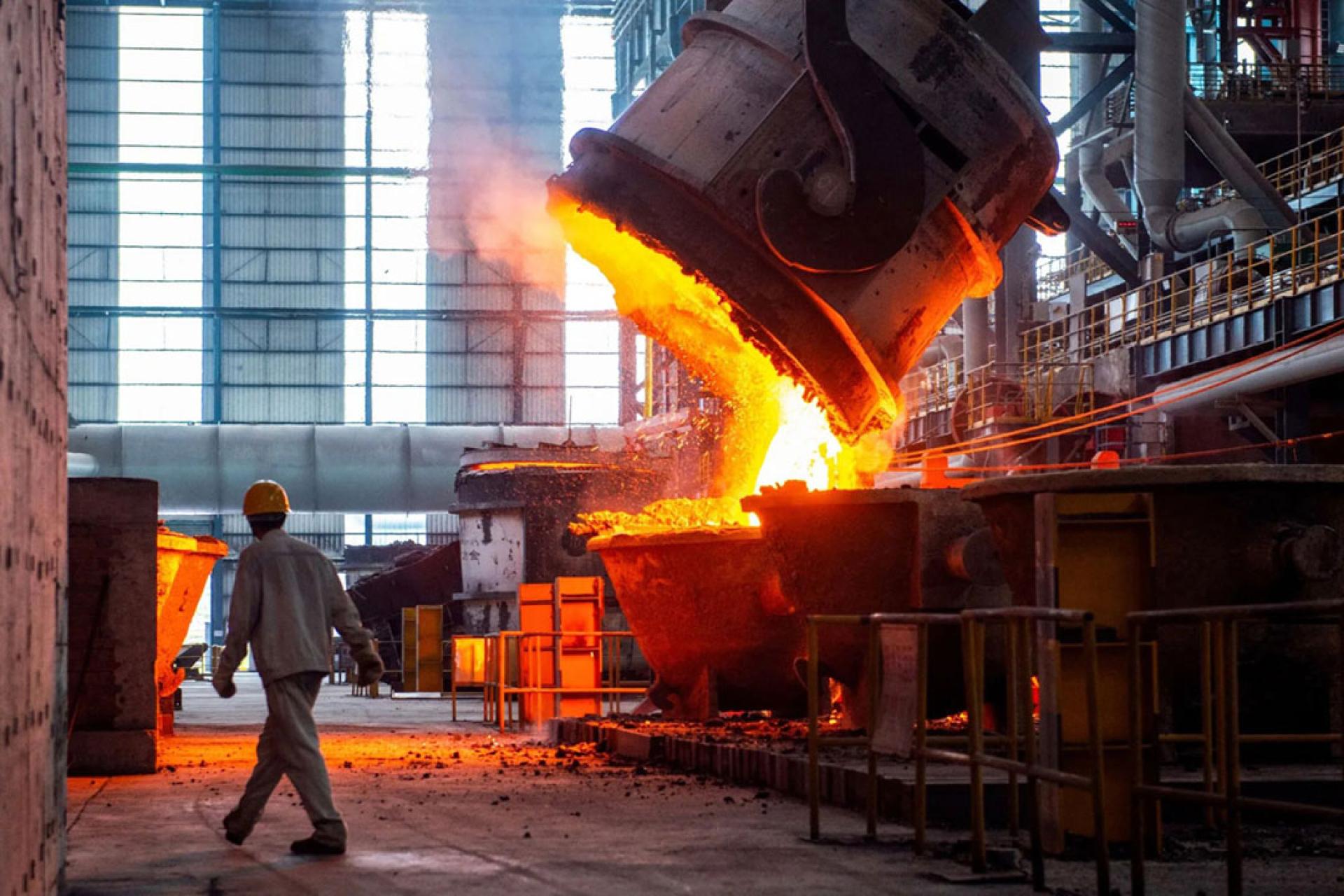
China's annual 'Two Sessions' (National People's Congress and Chinese People's Political Consultative Conference) kicked off on March 4, with Beijing and surrounding areas entering the heightened control period known as the 'Two Sessions time.' According to reports, multiple steel mills in northern China have recently been asked to reduce blast furnace production by at least 30% from March 4 to 11 in order to improve air quality. Meanwhile, from March 2 to 13, Beijing has completely banned vehicles carrying hazardous chemicals from operating.
According to foreign media reports, steel industry consultancy Mysteel released a report on the 25th stating that multiple steel mills in northern China have recently received notices to “voluntarily” initiate production restrictions, requiring blast furnace output to be cut by at least 30% from March 4 to 11. This is also a common practice during China's annual 'Two Sessions', with the aim of improving air quality in Beijing, where the meetings are held.
The report points out that China is the world's largest steel producer and consumer, and steel demand typically rebounds in March as warmer weather brings the construction industry back to work.
Ge Xin, Deputy Director of the Research Center at Chinese steel information website 'Lange Steel,' believes that this production restriction measure is expected to ease the seasonal build-up in steel inventories and thus support steel prices from falling. Additionally, the market anticipates that Chinese authorities may introduce stimulus policies during the 'Two Sessions', prompting steel mills to restock raw materials after the meetings in preparation for ramping up production.
On the other hand, on the 25th, the Traffic Management Bureau of the Beijing Municipal Public Security Bureau announced that, in order to ensure the 'safety and smooth flow' of citywide road traffic, a decision has been made to ban vehicles transporting hazardous (including highly toxic) chemicals from traveling on any roads within the administrative area of Beijing from 12:00 a.m. on March 2 to 12:00 midnight on March 13, effectively becoming a complete driving ban.