SIBU: Sarawak is targeting to emerge as a leading food producer and net food exporter through the implementation of the 13th Malaysia Plan (13MP), with a strong emphasis on outcome-based delivery and comprehensive reforms in the agri-food sector.
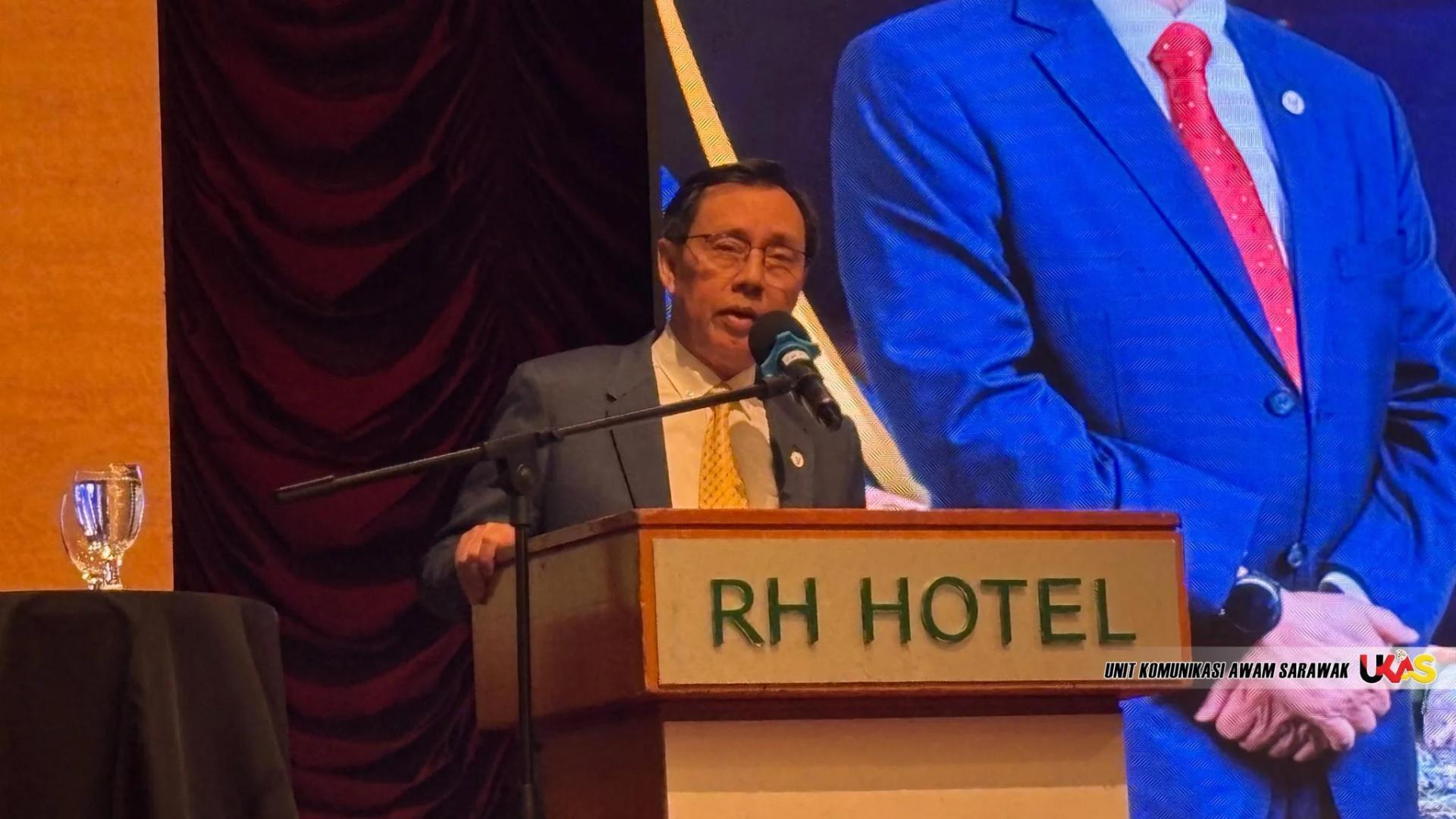
Minister of Food Industry, Commodity and Regional Development, Datuk Seri Dr Stephen Rundi Utom, said the first year of the 13MP would be a critical phase to ensure the Department of Agriculture delivers measurable results while strengthening the state’s food security.
“The agri-food sector currently contributes about 10 per cent to the state’s Gross Domestic Product (GDP), equivalent to nearly RM50 billion annually. However, its full potential has yet to be realised.
“Agriculture must move beyond routine administration towards outcome-based delivery. Every division must have a clear plan with timelines and measurable targets,” he said.
He said this when speaking at the Sarawak Department of Agriculture’s 2025 Excellent Service Award Ceremony here on Friday (Feb 13) as reported by Sarawak Public Communications Unit (UKAS).
Dr Rundi stressed that conventional approaches were no longer sufficient, as food security challenges are now global in nature and require proactive action and accountable leadership.
He pointed out that Sarawak is targeting to export at least 450,000 metric tonnes of agricultural products annually by 2030, while producing 25 per cent of its own livestock requirements.
“January to March period is crucial in implementing agricultural programmes to ensure initiatives are not disrupted by festive seasons, with each programme prioritised and closely monitored,” he said.
Touching on generational challenges, Dr Rundi noted that the majority of farmers in Sarawak are currently aged between 70 and 80, while youth participation remains low.
To attract younger generations, 60 youths will be sent to Australia for exposure to modern agricultural practices, including mechanisation, precision farming, aquaculture and smart technologies, aimed at reshaping perceptions of agriculture as a labour-intensive and high-risk occupation.
Dr Rundi also highlighted the importance of land suitability, topography and water access in strategic agricultural development, with approximately 14,000 to 15,000 hectares identified for the purpose.
“In enhancing competitiveness, focus will also be given to key commodities such as coconut, pineapple, durian, dabai, livestock and aquaculture, alongside improvements in data management, value-added processing and marketing to strengthen the supply chain,” he said.
Dr Rundi emphasised that although more than 70 programmes are being implemented by the department, priority must be placed on effective delivery and tangible impact on rural communities.
“Nothing is impossible if we work proactively, think beyond convention and carry out our responsibilities with discipline,” he said, urging that every allocation under the 13MP be spent prudently to position Sarawak as a globally competitive food producer.
“The agri-food sector currently contributes about 10 per cent to the state’s Gross Domestic Product (GDP), equivalent to nearly RM50 billion annually. However, its full potential has yet to be realised.
“Agriculture must move beyond routine administration towards outcome-based delivery. Every division must have a clear plan with timelines and measurable targets,” he said.
He said this when speaking at the Sarawak Department of Agriculture’s 2025 Excellent Service Award Ceremony here on Friday (Feb 13) as reported by Sarawak Public Communications Unit (UKAS).
Dr Rundi stressed that conventional approaches were no longer sufficient, as food security challenges are now global in nature and require proactive action and accountable leadership.
He pointed out that Sarawak is targeting to export at least 450,000 metric tonnes of agricultural products annually by 2030, while producing 25 per cent of its own livestock requirements.
“January to March period is crucial in implementing agricultural programmes to ensure initiatives are not disrupted by festive seasons, with each programme prioritised and closely monitored,” he said.
Touching on generational challenges, Dr Rundi noted that the majority of farmers in Sarawak are currently aged between 70 and 80, while youth participation remains low.
To attract younger generations, 60 youths will be sent to Australia for exposure to modern agricultural practices, including mechanisation, precision farming, aquaculture and smart technologies, aimed at reshaping perceptions of agriculture as a labour-intensive and high-risk occupation.
Dr Rundi also highlighted the importance of land suitability, topography and water access in strategic agricultural development, with approximately 14,000 to 15,000 hectares identified for the purpose.
“In enhancing competitiveness, focus will also be given to key commodities such as coconut, pineapple, durian, dabai, livestock and aquaculture, alongside improvements in data management, value-added processing and marketing to strengthen the supply chain,” he said.
Dr Rundi emphasised that although more than 70 programmes are being implemented by the department, priority must be placed on effective delivery and tangible impact on rural communities.
“Nothing is impossible if we work proactively, think beyond convention and carry out our responsibilities with discipline,” he said, urging that every allocation under the 13MP be spent prudently to position Sarawak as a globally competitive food producer.