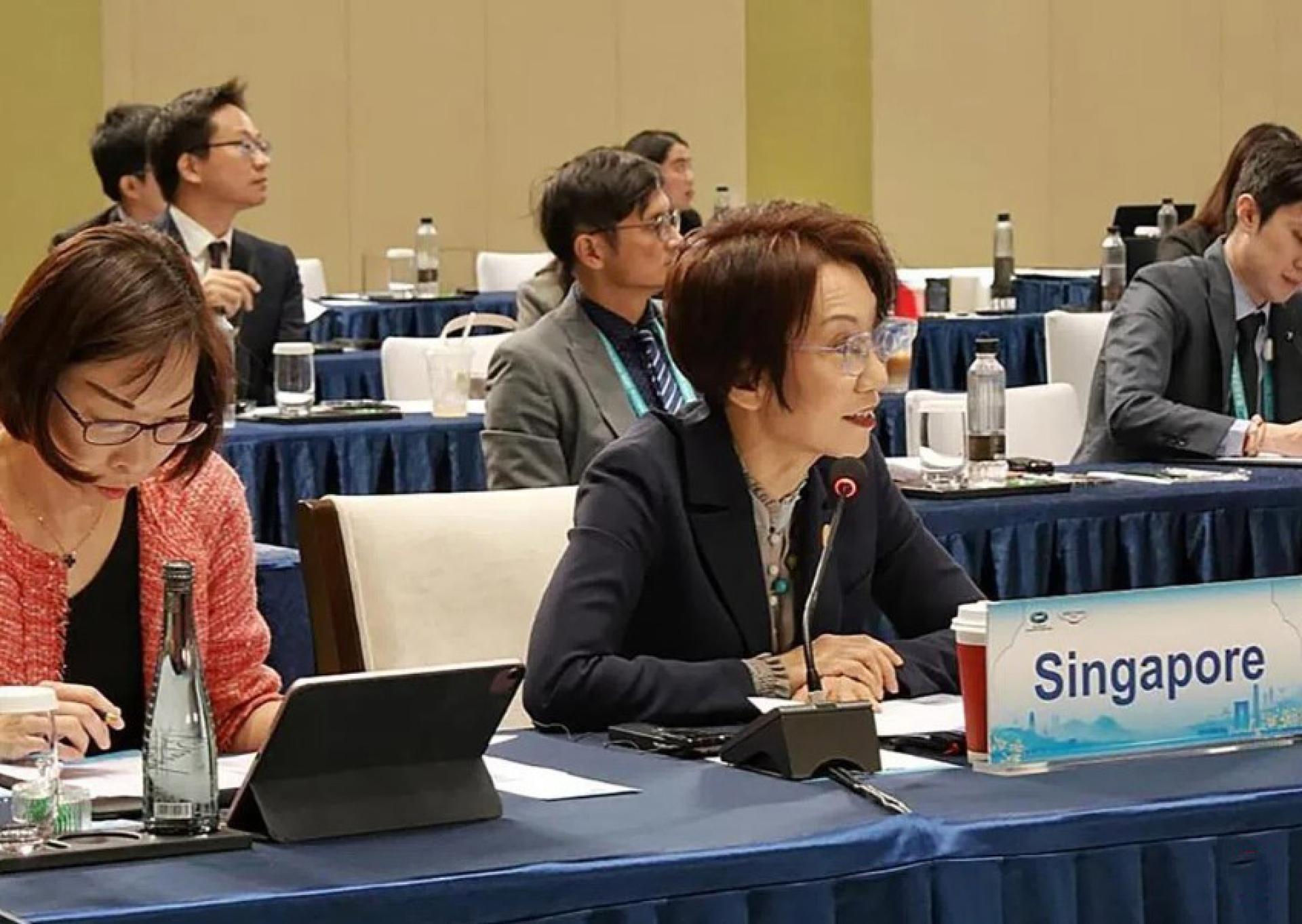
(Singapore, 25th) Geopolitical tensions are challenging the supply chains in the Asia-Pacific region. At the APEC Trade Ministers’ Meeting, Grace Fu, Minister for Sustainability and the Environment responsible for trade relations, called on Asia-Pacific economies to strengthen cooperation, ensure smooth trade flows, advance the digital economy, and support a trade system with the World Trade Organization at its core.
The four-day Asia-Pacific Economic Cooperation (APEC) Trade Ministers’ Meeting concluded on Saturday (May 23) in Suzhou, China. In response to current regional supply chain challenges, trade ministers and representatives from 21 Asia-Pacific economies reaffirmed in a joint statement their determination to maintain resilient supply chains, particularly for essential goods such as energy products and key derivatives, and agreed that keeping trade channels open serves their mutual interests.
The participating ministers also reiterated commitment to strengthening cooperation among themselves and with other trading partners to ensure the smooth flow of international trade and to keep key infrastructure supporting global supply chains dynamic and intact.
Chaired by China, the meeting’s theme was “Building an Asia-Pacific Community, Promoting Shared Prosperity.”
In a statement issued on Sunday (May 24), Singapore’s Ministry of Trade and Industry said that Grace Fu, representing Singapore at the meeting, reiterated Singapore’s support for a multilateral trading system centered on the WTO and APEC’s role in upholding this system.
Grace Fu also emphasized APEC’s key role in enhancing supply chain resilience, strengthening regional economic integration, advancing paperless trade, and the importance of continued close cooperation with the business community.
The release pointed out that the trade ministers discussed how to maintain open and predictable regional and multilateral trade and economic order, as well as how to develop innovative and vibrant new engines for investment and trade cooperation.
In line with APEC’s philosophy of “Openness, Innovation, Cooperation,” the ministers also reaffirmed their commitment to developing their own digital economies and ensuring the benefits of digital transformation are accessible to all. This includes strengthening affordable and resilient digital infrastructure, boosting capacity building, accelerating interoperability, addressing cyber threats, and enhancing digital literacy and skills to drive digital transformation.
In their joint statement, APEC economies also acknowledged the potential of artificial intelligence to reshape international trade, and reiterated the importance of enhancing supply chain efficiency, security, and resilience through AI and innovative technologies.
Delegates also welcomed APEC’s work to digitize and modernize customs procedures and processes, and welcomed the sharing of relevant experiences among APEC members. The APEC economies also committed to further promoting cross-border data flows; in addition to strengthening the protection of data and privacy, economies reaffirmed they would boost both business and consumer confidence in digital transactions.
In addition, delegates agreed on the need to prepare for low-carbon trade and addressed the impact of emerging technologies on trade and green infrastructure.
The statement noted that Grace Fu also attended the Digital Economy Partnership Agreement (DEPA) meeting held on the sidelines of the APEC Trade Ministers’ Meeting, meeting with trade ministers from Australia, Brunei, Chile, China, Indonesia, Malaysia, New Zealand, South Korea, Thailand, Vietnam, as well as WTO Director-General Dr. Ngozi Okonjo-Iweala.
The participating ministers also reiterated commitment to strengthening cooperation among themselves and with other trading partners to ensure the smooth flow of international trade and to keep key infrastructure supporting global supply chains dynamic and intact.
Chaired by China, the meeting’s theme was “Building an Asia-Pacific Community, Promoting Shared Prosperity.”
In a statement issued on Sunday (May 24), Singapore’s Ministry of Trade and Industry said that Grace Fu, representing Singapore at the meeting, reiterated Singapore’s support for a multilateral trading system centered on the WTO and APEC’s role in upholding this system.
Grace Fu also emphasized APEC’s key role in enhancing supply chain resilience, strengthening regional economic integration, advancing paperless trade, and the importance of continued close cooperation with the business community.
The release pointed out that the trade ministers discussed how to maintain open and predictable regional and multilateral trade and economic order, as well as how to develop innovative and vibrant new engines for investment and trade cooperation.
In line with APEC’s philosophy of “Openness, Innovation, Cooperation,” the ministers also reaffirmed their commitment to developing their own digital economies and ensuring the benefits of digital transformation are accessible to all. This includes strengthening affordable and resilient digital infrastructure, boosting capacity building, accelerating interoperability, addressing cyber threats, and enhancing digital literacy and skills to drive digital transformation.
In their joint statement, APEC economies also acknowledged the potential of artificial intelligence to reshape international trade, and reiterated the importance of enhancing supply chain efficiency, security, and resilience through AI and innovative technologies.
Delegates also welcomed APEC’s work to digitize and modernize customs procedures and processes, and welcomed the sharing of relevant experiences among APEC members. The APEC economies also committed to further promoting cross-border data flows; in addition to strengthening the protection of data and privacy, economies reaffirmed they would boost both business and consumer confidence in digital transactions.
In addition, delegates agreed on the need to prepare for low-carbon trade and addressed the impact of emerging technologies on trade and green infrastructure.
The statement noted that Grace Fu also attended the Digital Economy Partnership Agreement (DEPA) meeting held on the sidelines of the APEC Trade Ministers’ Meeting, meeting with trade ministers from Australia, Brunei, Chile, China, Indonesia, Malaysia, New Zealand, South Korea, Thailand, Vietnam, as well as WTO Director-General Dr. Ngozi Okonjo-Iweala.