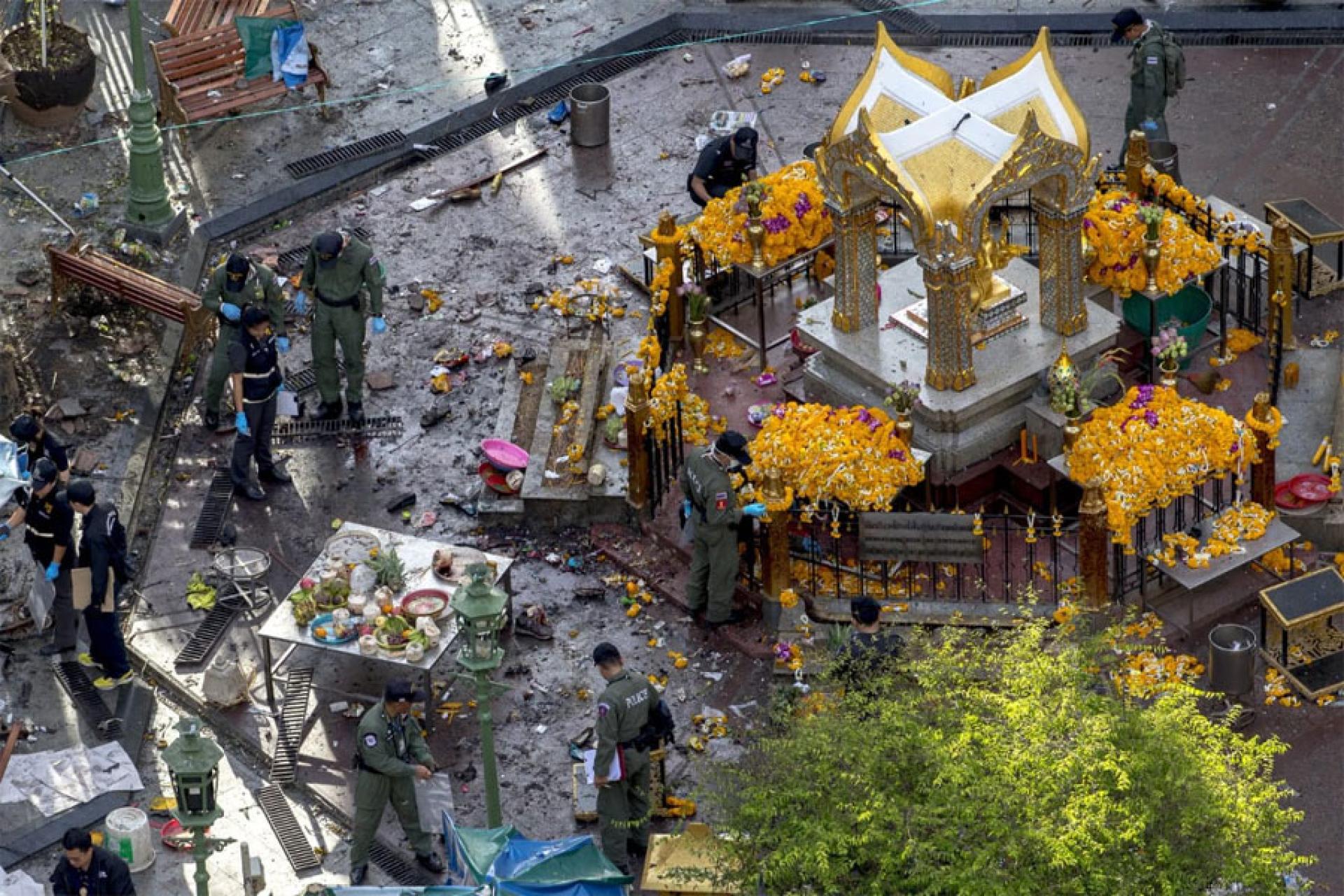
【Bangkok Erawan Shrine Bombing Case】11-Year Prosecution Reaches Verdict Today: 20 Dead Including 5 Malaysians From One Family
Published atJun 11, 2026 09:48 am
The internationally shocking Bangkok Erawan Shrine bombing case finally comes to its judicial conclusion nearly 11 years after the incident!
According to the 'Thai National News', the Bangkok South Criminal Court is set to deliver the verdict on the 2015 Erawan Shrine bombing case at 9:00am on June 11, marking an important endpoint for one of the most high-profile terrorist attacks in Thailand in recent years.
Since the case occurred in 2015, it has undergone transfers between military and civil courts, was disrupted by the Covid-19 pandemic, and faced a shortage of interpreters. The prosecution process has lasted 11 years, making it one of the longest major criminal cases in Thai judicial history.
Explosion in downtown leaves 20 dead, over 160 injured
On August 17, 2015, at about 6:55pm, a serious explosion occurred at the Erawan Shrine, located in Bangkok's central Ratchaprasong commercial district.
The blast caused 20 deaths, including Thai citizens and foreign tourists, and more than 160 injuries. At the time, the Erawan Shrine was a popular site for domestic and international visitors, so the incident shocked the world and dealt a heavy blow to Thailand’s tourism industry.
According to the prosecution, the defendant Bilal Mohammed (aka Adem Karadag) is accused of leaving a backpack containing a bomb at the scene, while another defendant, Yusufu Mieraili, is accused of assembling the explosive device, purchasing related materials, and assisting in transporting the bomb. Picture shows the two defendants in the case. (Image from Thai National News website)The police launched a large-scale manhunt after the incident and announced the case was solved in September that year.
Since the case occurred during the rule of Thailand’s military government “National Council for Peace and Order” (NCPO), it was initially tried by the Bangkok Military Court.
At that time, government law stipulated that cases involving weapons and explosives fell under the jurisdiction of the military court. Later, as relevant regulations were adjusted, cases involving civilians were gradually transferred to civilian courts, and the Erawan Shrine bombing was thus transferred to the Bangkok South Criminal Court.
After the transfer, most witness testimonies had to be re-examined within the civil judicial system, which further prolonged the trial.
Pandemic and translation issues slowed progress
Beyond changes in judicial procedures, the Covid-19 pandemic was also a major reason for the case’s delays.
During the pandemic, court hearings at all levels in Thailand were repeatedly interrupted, impeding trial progress.
Additionally, both defendants speak Uyghur, requiring three-way translation between Uyghur, English, and Thai during the court sessions. Due to a shortage of qualified interpreters, the case was once suspended in 2016.
At the time, the military court rejected the qualifications of one of the interpreters, while another interpreter could not communicate effectively in Uyghur with the defendants, further delaying the proceedings.
Over 400 prosecution witnesses called
The large scale of the case was also a key reason for the lengthy proceedings.
The prosecution called more than 400 witnesses, the defense summoned over 45 witnesses, and a substantial amount of written and physical evidence had to be reviewed.
Between 2023 and 2026, the Bangkok South Criminal Court accelerated the examination of the remaining witness testimonies and evidence, eventually completing all hearings and setting June 11 as the date for the verdict.
Other suspects at large, one female defendant acquitted
During the investigation, Thai authorities issued warrants for several suspects, identifying a total network of 17 suspects wanted in connection with the case.
Among them, a Thai woman, Wanna Suansan, who was accused of renting accommodation to suspects, was acquitted by the Bangkok South Criminal Court in November 2024 due to insufficient evidence.
It is reported that, of the 17 wanted suspects, only three have been apprehended.
With the court about to issue its ruling, this long-awaited major bombing case finally enters its final stage. The public is watching closely for the court’s decision and whether it will bring long-delayed justice to the victims and their families.
Five Malaysians killed
Among the casualties were members of a Chinese Malaysian family from Butterworth, Penang. Seven members of the family traveled to Thailand for vacation and unfortunately became victims in the bombing. Five family members were killed and others were injured. A group photo of the affected family before the incident: From left, Lim Soo See (deceased), Leong Yi Lin (injured), Lee Jing Xuan (deceased), Lee Zi Xiang (deceased), Thai tour guide, Leong Fook Yuen (injured), Leong Jia Jun (deceased), and Lim Soo Yuk (deceased).The deceased victims are: Lim Soo Yuk (49, died at the scene), Leong Jia Jun (20, died at the scene), Lee Zi Xiang (33, died at the scene), Lee Jing Xuan (4, died after being sent to hospital), Leong Soo Chin (confirmed dead after being missing, body eventually recovered)
Additionally, some family members, including Leong Fook Yuen and Leong Yi Lin, survived but were injured in the explosion.
After the incident, the victims’ bodies were returned to Malaysia on August 20, 2015, accompanied by family members, and wakes were subsequently held at different locations. Because of the powerful explosion, some bodies required DNA testing for identification, and follow-up proceedings involved cross-country coordination and verification.
This tragedy, involving a family that encountered mass casualties while traveling overseas, became one of the most high-profile foreign victim stories in the bombing case.
This article has been translated using our AI technology. While we strive for accuracy,
AI translations
may contain errors. For the most precise information, please refer to the original article.