JOHOR BAHRU, May 8 (Bernama) -- The Ministry of Home Affairs (KDN) will try to minimise any disruptions or “glitches” during the transition period from the Malaysian Immigration System (MyIMMs) to the National Integrated Immigration System (MyNIISe) which is currently in the final phase of implementation.
Home Affairs Minister Datuk Seri Saifuddin Nasution Ismail said the system was developed to replace the old immigration system that has been in use for decades and often causes problems, especially at the country’s main entry points such as the Sultan Iskandar Building (BSI) and the Sultan Abu Bakar Complex (KSAB).
He said the migration process from the old system to the new system certainly involves a transition and integration phase which has the potential to cause minor disruptions from time to time.
“I cannot guarantee that disruptions will not occur because this is the old system that we have inherited for so long. That is why we are opening a new chapter now with the new system and we hope this will be a game changer to solve the congestion problem mentioned earlier,” he said.
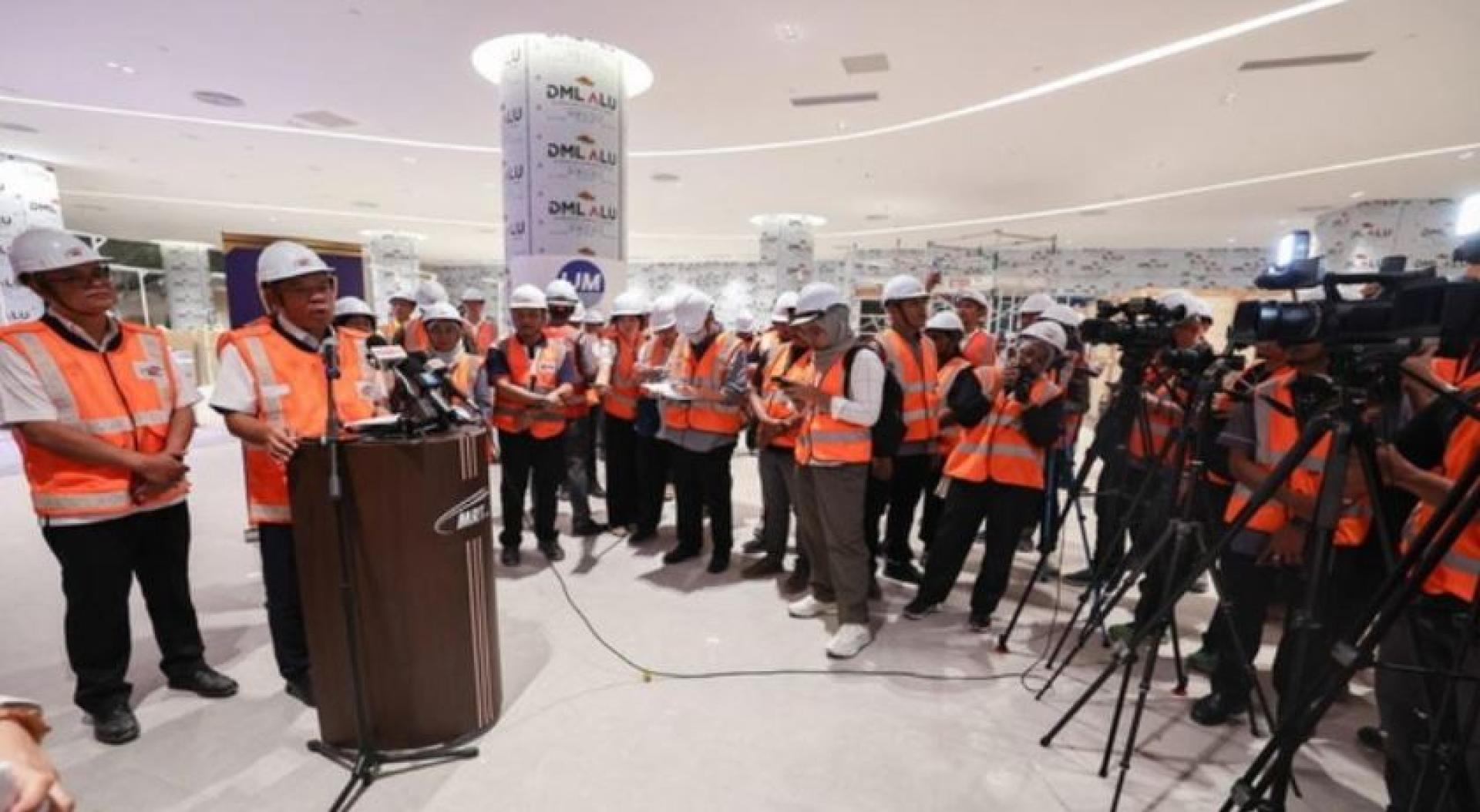
He said this at a press conference after his visit to the Customs, Immigration and Quarantine Complex (CIQ) at the Sultan Iskandar Building (BSI) and Bukit Chagar Station to inspect the Johor Bahru-Singapore Rapid Transit System (RTS) Link project, here today.
Also present was the Malaysian Border Control and Protection Agency (AKPS) director-general Datuk Seri Shuhaily Mohd Zain.
The MyNIISE system, which will be fully implemented in September at the country's entry points, will allow clearance to be carried out through three methods, namely facial recognition, QR code and passport.
Saifuddin Nasution said the ministry had also held a series of meetings with vendors who developed the system, supplied infrastructure and carried out maintenance to ensure the implementation went smoothly.
He said his ministry could not reject the stigma surrounding frequent system disruptions, including at BSI, which left thousands of users stranded, but was always taking proactive steps to overcome the issue.
“We know that the disruption is happening because as long as the old system is still in use until the new system is up and running, we will continue to face the issue.
“Of course at KDN and Immigration Department, we know what day the disruption is likely to occur, when the peak time is and which systems are involved. We have all the records. It is not difficult for us to predict,” he said.
Meanwhile, he said that 220 units of automatic entrance gates (e-gates) at the CIQ Complex are now fully installed and will go through the system integration process using the MyNIISe platform starting in mid-June.
He said that the next phase involves system integration and the implementation of dry runs in stages.
He said the implementation of the large-scale project not only aims to accelerate the movement of passengers more smoothly and seamlessly, but also to strengthen the national security aspect through the use of the latest monitoring technology.
He said that the technology used allows every movement to be recorded, analysed and monitored in real time to prevent any space for smuggling attempts, illegal entry or other security threats.
He said that the country's border entry control is always exposed to various security threats including human trafficking, migrant smuggling, illegal entry of foreign nationals and other smuggling activities.
The Johor Bahru-Singapore RTS Link is expected to be fully operational in January next year, connecting Bukit Chagar Station in Johor Bahru and Woodlands North Station in Singapore in only five minutes.
He said the migration process from the old system to the new system certainly involves a transition and integration phase which has the potential to cause minor disruptions from time to time.
“I cannot guarantee that disruptions will not occur because this is the old system that we have inherited for so long. That is why we are opening a new chapter now with the new system and we hope this will be a game changer to solve the congestion problem mentioned earlier,” he said.
He said this at a press conference after his visit to the Customs, Immigration and Quarantine Complex (CIQ) at the Sultan Iskandar Building (BSI) and Bukit Chagar Station to inspect the Johor Bahru-Singapore Rapid Transit System (RTS) Link project, here today.
Also present was the Malaysian Border Control and Protection Agency (AKPS) director-general Datuk Seri Shuhaily Mohd Zain.
The MyNIISE system, which will be fully implemented in September at the country's entry points, will allow clearance to be carried out through three methods, namely facial recognition, QR code and passport.
Saifuddin Nasution said the ministry had also held a series of meetings with vendors who developed the system, supplied infrastructure and carried out maintenance to ensure the implementation went smoothly.
He said his ministry could not reject the stigma surrounding frequent system disruptions, including at BSI, which left thousands of users stranded, but was always taking proactive steps to overcome the issue.
“We know that the disruption is happening because as long as the old system is still in use until the new system is up and running, we will continue to face the issue.
“Of course at KDN and Immigration Department, we know what day the disruption is likely to occur, when the peak time is and which systems are involved. We have all the records. It is not difficult for us to predict,” he said.
Meanwhile, he said that 220 units of automatic entrance gates (e-gates) at the CIQ Complex are now fully installed and will go through the system integration process using the MyNIISe platform starting in mid-June.
He said that the next phase involves system integration and the implementation of dry runs in stages.
He said the implementation of the large-scale project not only aims to accelerate the movement of passengers more smoothly and seamlessly, but also to strengthen the national security aspect through the use of the latest monitoring technology.
He said that the technology used allows every movement to be recorded, analysed and monitored in real time to prevent any space for smuggling attempts, illegal entry or other security threats.
He said that the country's border entry control is always exposed to various security threats including human trafficking, migrant smuggling, illegal entry of foreign nationals and other smuggling activities.
The Johor Bahru-Singapore RTS Link is expected to be fully operational in January next year, connecting Bukit Chagar Station in Johor Bahru and Woodlands North Station in Singapore in only five minutes.