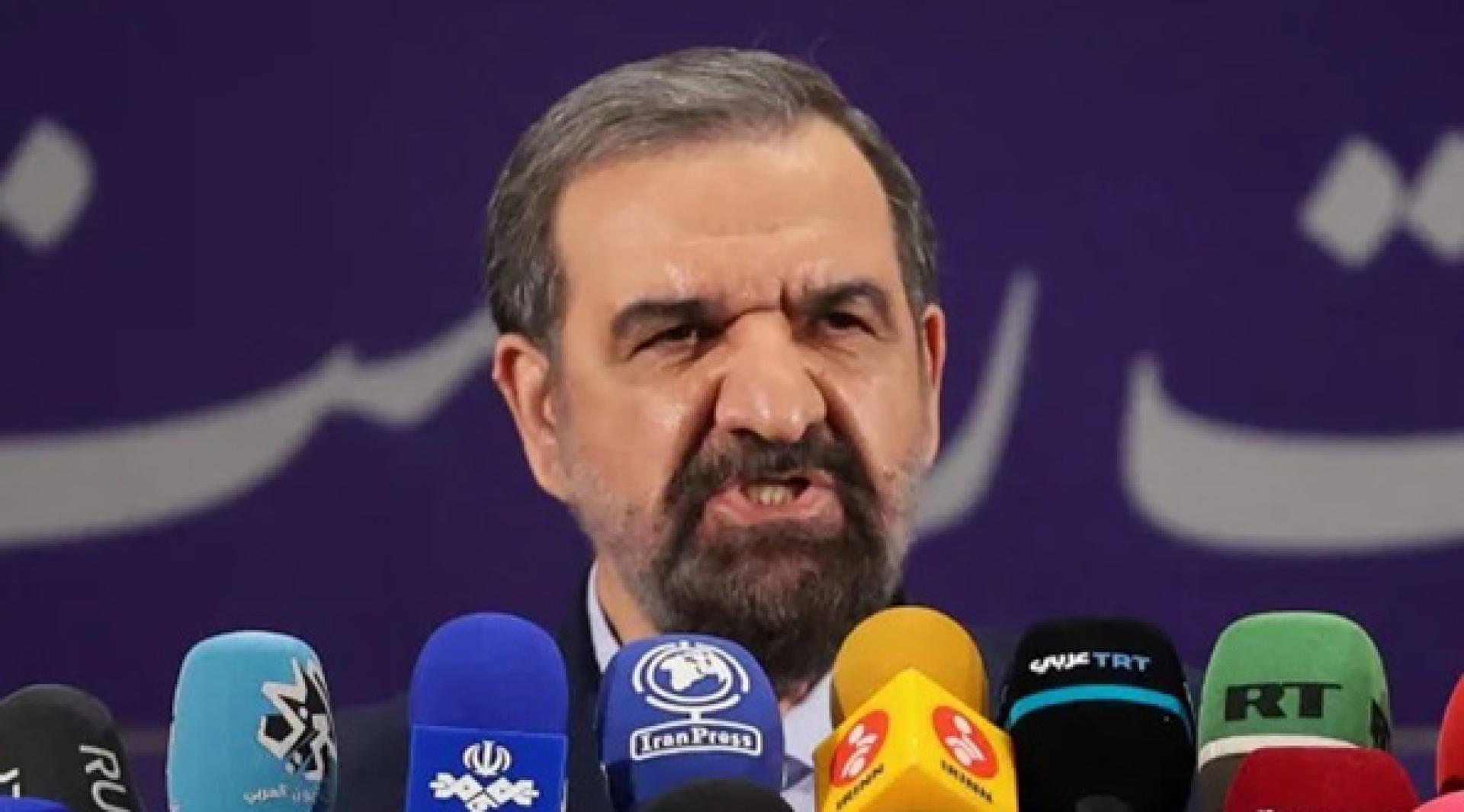
On the 9th, the Iranian presidential office announced that Mohsen Rezaei has been appointed Secretary of Iran's Supreme National Security Council.
Rezaei was also appointed by Iran's Supreme Leader Mojtaba as his representative in the Supreme National Security Council.
Rezaei led the Revolutionary Guard during the Iran-Iraq War in the 1980s.
Born in 1954, Rezaei served as the commander-in-chief of Iran's Islamic Revolutionary Guard Corps from 1981 to 1997. He later held the position of Secretary of Iran's Expediency Discernment Council and also served as the Vice President in charge of economic affairs under former President Raisi.
According to The New York Times, the personnel appointment shows that Tehran's old-generation power elite are further consolidating their power, with the hardline Revolutionary Guard taking control of Iran's key decision-making and trying to rein in parliament speaker Qalibaf, the leading representative for US negotiations, and moderate President Pezeshkian.
Gorka, a professor at the University of Tennessee at Chattanooga who studies Iran's security forces, believes that this move does not necessarily signal a shift towards either tougher or more pragmatic policies. Instead, he expects that Rezaei and Qalibaf—who also once ran for president—may run into conflict due to political ambition: "Such a combination won't work; everyone wants to be king."
Repeated Unsuccessful Presidential Bids
Iran's Supreme National Security Council is composed of top civilian and military officials. While the secretary is nominally appointed by the president, the actual choice is decided by the Supreme Leader, and the council plays a key role in decisions regarding war with the United States.
Ajizi, an Iran analyst based in Berlin who studies Iranian security issues, says that Rezaei's rise to this crucial position signals that the senior leadership, who have long held the reins of security power in Iran, are further consolidating their authority rather than paving the way for a generational handover to a younger cohort of political elites.
For more than forty years, Rezaei has been active at the highest levels of Iran's military and political power and has run for president several times but was unsuccessful.
This reshuffle is also being interpreted as a constraint on moderate President Pezeshkian.