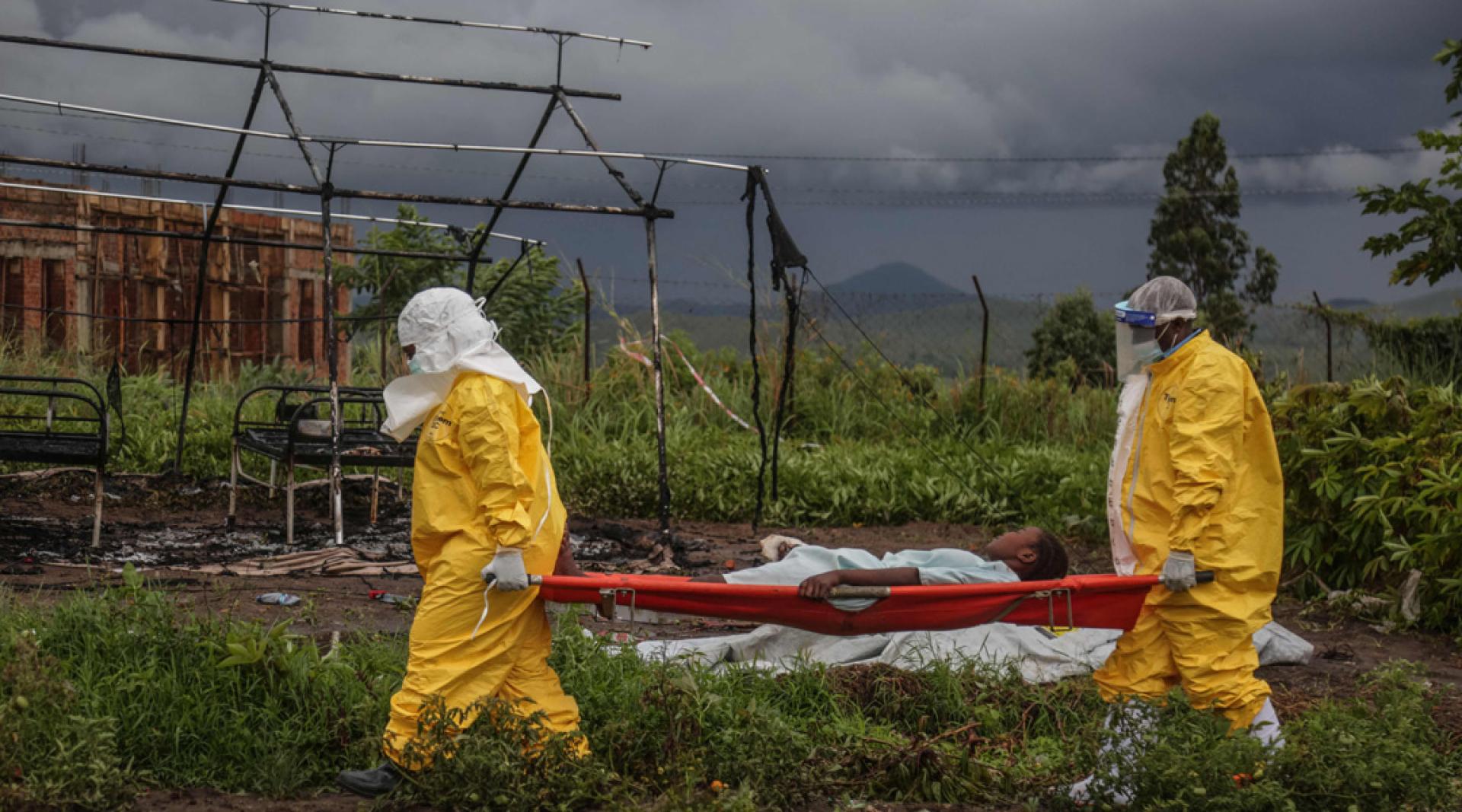
The World Health Organization announced on the 22nd that the risk level of the new Ebola outbreak in the Democratic Republic of the Congo (DRC) has been raised from "high" to "very high" at the national level, remains high at the regional level, but is low at the global level.
During a press conference, WHO Director-General Tedros Adhanom Ghebreyesus stated that 82 confirmed cases have been reported in the DRC so far, including 7 deaths. However, the WHO believes the actual situation in the country is far more severe than the confirmed figures suggest, with nearly 750 suspected cases and 177 suspected deaths.
He pointed out that the situation in Uganda is stable, with 2 confirmed cases, one of whom has died, and both had traveled to the DRC.
He said that Uganda’s measures, including contact tracing and the cancellation of the Martyrs’ Day mass gathering, appear to have effectively prevented further spread of the virus.
He noted that WHO and its partners have provided personnel and funding support for outbreak response efforts in both the DRC and Uganda, offering on-site support in areas such as contact tracing, establishment of treatment centers, risk communication, and community engagement.
He pointed out that, unlike previous outbreaks caused by the Zaire strain of the Ebola virus, the current outbreak is caused by the Bundibugyo strain. There are currently no approved virus-specific treatments or vaccines for this strain. Only two previous outbreaks of the Bundibugyo strain have been recorded, one in Uganda in 2007 and another in the DRC in 2012.
Tedros stated that WHO convened leaders from multiple partner organizations on the 21st to review progress in vaccine, therapeutic, and diagnostic development. The WHO "R&D Blueprint" program has also convened a technical advisory group on therapeutics and recommended prioritizing clinical trials of two monoclonal antibodies.
He pointed out that the situation in Uganda is stable, with 2 confirmed cases, one of whom has died, and both had traveled to the DRC.
He said that Uganda’s measures, including contact tracing and the cancellation of the Martyrs’ Day mass gathering, appear to have effectively prevented further spread of the virus.
He noted that WHO and its partners have provided personnel and funding support for outbreak response efforts in both the DRC and Uganda, offering on-site support in areas such as contact tracing, establishment of treatment centers, risk communication, and community engagement.
He pointed out that, unlike previous outbreaks caused by the Zaire strain of the Ebola virus, the current outbreak is caused by the Bundibugyo strain. There are currently no approved virus-specific treatments or vaccines for this strain. Only two previous outbreaks of the Bundibugyo strain have been recorded, one in Uganda in 2007 and another in the DRC in 2012.
Tedros stated that WHO convened leaders from multiple partner organizations on the 21st to review progress in vaccine, therapeutic, and diagnostic development. The WHO "R&D Blueprint" program has also convened a technical advisory group on therapeutics and recommended prioritizing clinical trials of two monoclonal antibodies.