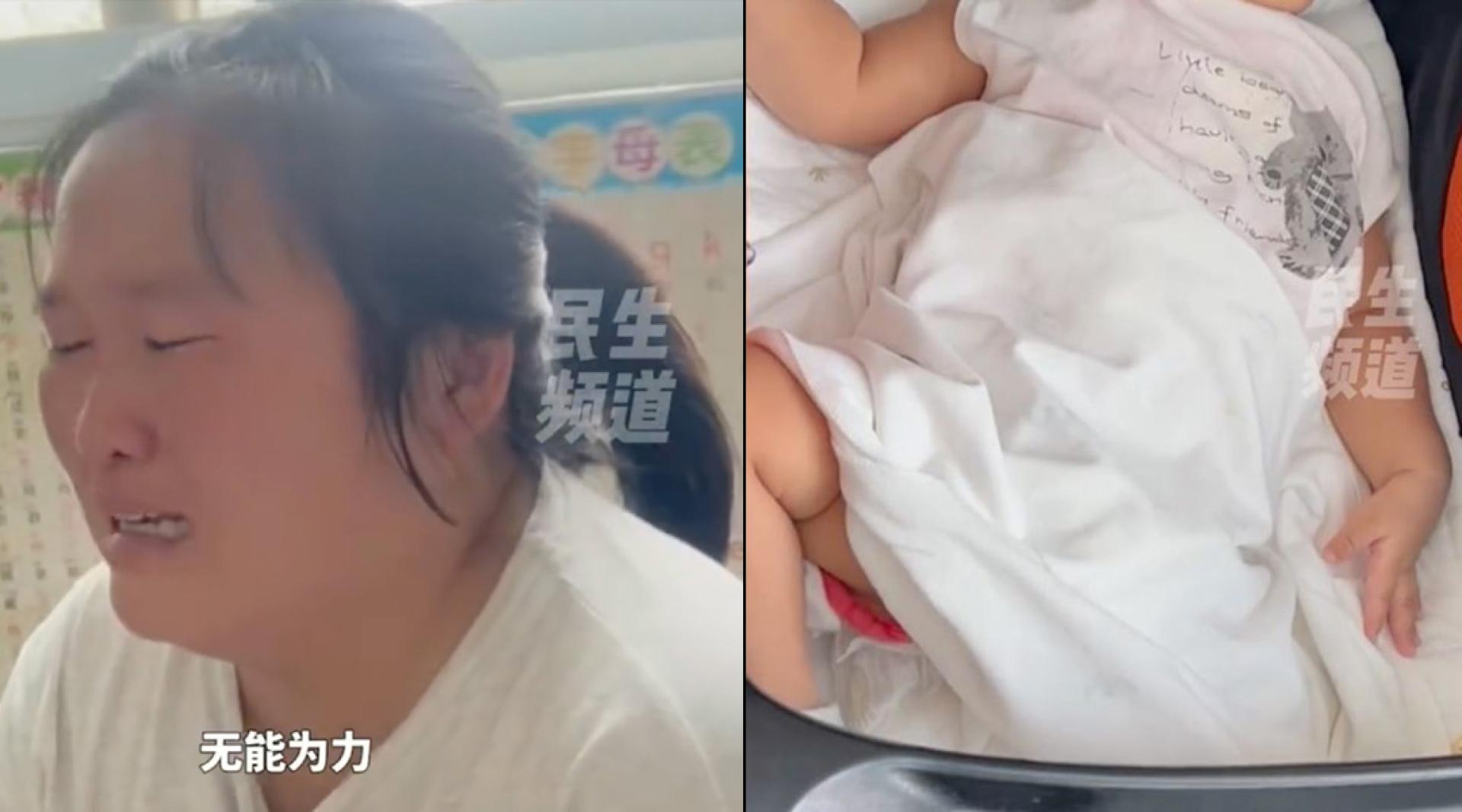
A mother from Puyang City, Henan Province, who has four children, recently revealed that both her 14-year-old eldest son and 1-year-old youngest son have been diagnosed with the rare genetic disease "Lesch-Nyhan Syndrome" (LNS, commonly known as Self-Mutilation Syndrome), which has an incidence rate of only 1 in 380,000. Sufferers display uncontrollable behaviors such as biting nails, lips, and head-banging.
Although there is currently no specific medicine to cure this disease, the mother insists she will never give up caring for them.
It is understood that this rare disease has an incidence rate of 1 in 380,000, with no specific drugs or cure available. The child’s physical development may stagnate, along with uncontrollable behaviors such as biting nails and head-banging.
The mother, Ms. Bai, said that when her eldest son became ill, they initially thought it was cerebral palsy. During her youngest son’s pregnancy and delivery, all prenatal check-ups showed normal results, but when the child couldn’t lift his head at three months old, they sought medical attention. They eventually learned that both sons had been diagnosed with the same disease.
Ms. Bai said it pains her deeply to see her children suffer like this: “As a mother, I feel I’ve let my children down. I hope that someone, or a pharmaceutical company, can pay attention to this disease and give these children hope to live, even if just one drug could reduce their pain.” But she also emphasized that she will not give up: “Once a mother, always a mother. I won’t give up.”
Passed to Sons, Not Daughters
Lesch-Nyhan Syndrome is a recessive genetic disorder caused by a deficiency of a key enzyme, leading to metabolic abnormalities and extremely high uric acid levels. Apart from stunted growth, lack of coordination in limbs, intellectual impairment, and an inability to walk or speak normally, as they grow older, sufferers exhibit uncontrollable behaviors like lip-biting, finger-chewing until they bleed, and head-banging. Because the pathogenic gene is a recessive gene on the X chromosome, it primarily affects males. There is currently no cure in medicine, only symptomatic relief.
When interviewed, Ms. Bai said that doctors gave her youngest son, just one year old, an ultrasound and found his five-centimeter kidney was already filled with crystals and stones, which made her feel incredibly heartbroken.
Netizens Question Consecutive Childbearing
After the incident came to light, netizens responded with mixed feelings. Some expressed sympathy for the affected children, but many questioned Ms. Bai’s decision to continue having children after the first child showed abnormalities, saying this led to a sharp deterioration in the family's finances and caregiving capabilities. Some even speculated whether it was due to a preference for sons or a gambling mentality, arguing that parents must bear the consequences of their choices, bluntly stating “can’t bring myself to feel sorry.”