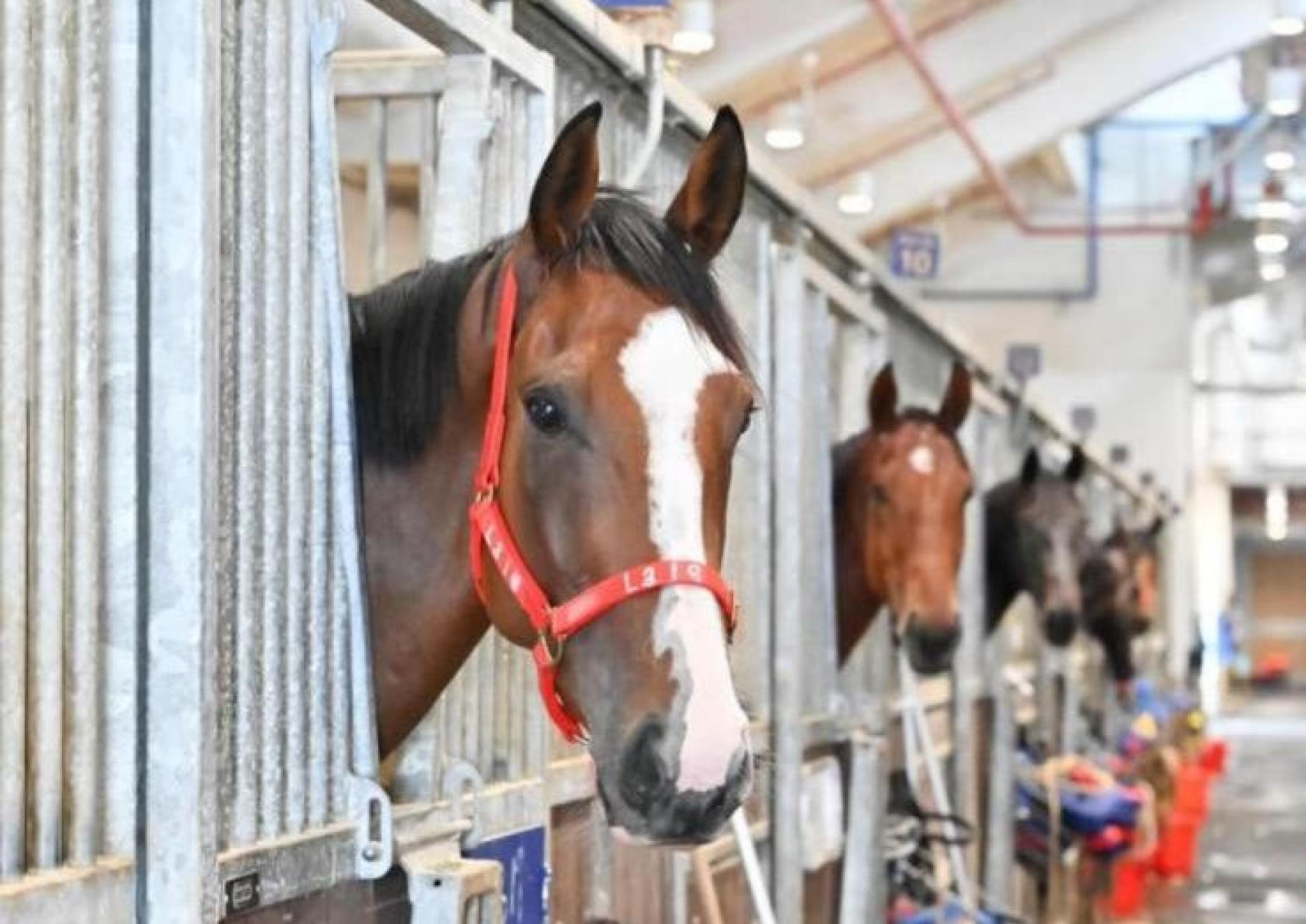
Just after the Chinese New Year of the Horse, a major news story related to horses has emerged in Guangzhou, the capital of Guangdong Province: Horse racing, which has been suspended for nearly 30 years, will make a comeback.
According to People Finance News, at the Guangzhou Conghua District High-Quality Development Conference held on Thursday (February 26), the Hong Kong Jockey Club announced that regular, internationally-standard speed horse races will take place at the Conghua Racecourse this October. Around these races and associated team events, a series of horse-themed cultural, sports, tourism, and carnival activities will be developed.
Jiemian News, citing information from the Hong Kong Jockey Club, disclosed further that Conghua Racecourse will begin hosting horse racing events on October 31. The races will operate under the same standards as those in Hong Kong, with world-class trainers working with top-quality racehorses paired with leading international jockeys, all conducted according to international standard race rules and supervision mechanisms.
After 'Horse Racing Returns to Guangzhou' made the hot search list on Weibo, reactions varied among different groups. The post-2000s generation was curious: When did Guangzhou ever have horse racing? Residents who had experienced horse racing back in the day were concerned that the restart might once again foster a gambling culture and erode social morals.
In the 1990s, Guangzhou had a seven-year stretch of horse racing activity, which once developed into a booming scene.
On January 28, 1993, the sixth day of the Lunar New Year, Guangzhou Racecourse held its first trial horse race. The grandstand, designed to accommodate 40,000 people, issued only 12,000 tickets for the inaugural race day, yet 25,000 spectators entered the venue. The race included a betting segment, with the first race generating wagering totals of 600,000 yuan (approximately RM340,000).
As the influence of horse racing continued to grow, so did the related negative aspects of gambling. In 1995, a major cheating scandal broke out at the Guangzhou Jockey Club, leading the audience to refuse to leave after the races in protest, eventually prompting police intervention.
In 1999, due to the continuing challenges of separating the races from gambling and combating illegal betting, horse racing activities in Guangzhou were halted. Two years later, the former general manager of Guangzhou Horse Racing Entertainment Co., Ltd., Huang Qiheng, was sentenced to 19 years in prison for bribery and embezzlement.
From 1993 to 1999, Guangzhou held a total of 757 horse races. After withdrawing from the stage of history, the Guangzhou Racecourse, built in 1992, gradually became a hub for restaurants, furniture, and car sales outlets, but business was always lukewarm.
The old racetrack in downtown Guangzhou no longer exists, but the Conghua Racecourse, which opened in 2018 in the northeastern part of Guangzhou, is now the largest and highest standard thoroughbred breeding and training center in mainland China. This is related to the growing integration of the horse industry between Guangzhou and Hong Kong in line with the development plan for the Guangdong-Hong Kong-Macao Greater Bay Area.
Developed by the Hong Kong Jockey Club, the Conghua Racecourse covers more than 150 hectares, with four tracks, 12 stables, a horse hospital, horse swimming pool, and other facilities, capable of accommodating and training over 1,100 racehorses simultaneously. In 2021, the Hong Kong Jockey Club and the Guangzhou city government signed a framework cooperation agreement to create the "Guangzhou-Hong Kong Horse Industry Economic Circle" centered on the Conghua Racecourse.
Currently, the second phase of the Conghua Racecourse project, with an investment of 4 billion yuan (about RM2.27 billion), has been fully completed, and its main grandstand with a capacity of 9,500 people has also been finished.
However, many Chinese netizens are skeptical that horse racing could succeed when detached from gambling. Some Weibo users questioned: "If you can't place bets, how many people would voluntarily go to watch horse races?" "Without betting, the horse racing industry chain simply can't function."
Others pointed out that in the internet era, banning gambling on horse races is even more difficult: "No one's stupid — as soon as you run horse racing, there will be underground or overseas betting operations. With internet payments today, it's obvious this will spread more quickly and covertly than ever before."
Can de-gamblified horse racing get off the ground? After nearly 30 years, Guangzhou is exploring a new path for this long-absent sport. Regardless of the outcome, all eyes will be watching to see what happens.