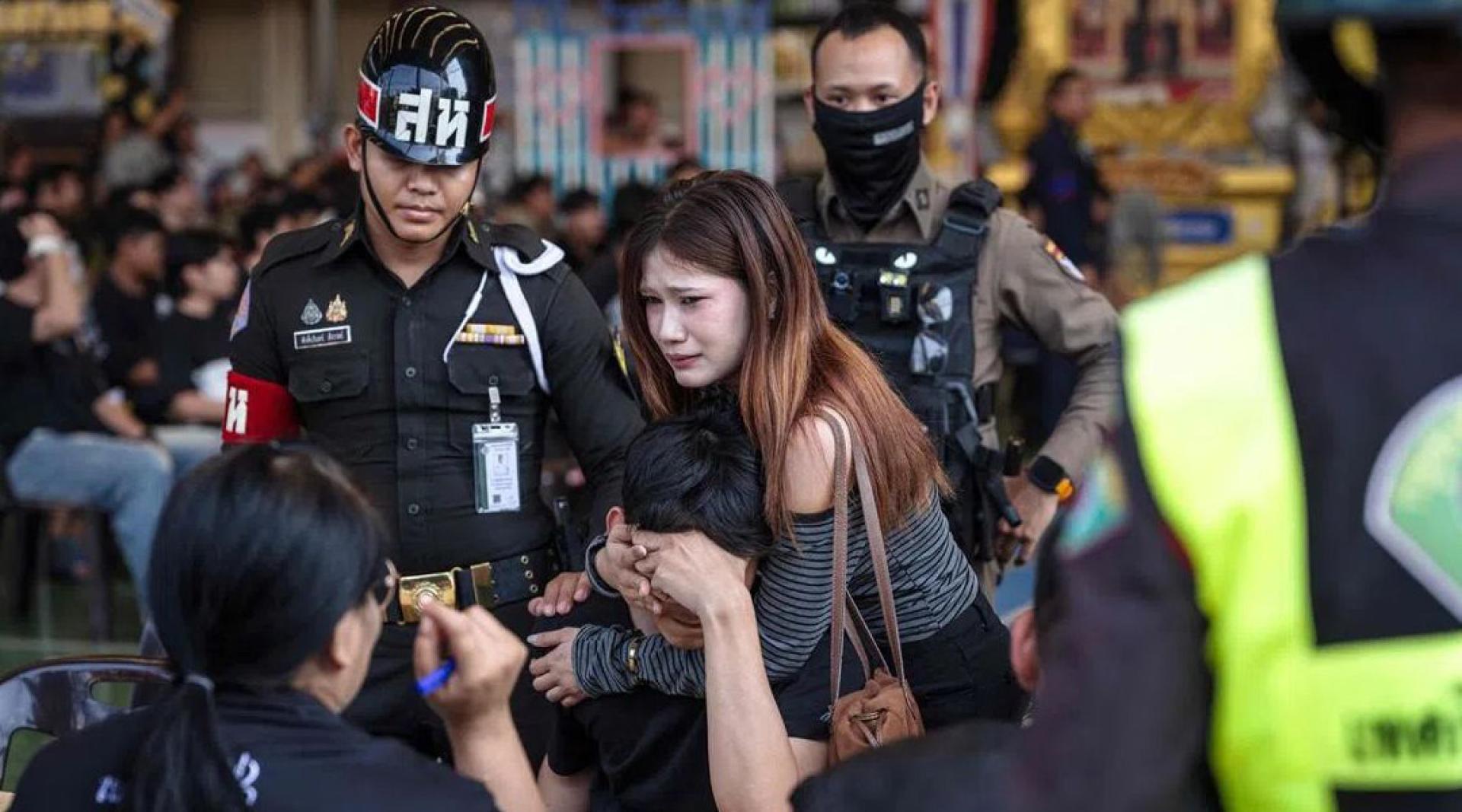
Thailand holds its conscription lottery every April. This year, ongoing tensions at the Cambodian border have made many young men, already fearful of the battlefield, even more apprehensive. However, following the Thai-Cambodian border conflict, a surge in nationalism has also led to a marked increase in voluntary enlistments.
From April 1st to 12th, conscription lotteries take place across Thailand. All males aged 21 must draw lots to determine their fate: drawing a red lot means serving in the military for two years, while black means exemption from service.
Although a ceasefire agreement has been in place since December last year, the border situation remains tense. Many young men worry that drawing the red lot could send them to the frontlines, putting their lives at risk.
Numerous recruits who drew the red lot collapsed to the ground in frustration, covering their faces and weeping. Others accept their fate with composure.
For years, there have been persistent calls in Thai society to abolish mandatory conscription, citing issues such as human rights and safety in the military, as well as the impact on personal life planning. Now, with border tensions running high, calls to reform or abolish the system have grown even louder.
Nevertheless, over the past five years, the number of voluntary enlistees has steadily increased. In some areas this year, conscription quotas were filled without the need for a lottery. According to the military, nearly 30,000 men have signed up this year, an increase of nearly 50% compared to 2024.
Observers point out that this is related to the rise in nationalism following the Thai-Cambodian conflict. In addition, economic recession and bleak job prospects are also factors prompting more people to enlist.
Military service offers stable income—about 11,000 baht per month (approximately 1,357 ringgit)—along with free food and accommodation, which is higher than the minimum wage in many parts of Thailand.