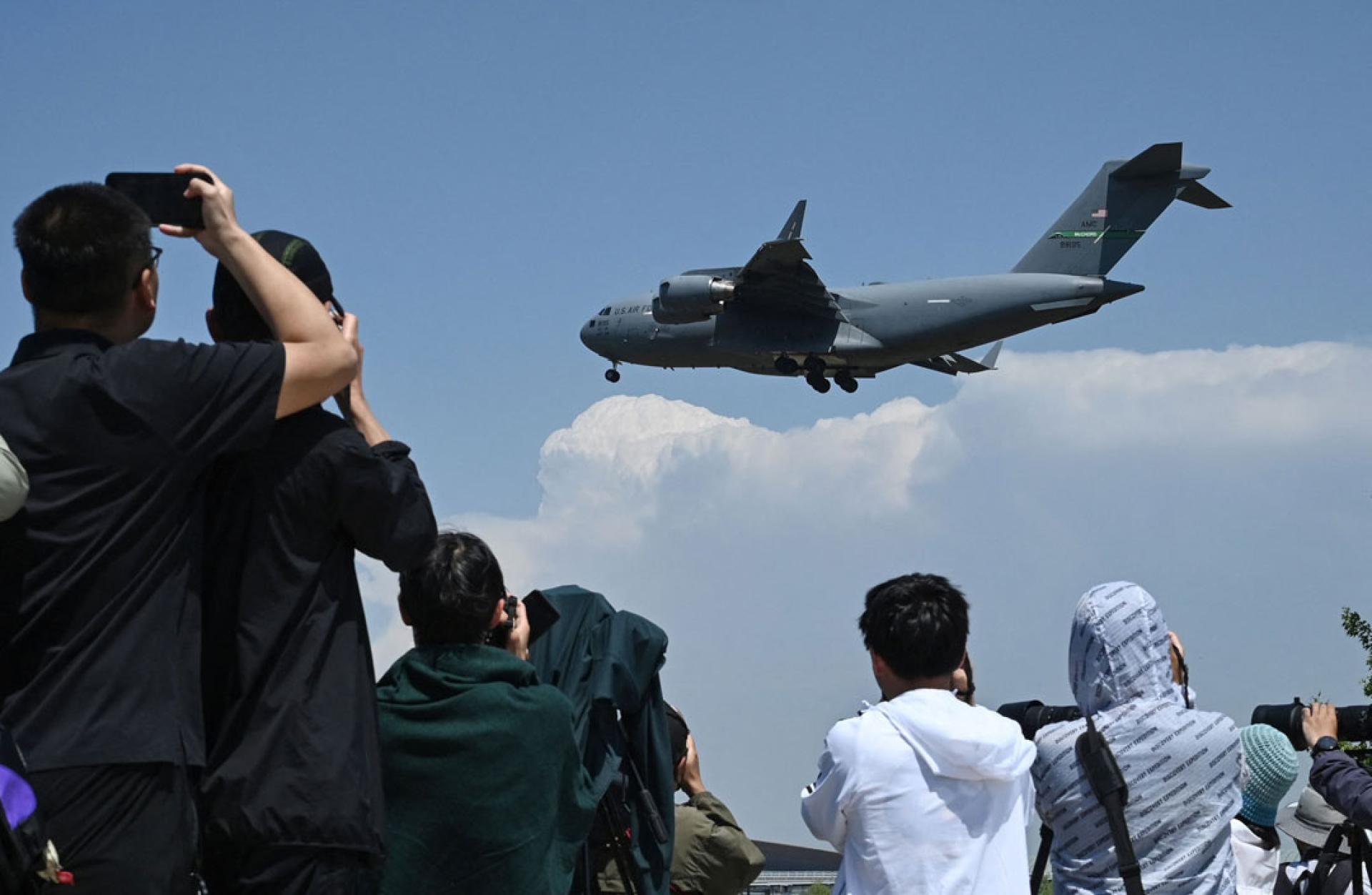
U.S. President Donald Trump will pay a state visit to China from May 13 to 15. This marks his first return to China in nine years; his previous visit was in 2017 during his first trip to Beijing as president. According to foreign media statistics, as of the official announcement, seven C-17 transport planes have arrived in Beijing, bringing approximately 500 tons of various supplies. In comparison, only two planes were used for his 2017 visit, signaling a marked increase in transport volume and a notable difference.
Judging from the transportation data, preparations for this visit are clearly upgraded. In addition to specialized vehicles, communications equipment, and medical support materials, the U.S. contingent has brought a full suite of furnishings for the presidential suite, food and drinking water, encrypted office devices, and emergency protective gear. Compared to 2017, the total amount of supplies has doubled, with more comprehensive security equipment, reflecting the importance the U.S. attaches to this visit and implying a cautious assessment of security risks.
The U.S. brings its own complete set of materials and establishes a "bubble-style" security cordon. This is both an institutional convention for presidential visits and a necessary response to national security and confidentiality needs—it should not be over-interpreted as a sign of distrust towards the Chinese side.
Trump chose to visit China at this time for well-defined practical reasons. In terms of trade and economics, U.S. agriculture and energy sectors have long called for expanded exports to China, and procurement of agricultural products like wheat and soybeans is a key demand for the U.S.; on global governance, coordination with China is indispensable on issues such as the North Korean nuclear issue, the Middle East, and climate change; in addition, Trump is still under some domestic political pressure, and diplomatic achievements with China can help consolidate his base and serve as a boost to his administration.