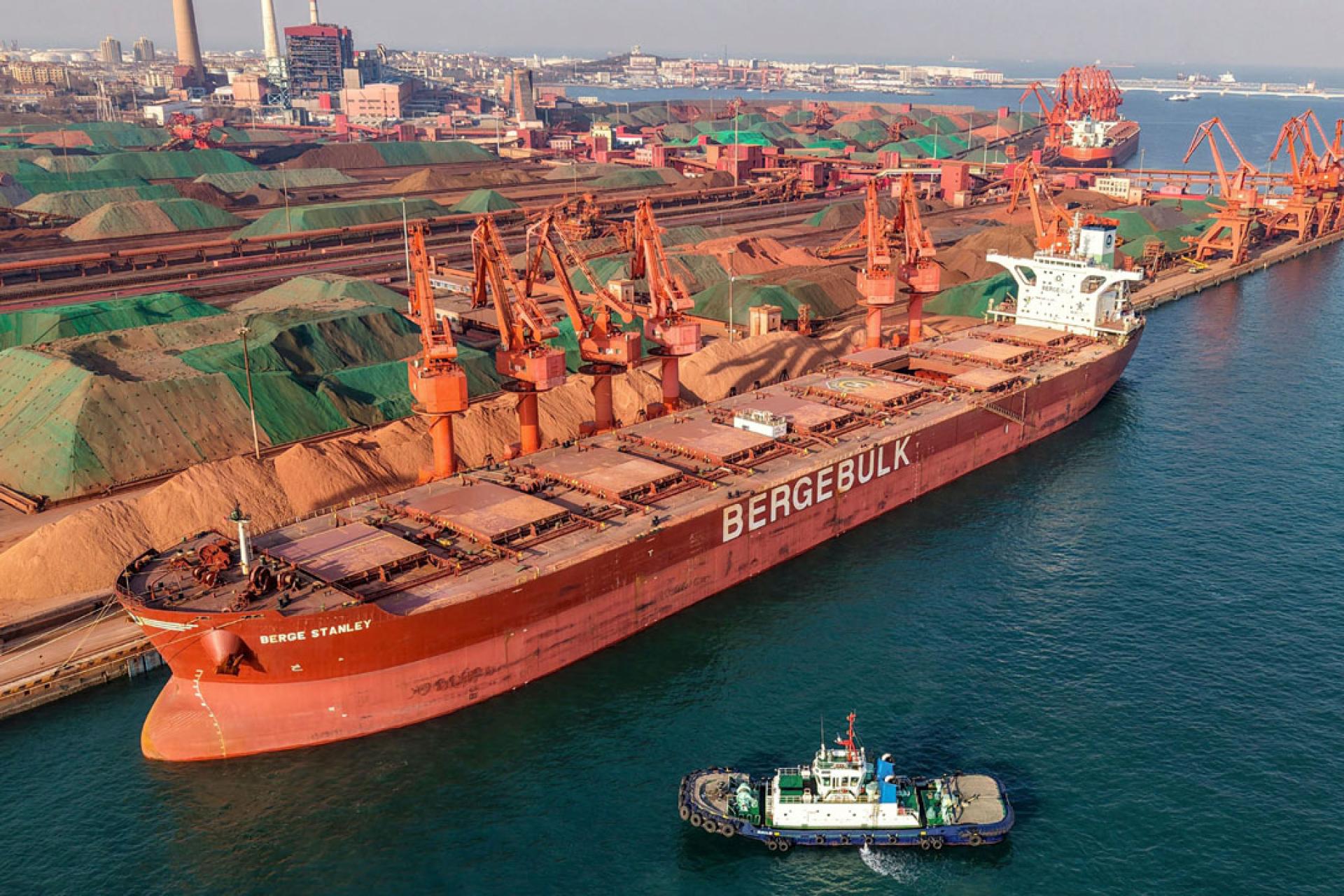
Despite facing US tariff policies and continued trade pressure, China’s export performance will remain strong in 2025, achieving a record-breaking trillion-dollar level trade surplus over the year.
According to data released by the General Administration of Customs of China on the 14th, China’s annual trade surplus in 2025 reached US$1.189 trillion (RM4.82 trillion), an amount equivalent to the GDP of Saudi Arabia, one of the world’s top 20 economies.
Data shows that, measured in dollar terms, China’s exports in December rose by 6.6% year-on-year, higher than November’s 5.9% and significantly exceeding the 3% expected by economists surveyed by foreign media. Imports grew by 5.7% year-on-year, a clear rebound from last month’s 1.9%, and also above market expectations of 0.9%.
Looking at the year as a whole, China recorded a monthly export surplus of over US$100 billion (RM405.668 billion) in as many as 7 months of 2025, whereas this only happened once in 2024. This performance was partly boosted by the depreciation of the renminbi, and also shows that while US tariff policy has somewhat suppressed exports to the US, China’s overall trade capacity in the global market has not been significantly weakened.
Economists predict that China will continue to expand its share in the global market this year. On one hand, Chinese companies are accelerating the establishment of overseas manufacturing bases to enter US and European markets with lower tariffs; on the other hand, strong demand for low-end chips and other electronic products will continue to support export growth.
With the real estate sector mired in long-term sluggishness and domestic demand recovering slowly, exports have become a vital pillar of China’s economic growth. However, this record-high trade surplus could further intensify external friction, as several economies voice concerns about China’s trade practices, overcapacity, and heavy dependence on key Chinese goods.