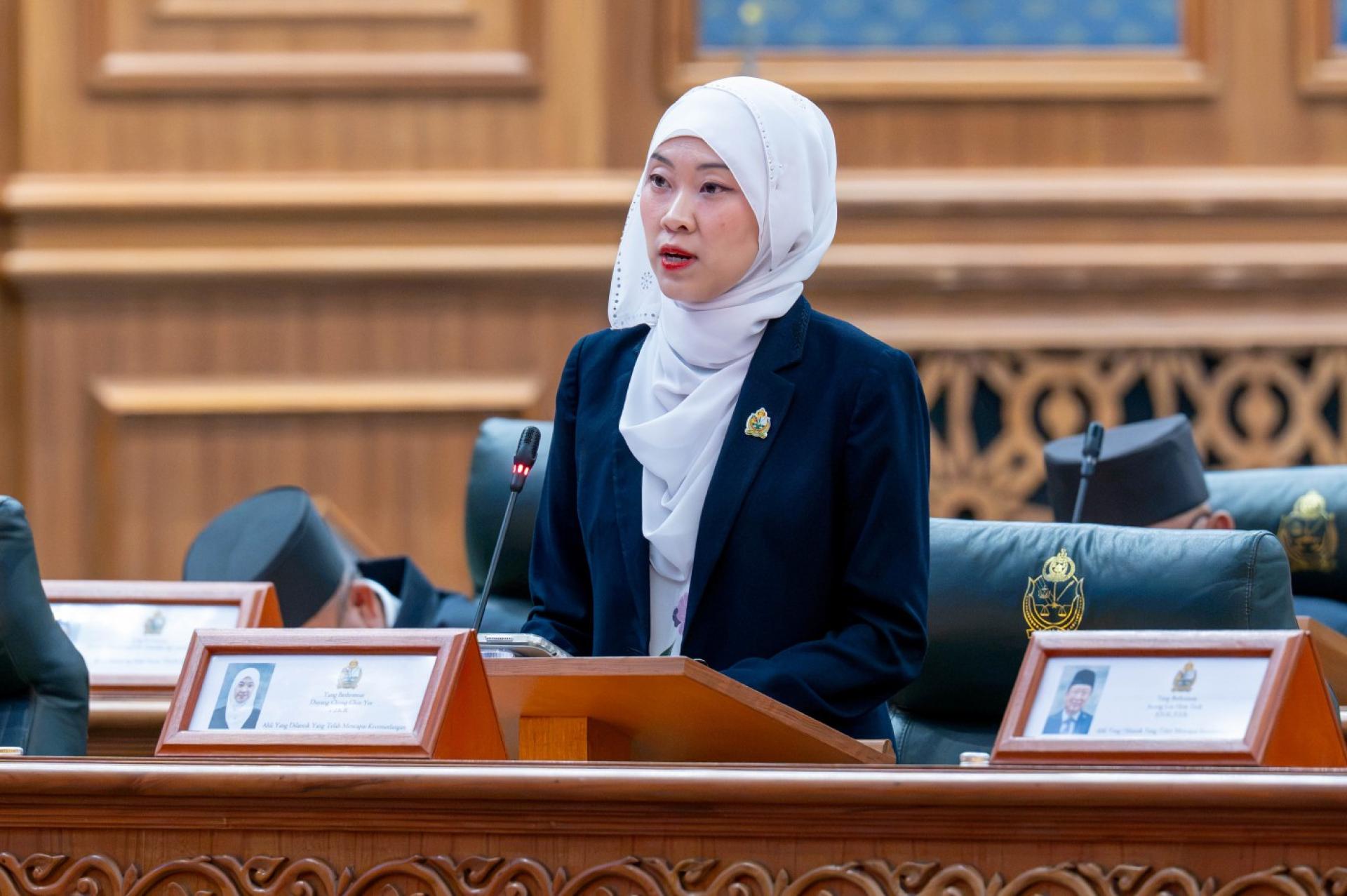
(Bandar Seri Begawan, 13th) Member of Parliament Chong Jingyi expressed her gratitude to the Speaker of Parliament, Cabinet Ministers, fellow Members of Parliament, clerks, staff, and all personnel for their support during the second session of the 22nd Parliament.
During a recent adjournment motion, Chong Jingyi emphasized that Parliament is an important platform where government policies are integrated with the actual needs of the people.
She stated that although the questions and comments raised by Members may be direct, they share the same goal—to help the government serve the people better.
She pointed out that throughout the session, a recurring concern raised by the public was their need for clear and concrete policies, effective follow-up actions, and meaningful implementation of these policies.
She further explained that good policies can have greater impact if they are implemented continuously and effectively; moreover, the consultation process must provide sufficient space to genuinely consider the opinions raised by all parties.
At the same time, she highlighted the implementation of a motion amendment made last Saturday by Parliament under Standing Order 20, which was the result of debate among Members.
She said this serves as a reminder that Parliament is not just a place to record opinions, but a forum where diverse input can jointly influence decision-making.
To this end, she hopes that not only within Parliament, but also outside it, the culture of open-mindedness towards feedback and debate would continue to be strengthened through close communication among Members, Ministers, and various ministries.
She also welcomed the appointment of Members to participate in updating the Brunei Vision 2035 framework.
On the responsibilities of the Coordinating Minister in handling cross-ministry and cross-agency affairs, she noted that the true challenge lies in ensuring that this role is effectively translated into concrete action.
She emphasized that clear accountability, designated leads for follow-up actions, and relevant mechanisms are critical to ensure that issues involving multiple agencies are properly addressed.
In this regard, she further underscored the importance of implementation and accountability in achieving the targets established under the updated Brunei Vision 2035 framework.
She welcomed the framework, which outlines national priorities, expected outcomes and Key Performance Indicators (KPIs), including a plan for annual progress reporting through the Brunei Vision Index.
She stated that goal direction and metrics are becoming clearer, but what is more important is to ensure that implementation and accountability mechanisms are in place, so that the set targets are truly achieved.
She believes this approach should be continued and strengthened, with meaningful consultations, since appointed Members can bring perspectives from business, workers, and the community, to contribute to the policy-making process.
She hopes that through clear KPIs and timelines, progress achieved can be reflected in concrete actions, project implementation and initiatives, leading up to final completion.
"The framework is now clearer. The next step is to ensure that progress is visible, measurable, and sustained,"
She also hopes that reforms can be implemented, projects can be completed, obstacles can be overcome, and outcomes can be improved.
When discussing cooperation, she cited the FIFA World Cup as an example, pointing out that a team's success cannot depend on just one player.
She stressed that ministries are not competing teams against each other, and the public and private sectors are not adversaries.
She believes that with the inauguration of the new Cabinet Ministers, all parties are presented with an opportunity to join hands and accelerate the nation's development. Cooperation, too, requires all parties to maintain good relations, which aligns with efforts to enhance coordination and collaboration.
She concluded by urging all parties to support the Cabinet Ministers in fulfilling their duties and to jointly uphold the wishes of His Majesty the Sultan of Brunei.
During a recent adjournment motion, Chong Jingyi emphasized that Parliament is an important platform where government policies are integrated with the actual needs of the people.
She stated that although the questions and comments raised by Members may be direct, they share the same goal—to help the government serve the people better.
She pointed out that throughout the session, a recurring concern raised by the public was their need for clear and concrete policies, effective follow-up actions, and meaningful implementation of these policies.
She further explained that good policies can have greater impact if they are implemented continuously and effectively; moreover, the consultation process must provide sufficient space to genuinely consider the opinions raised by all parties.
At the same time, she highlighted the implementation of a motion amendment made last Saturday by Parliament under Standing Order 20, which was the result of debate among Members.
She said this serves as a reminder that Parliament is not just a place to record opinions, but a forum where diverse input can jointly influence decision-making.
To this end, she hopes that not only within Parliament, but also outside it, the culture of open-mindedness towards feedback and debate would continue to be strengthened through close communication among Members, Ministers, and various ministries.
She also welcomed the appointment of Members to participate in updating the Brunei Vision 2035 framework.
On the responsibilities of the Coordinating Minister in handling cross-ministry and cross-agency affairs, she noted that the true challenge lies in ensuring that this role is effectively translated into concrete action.
She emphasized that clear accountability, designated leads for follow-up actions, and relevant mechanisms are critical to ensure that issues involving multiple agencies are properly addressed.
In this regard, she further underscored the importance of implementation and accountability in achieving the targets established under the updated Brunei Vision 2035 framework.
She welcomed the framework, which outlines national priorities, expected outcomes and Key Performance Indicators (KPIs), including a plan for annual progress reporting through the Brunei Vision Index.
She stated that goal direction and metrics are becoming clearer, but what is more important is to ensure that implementation and accountability mechanisms are in place, so that the set targets are truly achieved.
She believes this approach should be continued and strengthened, with meaningful consultations, since appointed Members can bring perspectives from business, workers, and the community, to contribute to the policy-making process.
She hopes that through clear KPIs and timelines, progress achieved can be reflected in concrete actions, project implementation and initiatives, leading up to final completion.
"The framework is now clearer. The next step is to ensure that progress is visible, measurable, and sustained,"
She also hopes that reforms can be implemented, projects can be completed, obstacles can be overcome, and outcomes can be improved.
When discussing cooperation, she cited the FIFA World Cup as an example, pointing out that a team's success cannot depend on just one player.
She stressed that ministries are not competing teams against each other, and the public and private sectors are not adversaries.
She believes that with the inauguration of the new Cabinet Ministers, all parties are presented with an opportunity to join hands and accelerate the nation's development. Cooperation, too, requires all parties to maintain good relations, which aligns with efforts to enhance coordination and collaboration.
She concluded by urging all parties to support the Cabinet Ministers in fulfilling their duties and to jointly uphold the wishes of His Majesty the Sultan of Brunei.